
In Minor Keys - 2026 Venice Biennale
Foreword
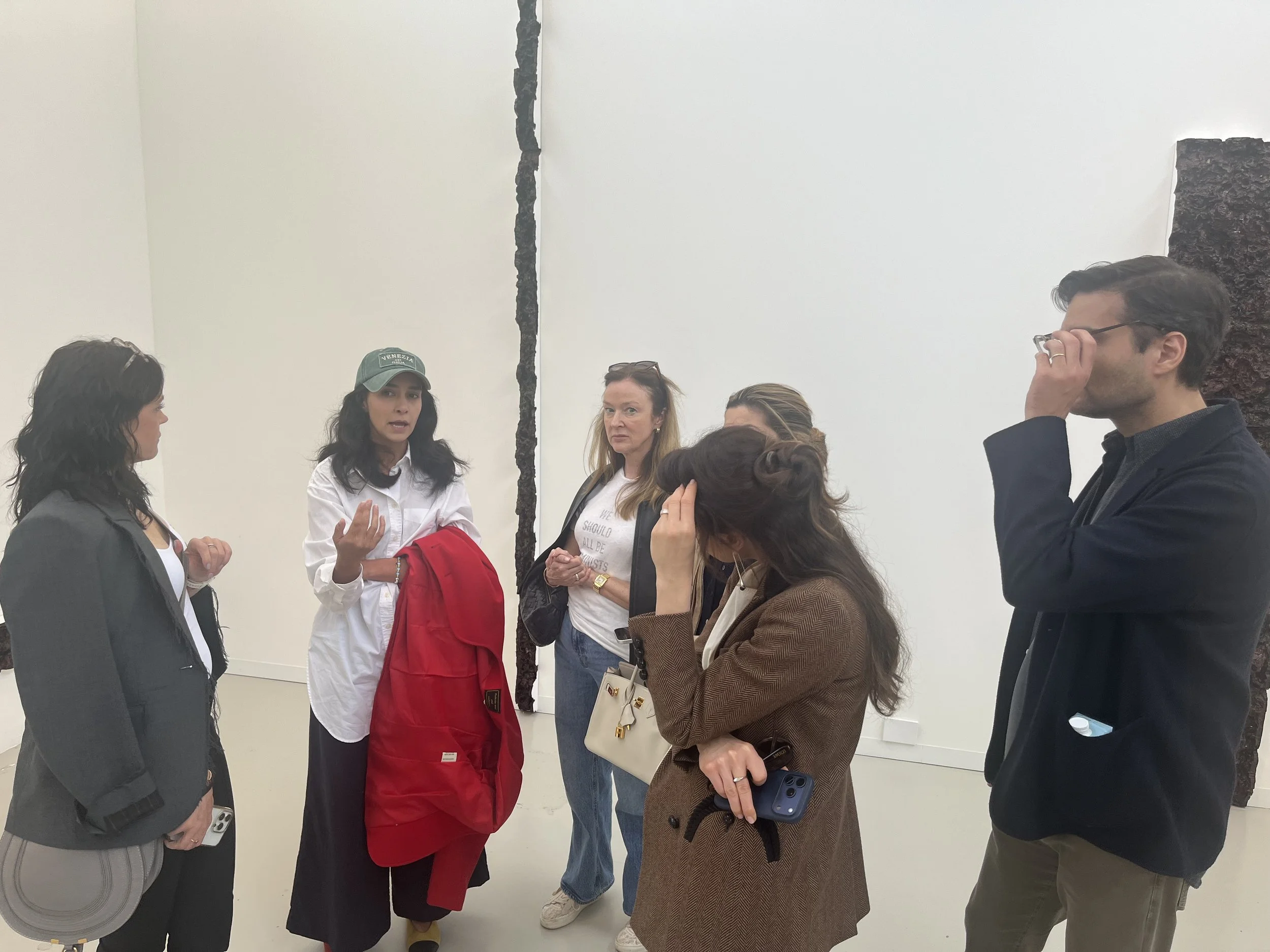
Dear friends, what a pleasure it was to see so many of you in Venice. Like each time, Venice never disappoints. Whether shaken by the geopolitical climate, the weather or the spectacular amount of people and events happening, we always find the time to see each other and see most of the art on display. We have tried to curate a program but with the Biennale becoming more dense with each edition, I am starting to think that coming back later to Venice is now a must. In the mean time, it is always a pleasure to look back at those memories. For our friends that were not able to attend, you can easily catch up with what we have been up to! I highly recomend you to visit Venice if you were not able to attend our program
A rainy start
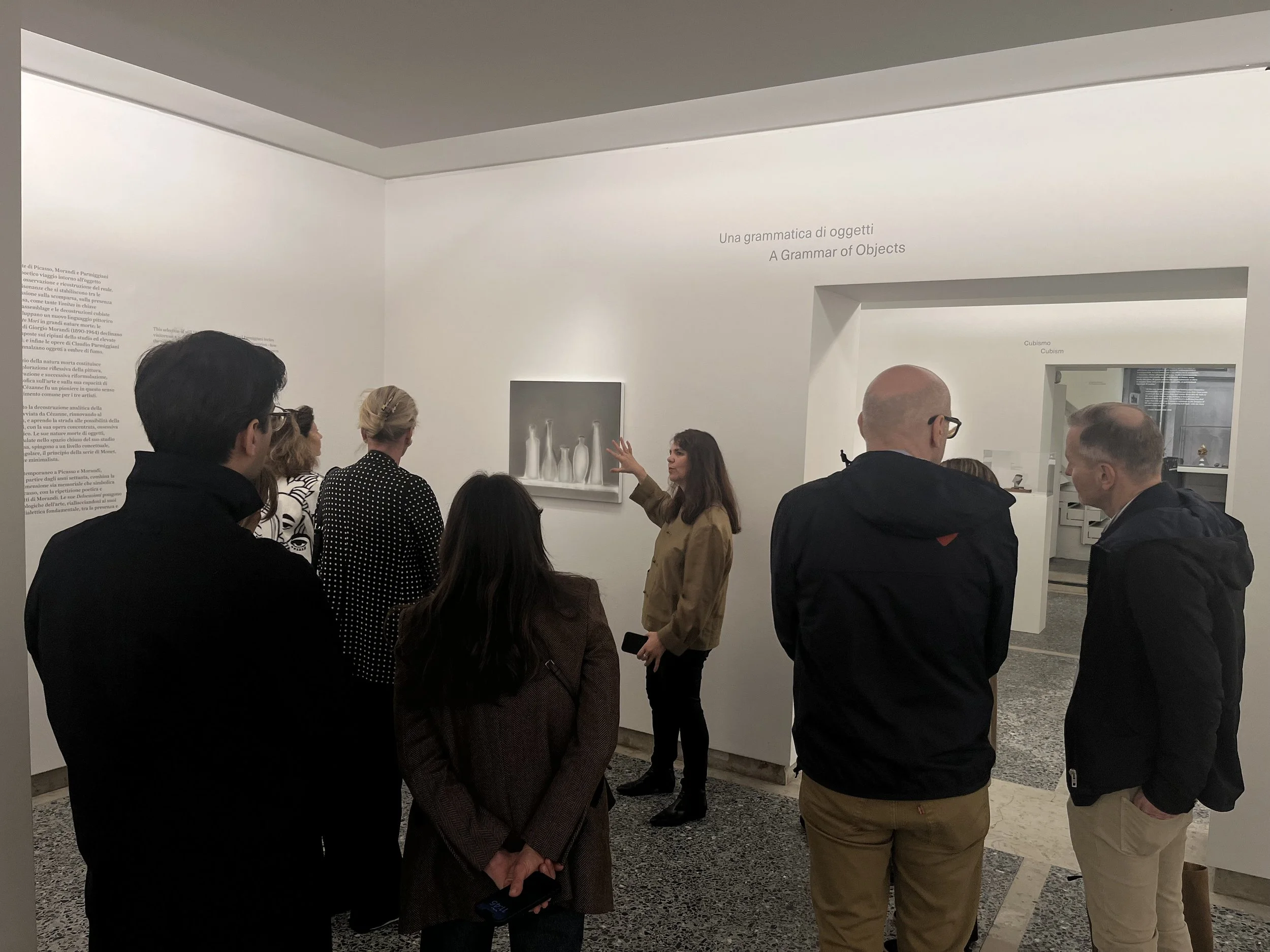
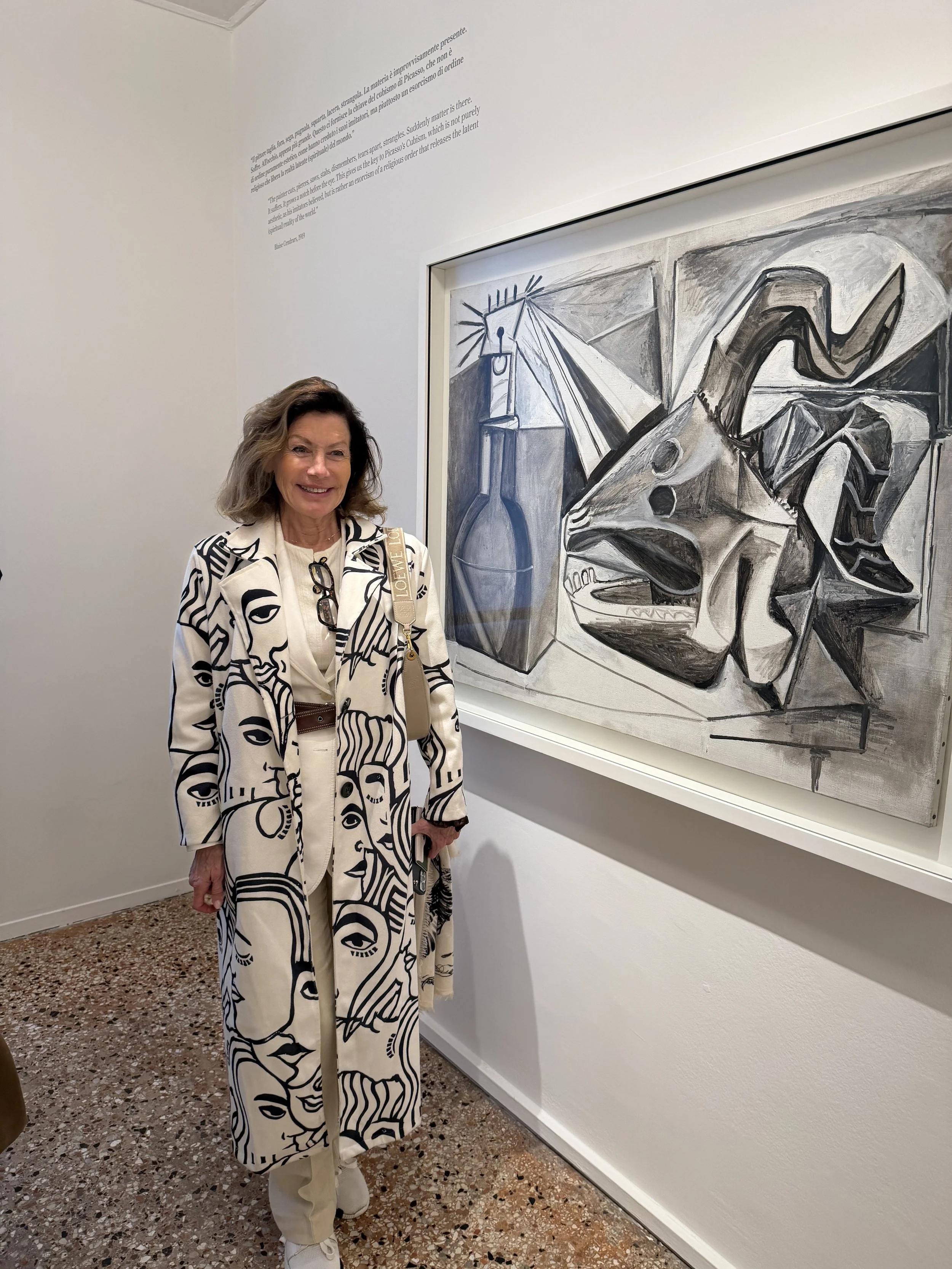
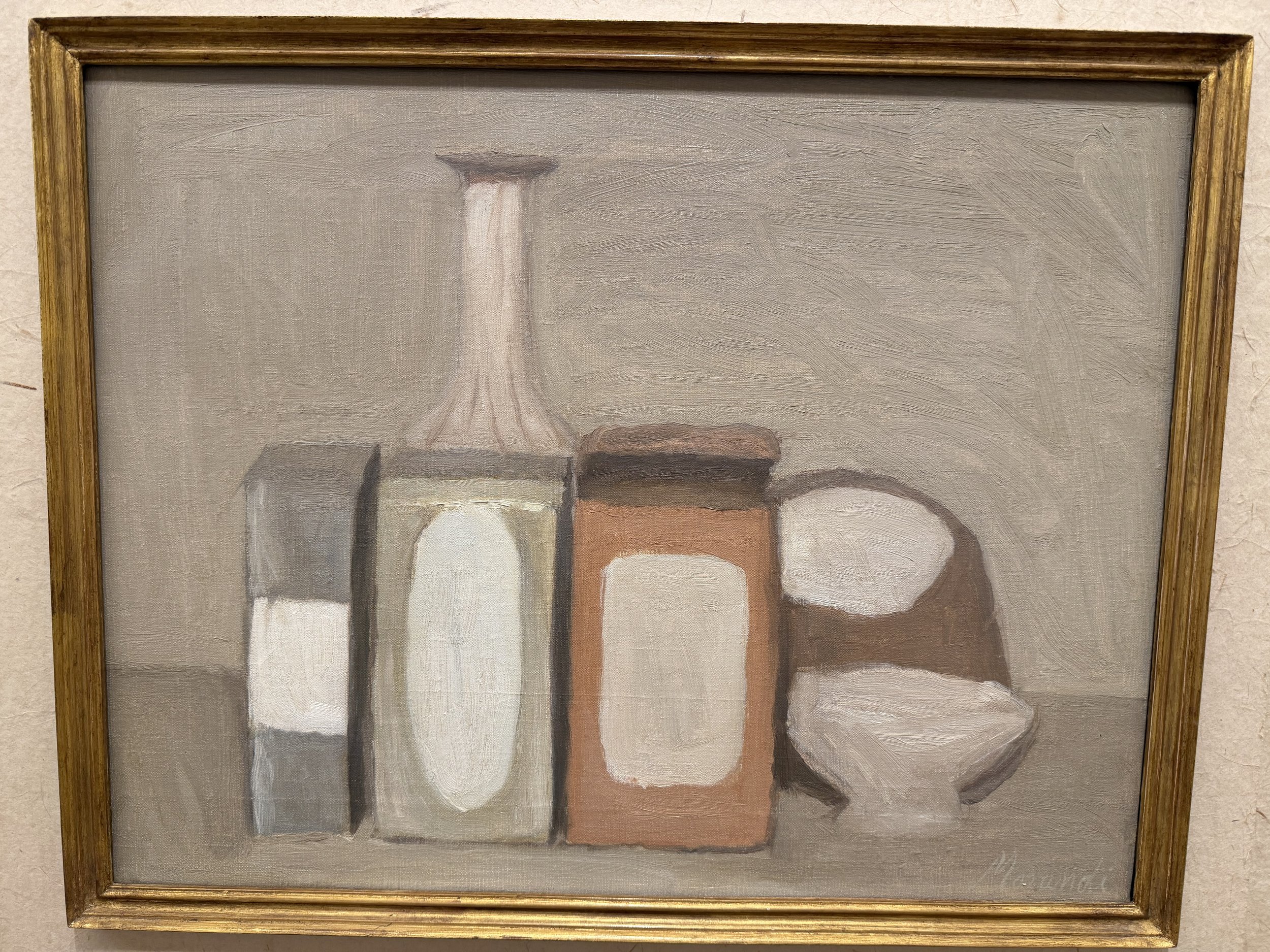
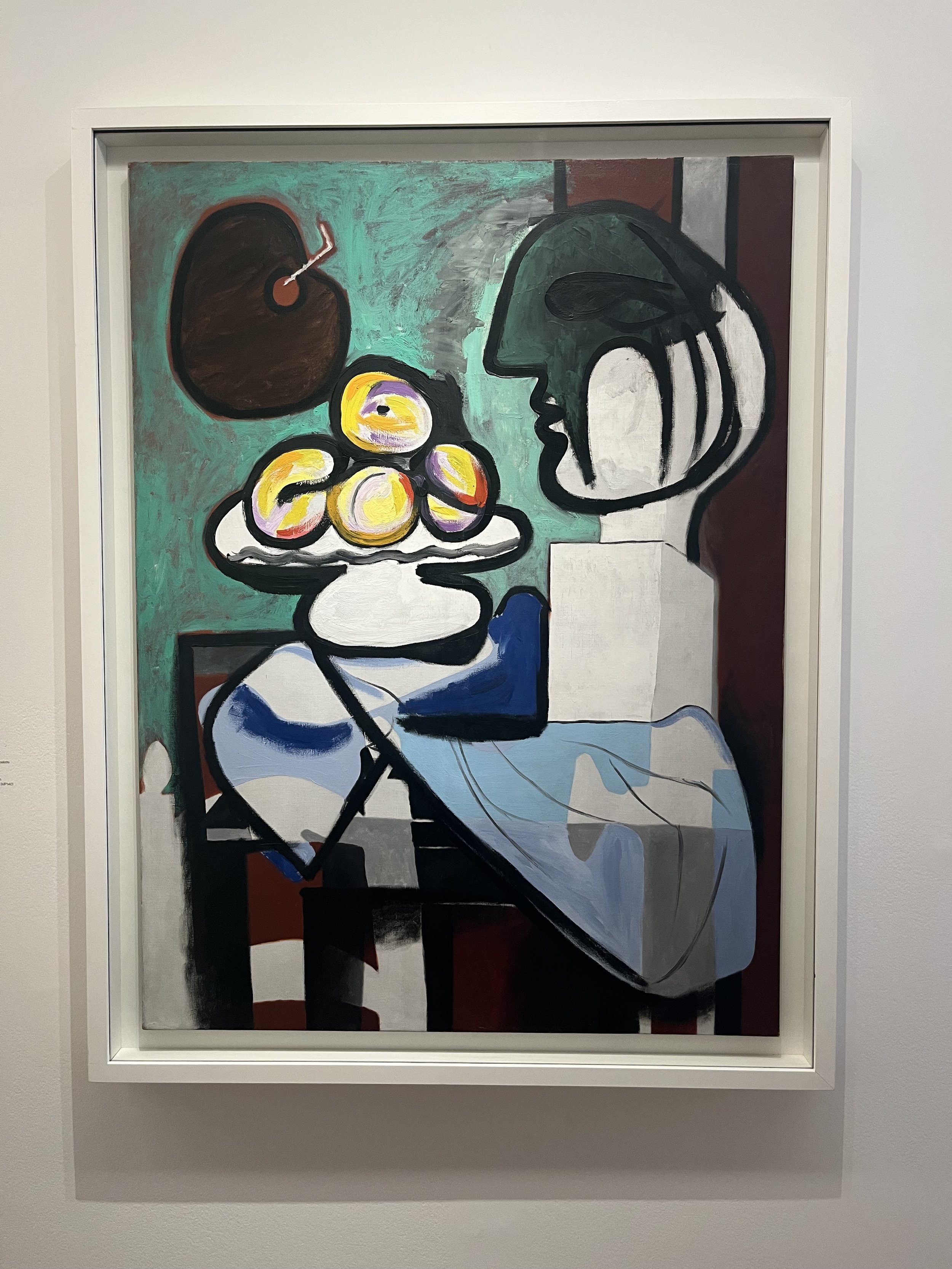
For our first visit in Venice, we headed to Piazza San Marco where Cécile Debray, director of Musée National Picasso-Paris, took us around the most impressive Picasso-Morandi-Parmiggiani exhibition. The exhibition brings together the works of 3 legendary masters, each with their unique approach, focusing on still life as a field for reflecting on representation and the mediation of reality through the artist’s eye.
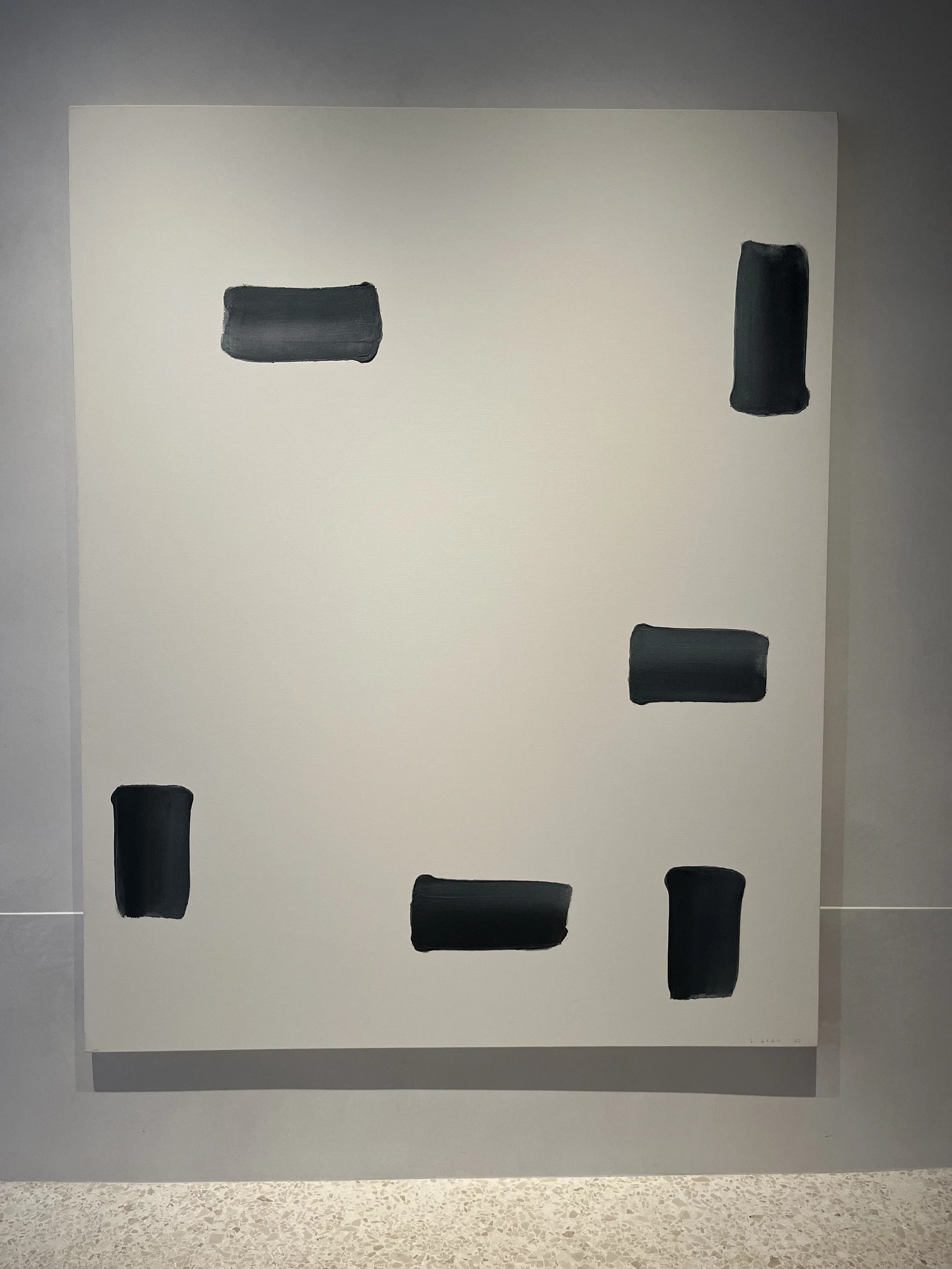
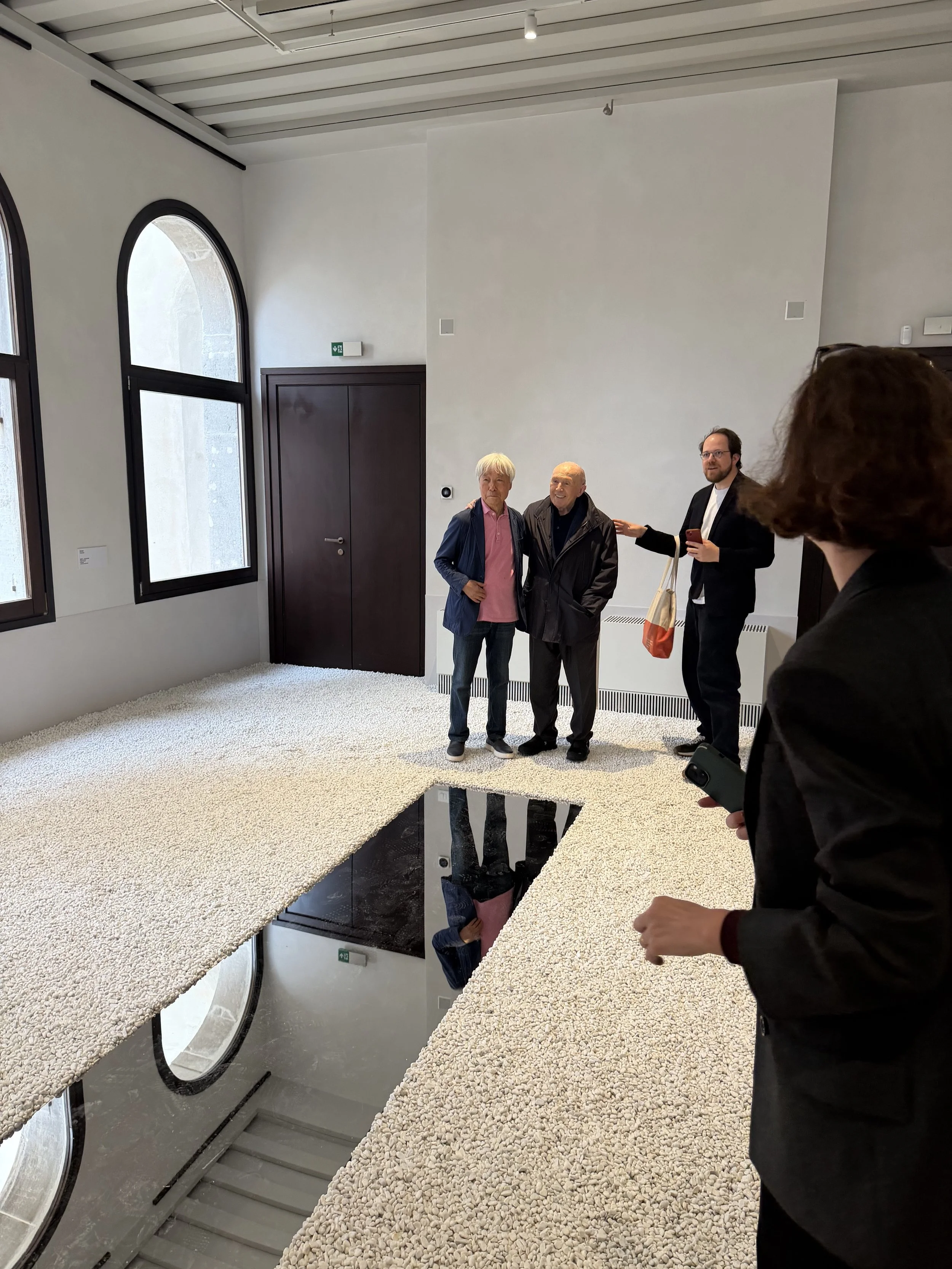
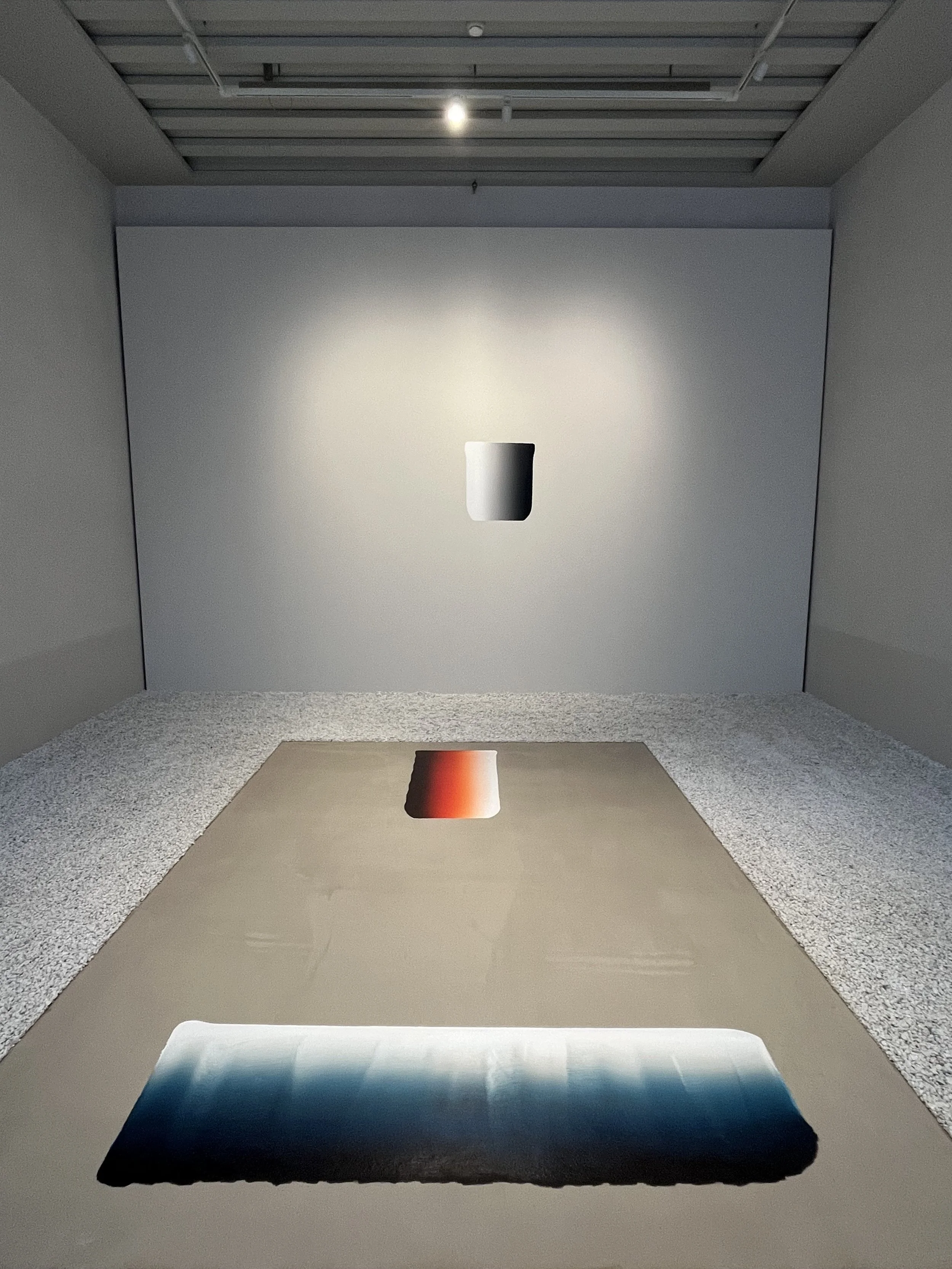
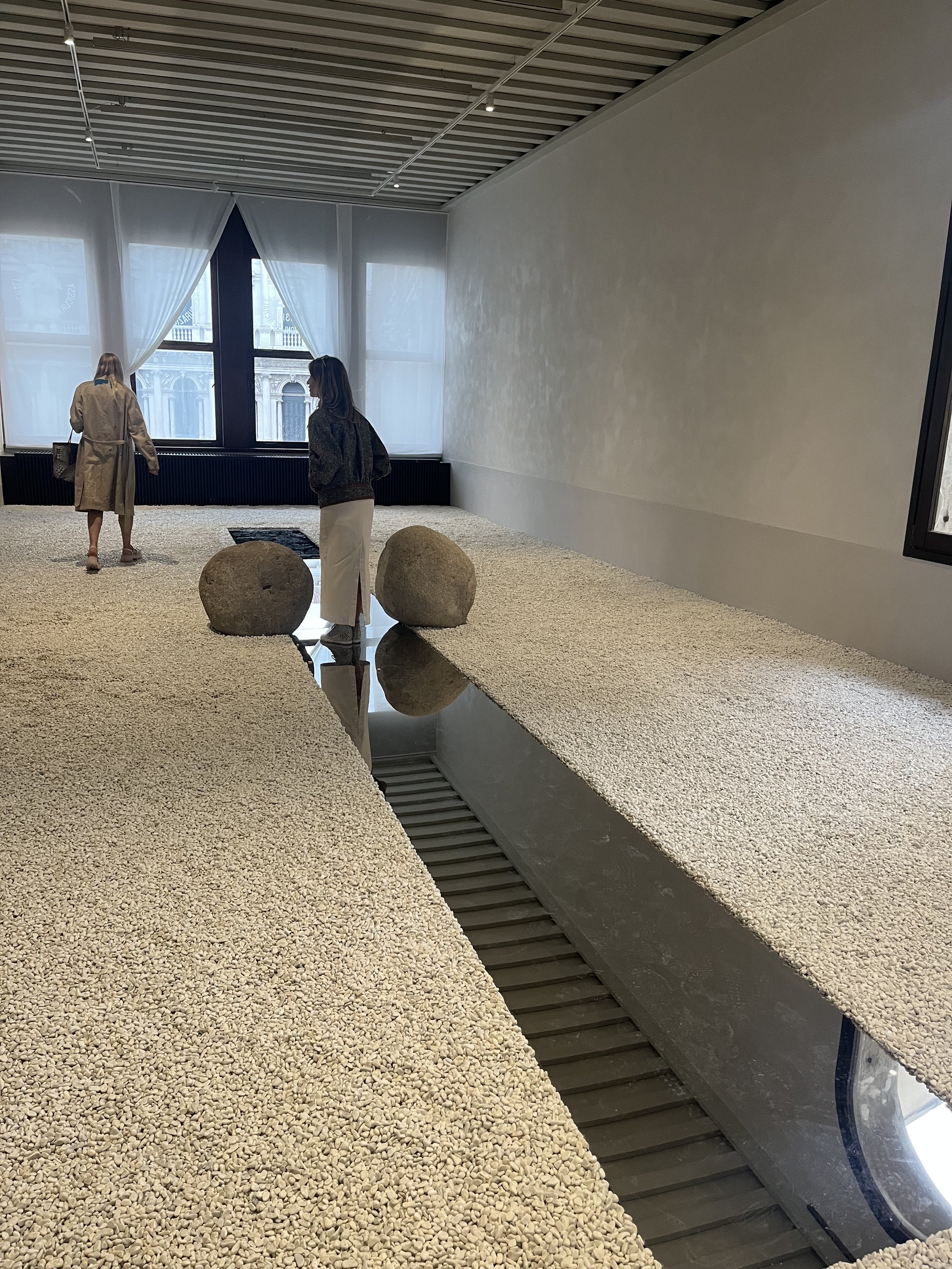
Around the corner, we sneaked into the sublime Lee Ufan exhibition where we had the chance to bump into Mr. Lee and Monsieur François Pinault touring the exhibition.
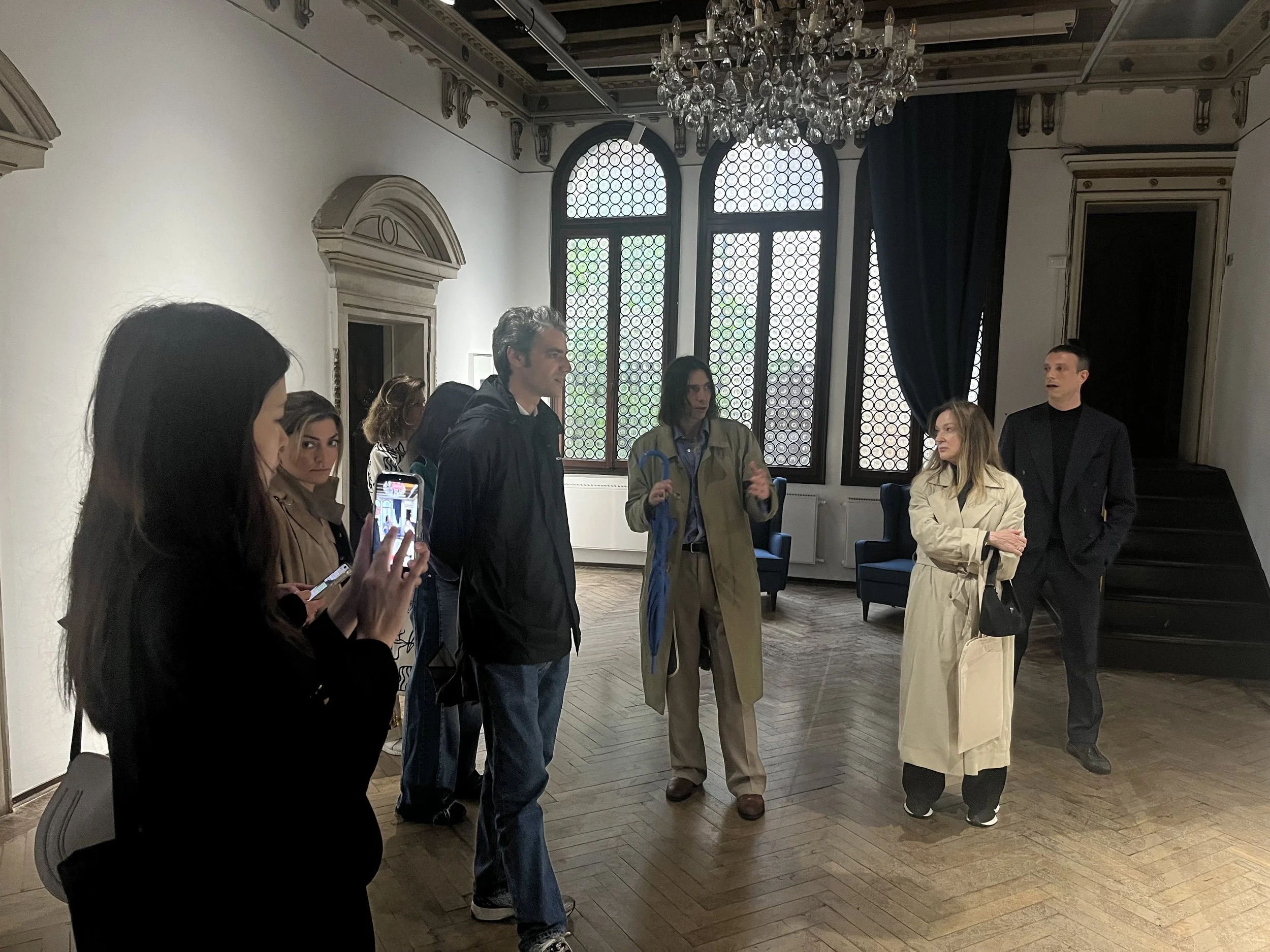
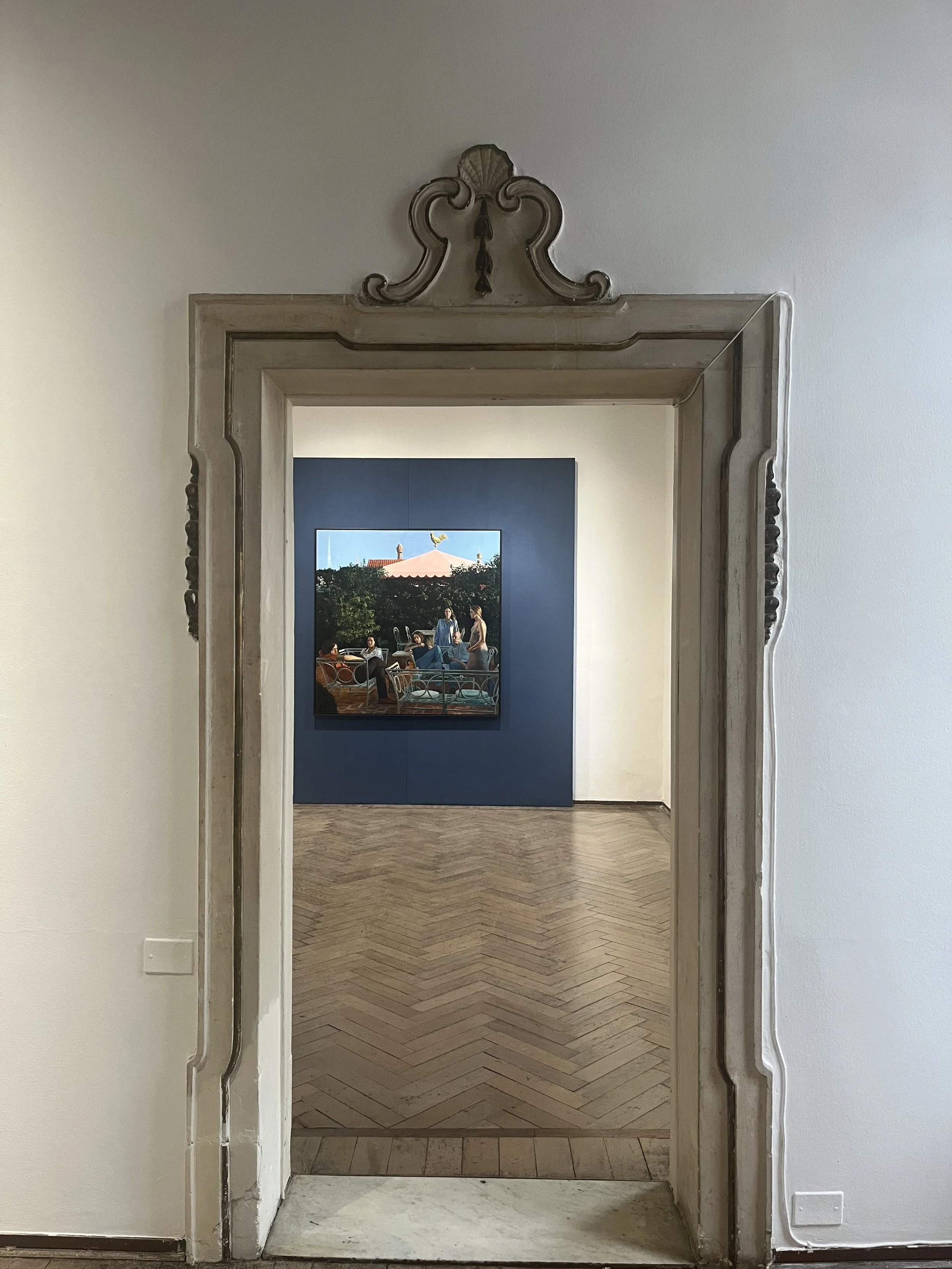
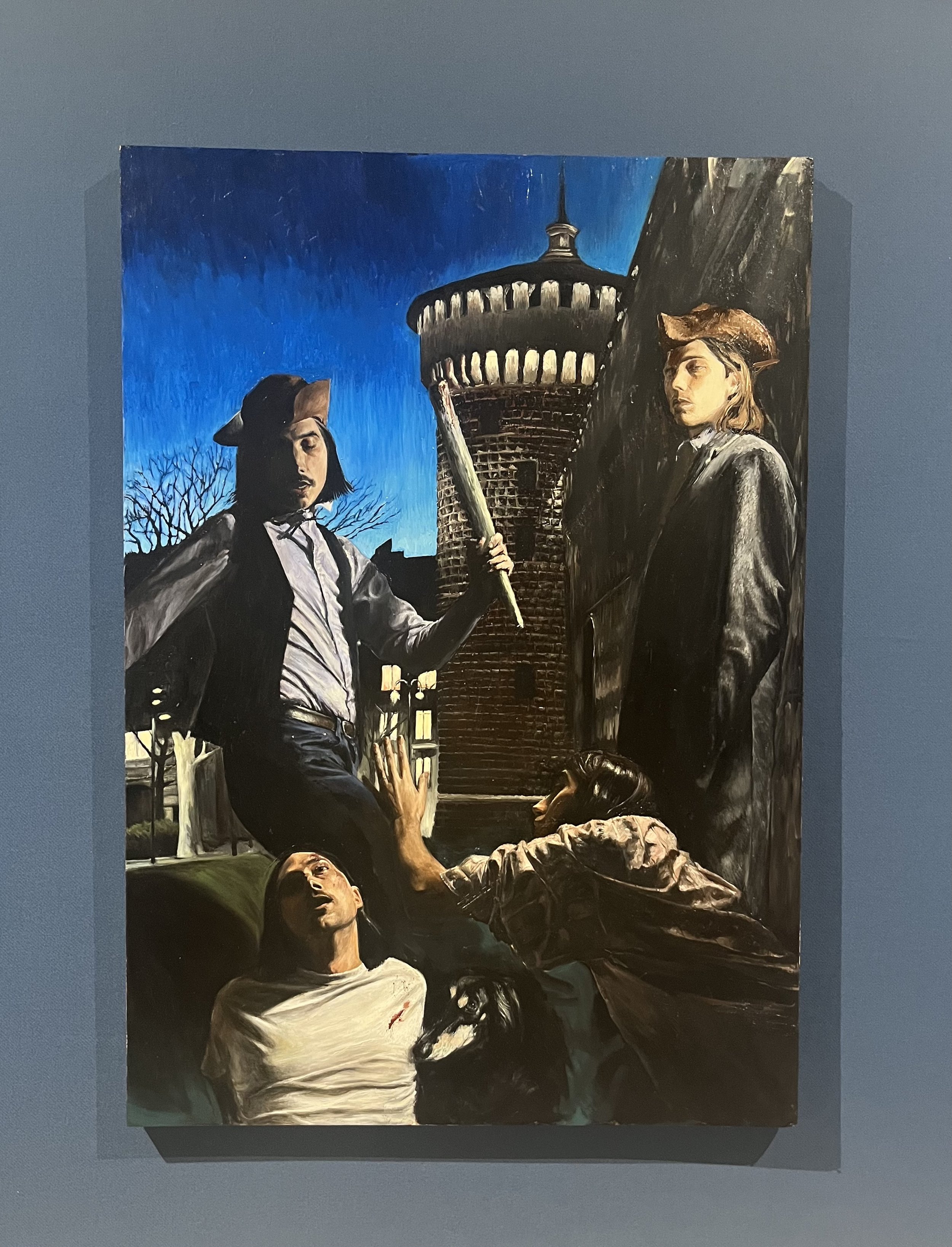
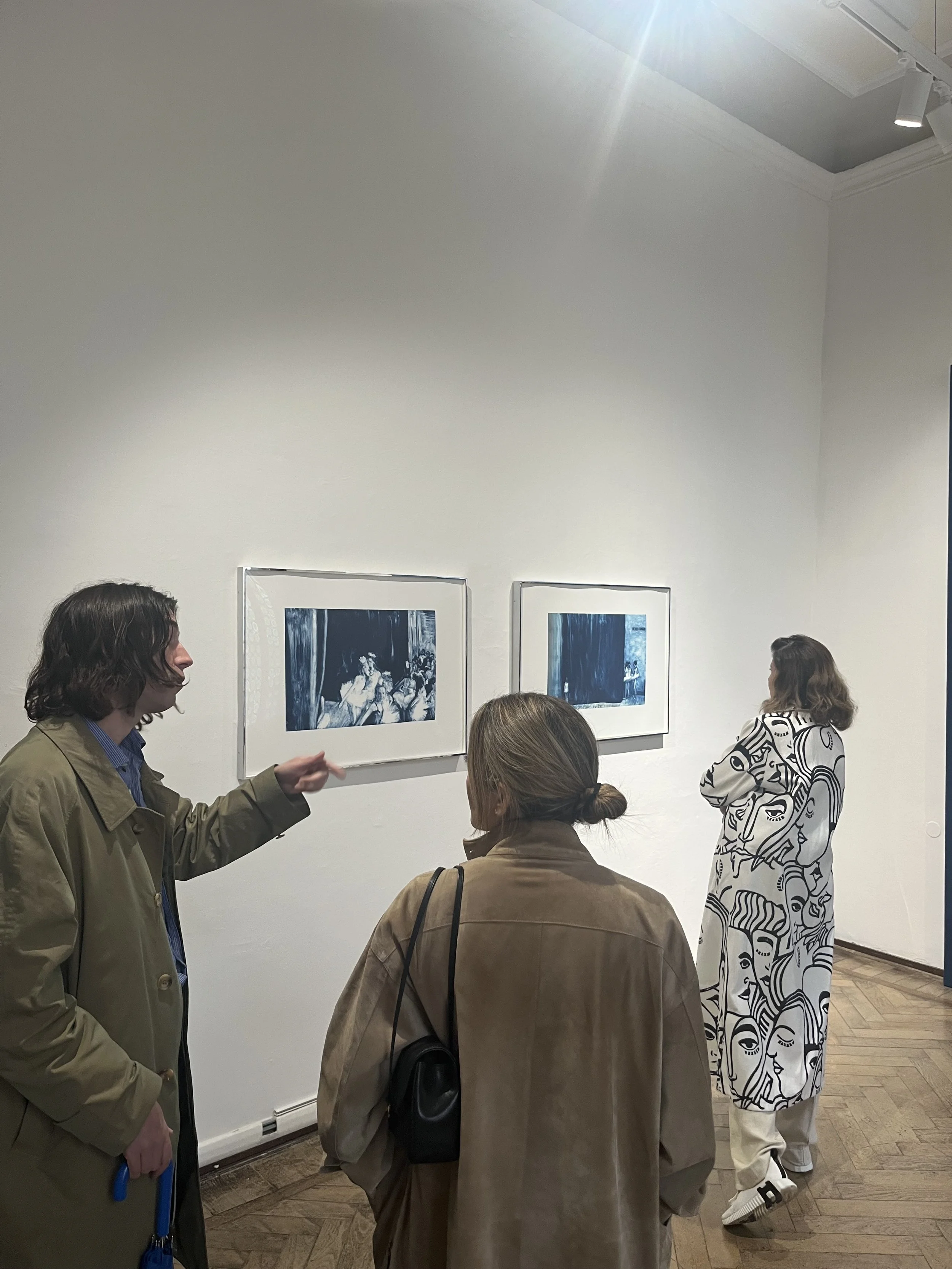
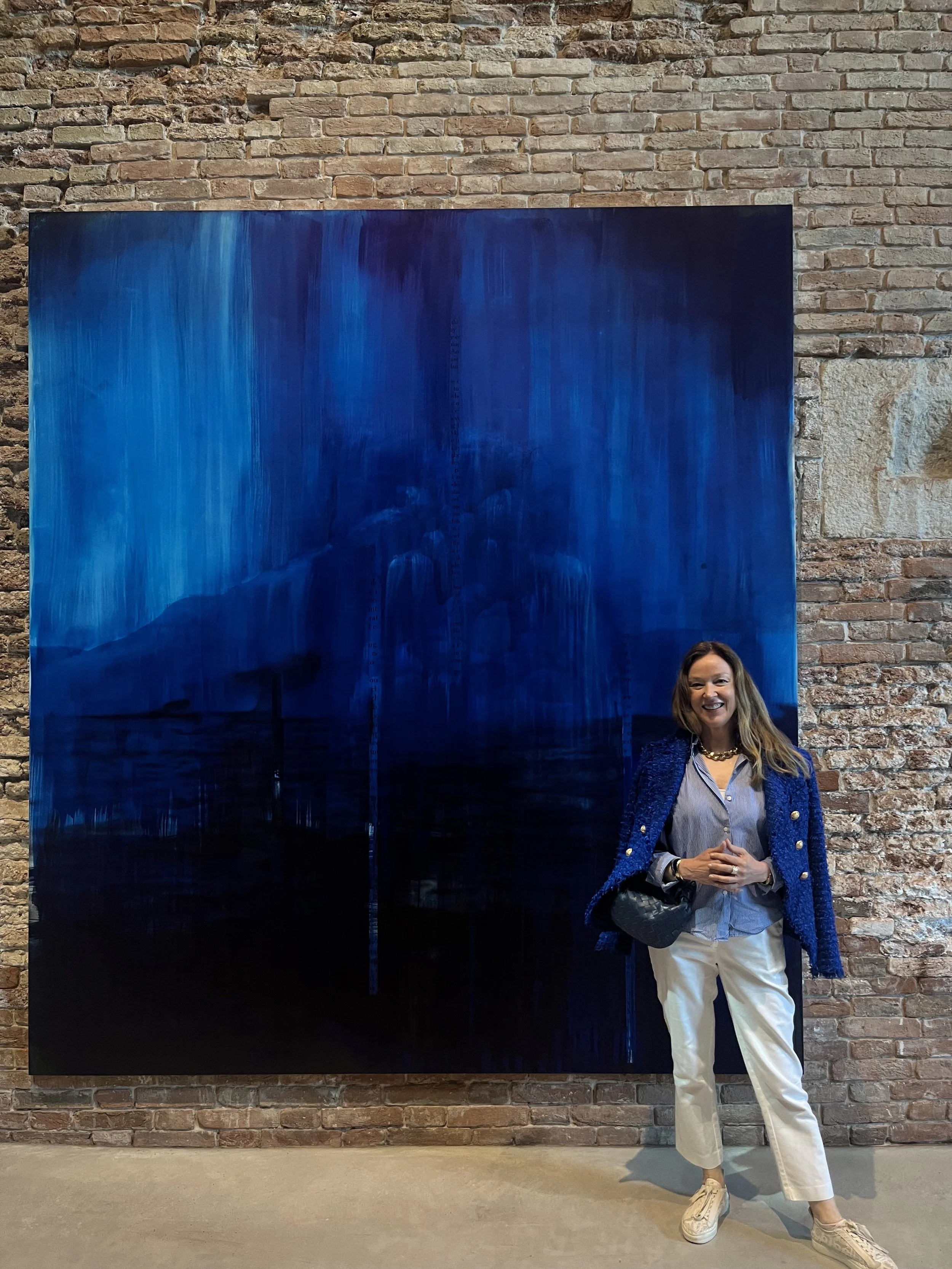
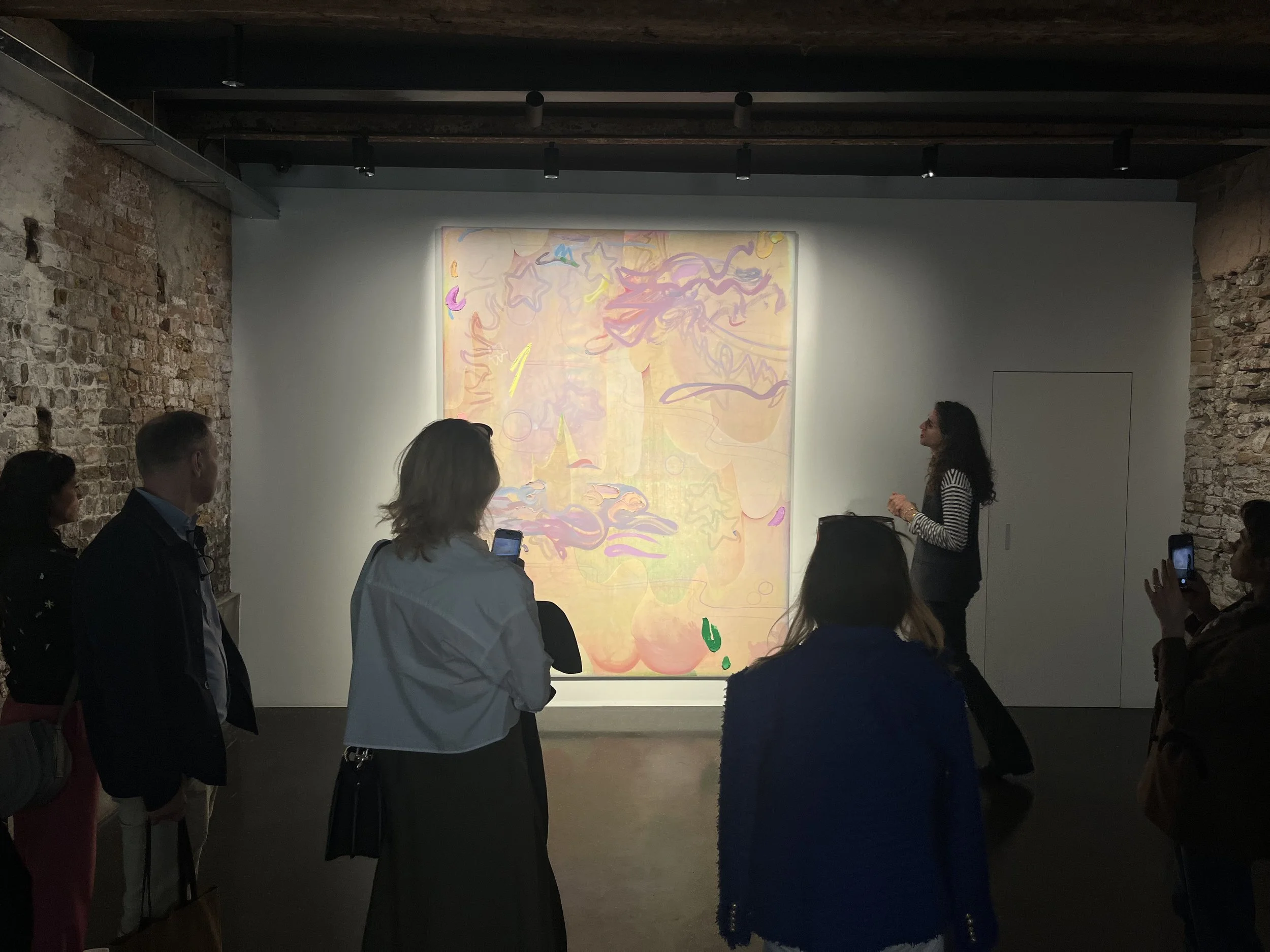
Last but not least, we met with Giangiacomo Rossetti to visit his newly opened exhibition entitled “The Dead”. I discovered Giangiacomo in an article of the Sunday Times and was seduced by his work and apparent talent. This show marks a significant milestone in Rossetti's practice. It is the first occasion on which Rossetti has chosen to tackle large-scale canvases, larger than any of his previous works, and at the same time the first moment in which his figurative language opens up to what the artist calls a "cosmic breath." I was glad that we were able to meet him personally inside of his solo show.
The Biennale opens !
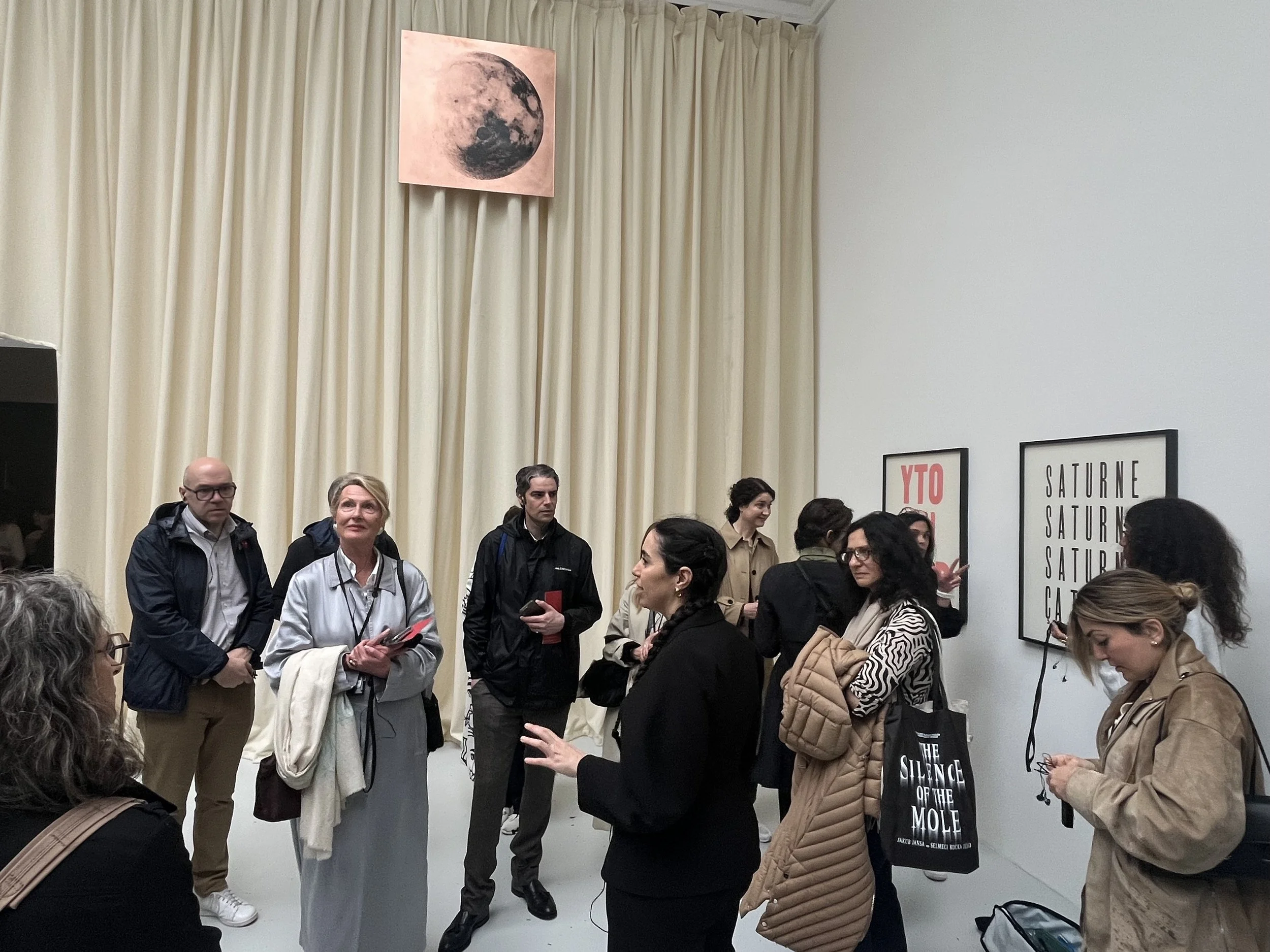
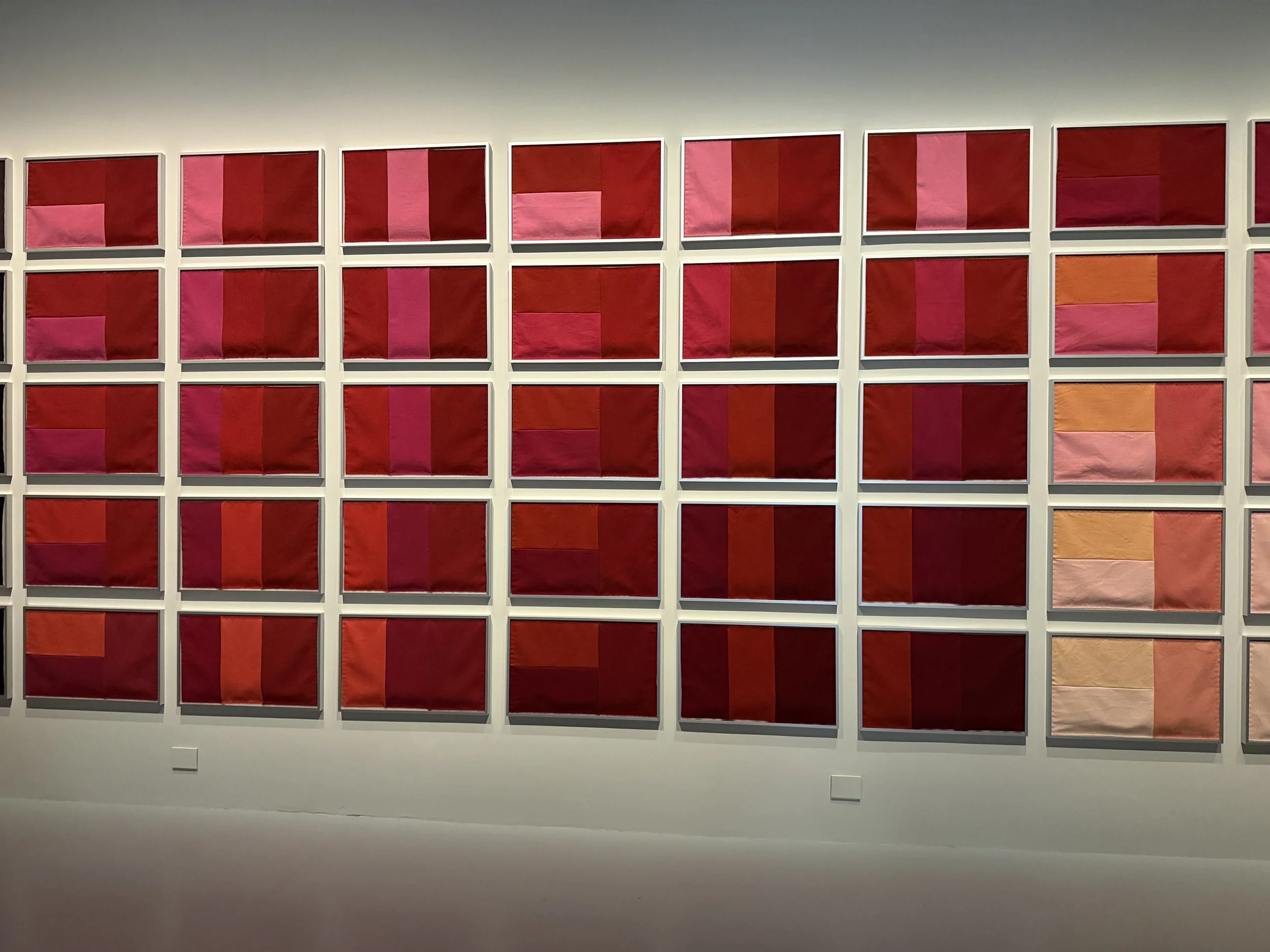
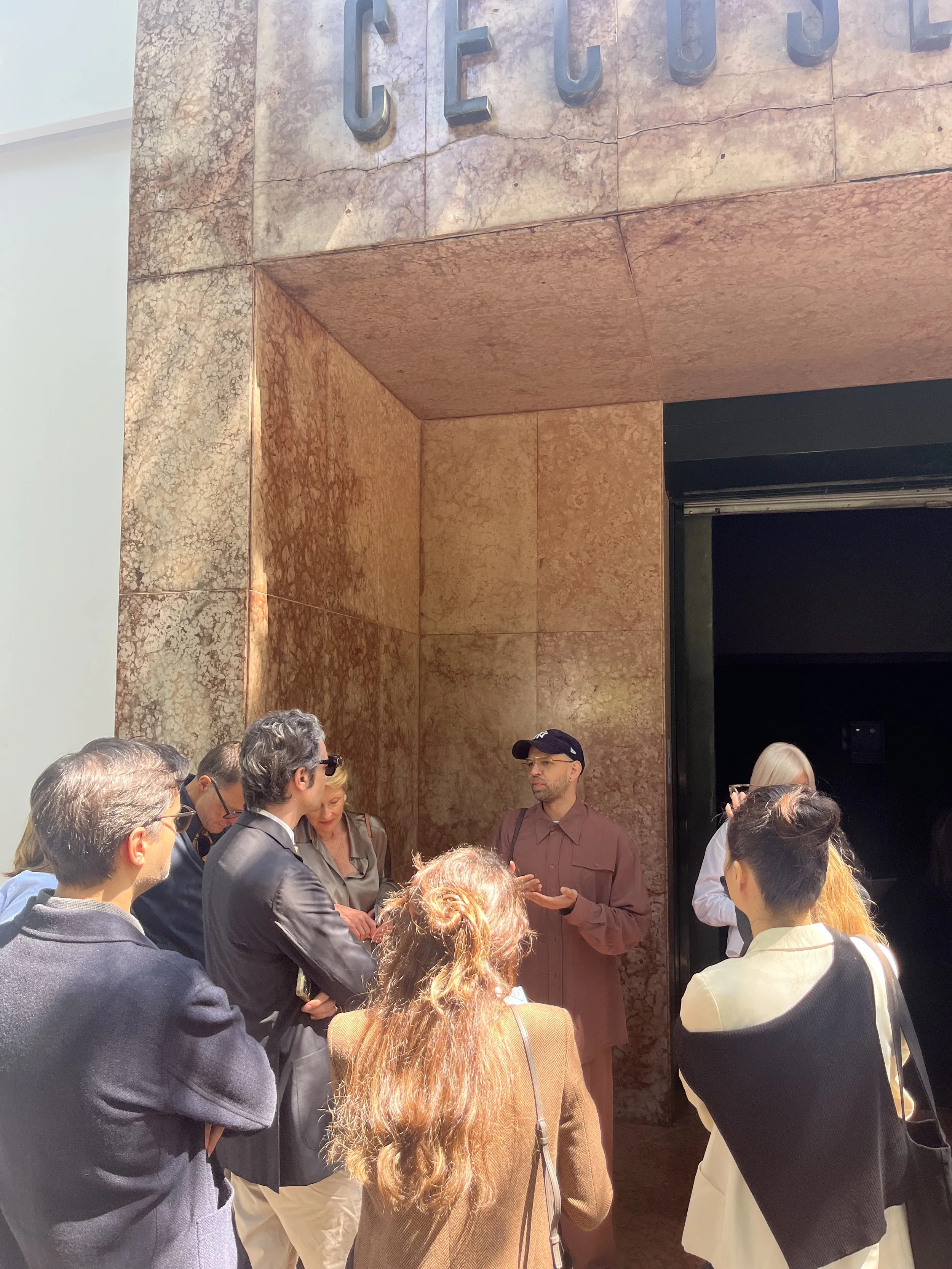
For our first morning in the Giardini, we discovered the french pavilion with its curator Myriam Ben Salah. Along with Yto Barrada, they created a melancholic, textile-driven meditation on time, erosion, and revolution.
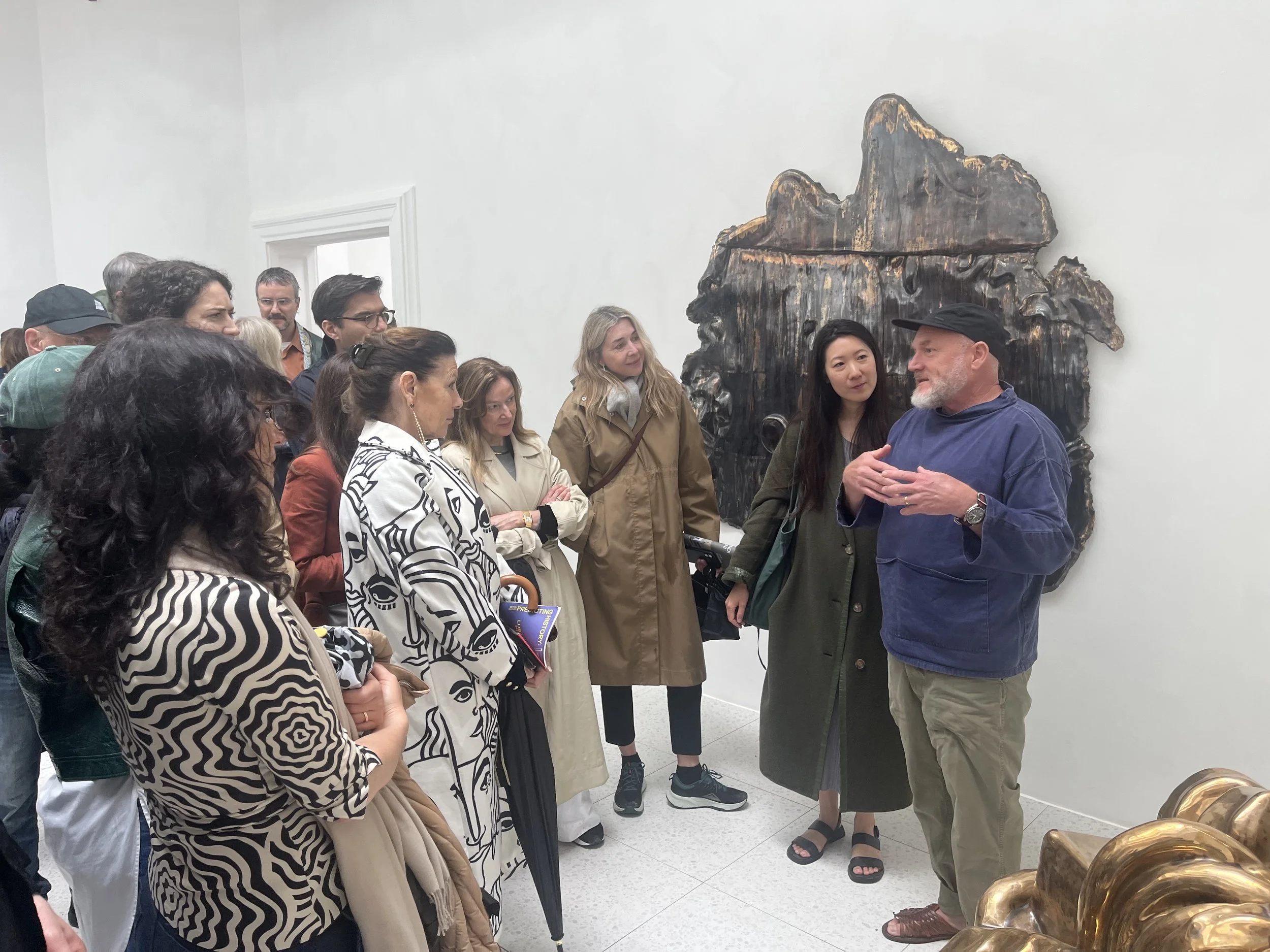
We then quickly ran under the rain to meet with Alma Allen at the US pavilion. Alma elaborated on his biomorphic stone and bronze forms evoking geological memory, transcendence, and quiet American mythologies
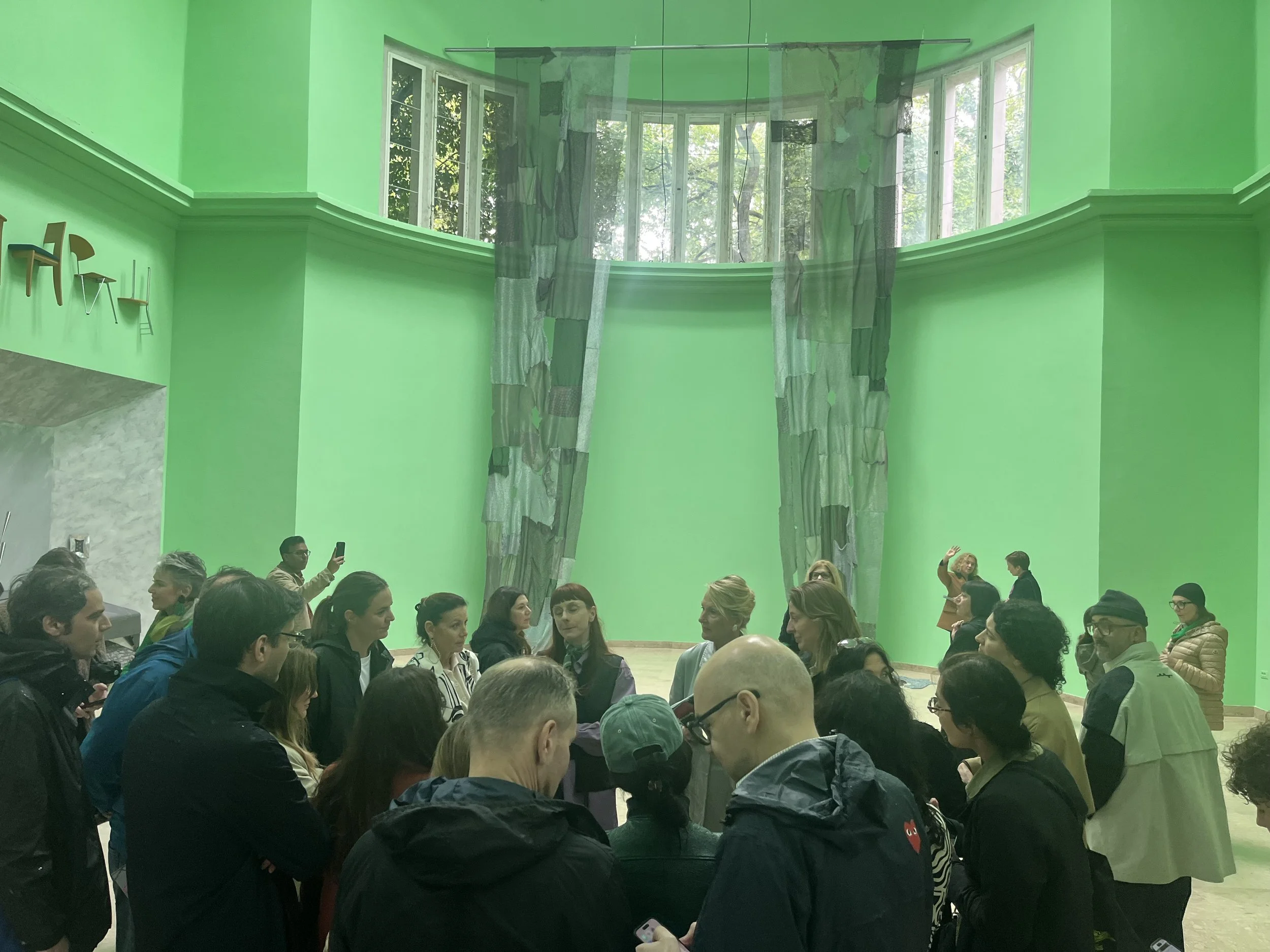
Our third stop led us to the german pavilion, where we met with its curator Dr. Kathleen Reinhardt. The German Pavilion’s artists Henrike Naumann and Sung Tieu turned the monumental building into a destabilized landscape of collapse, memory, and reconstruction. Through fragmented architecture, archival traces, sound, and spatial interventions, the exhibition reflected on the unfinished legacy of reunification, migration, and political ideology in contemporary Germany, as evoked by the title Ruins
International Board Luncheon
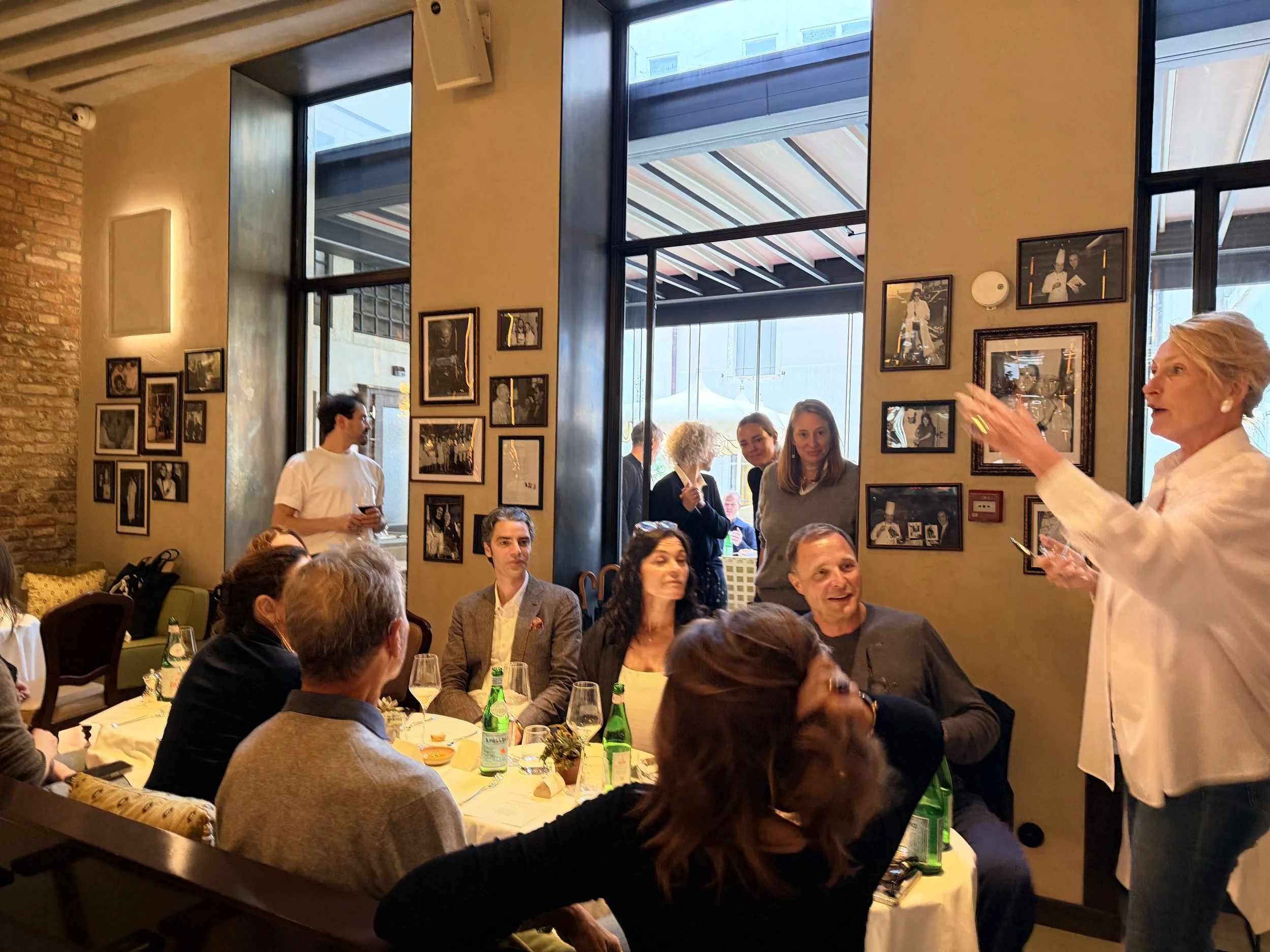
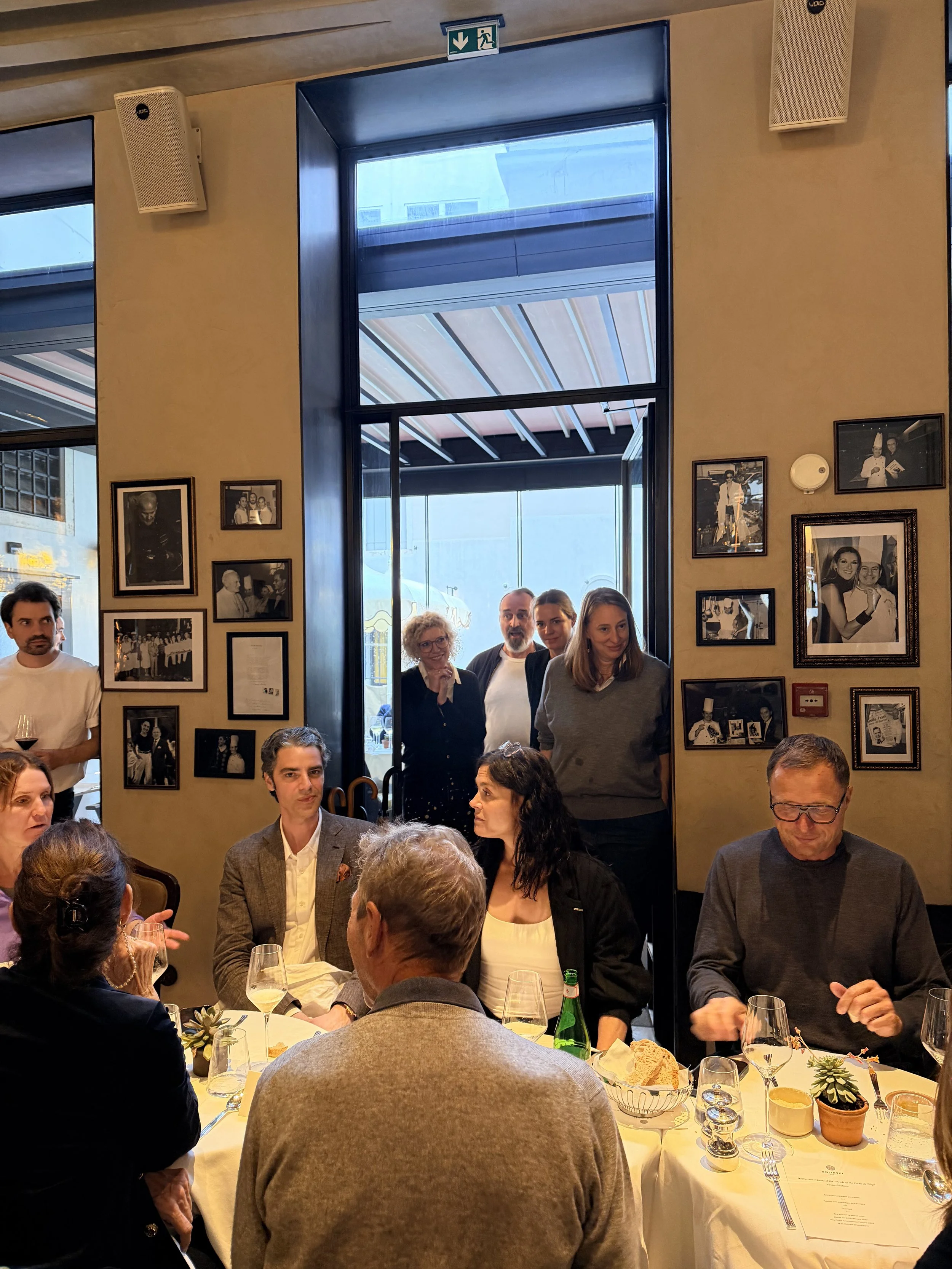
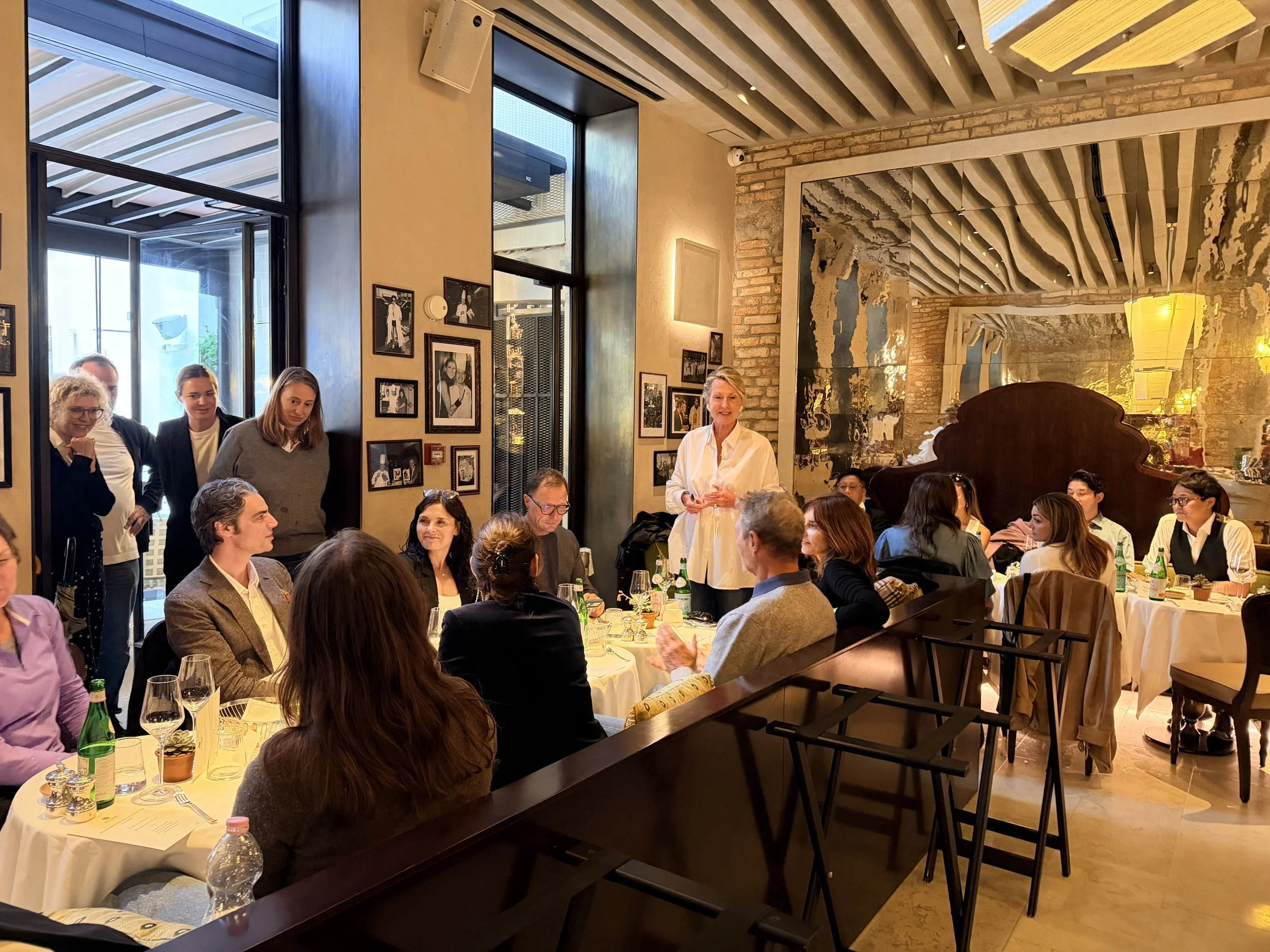
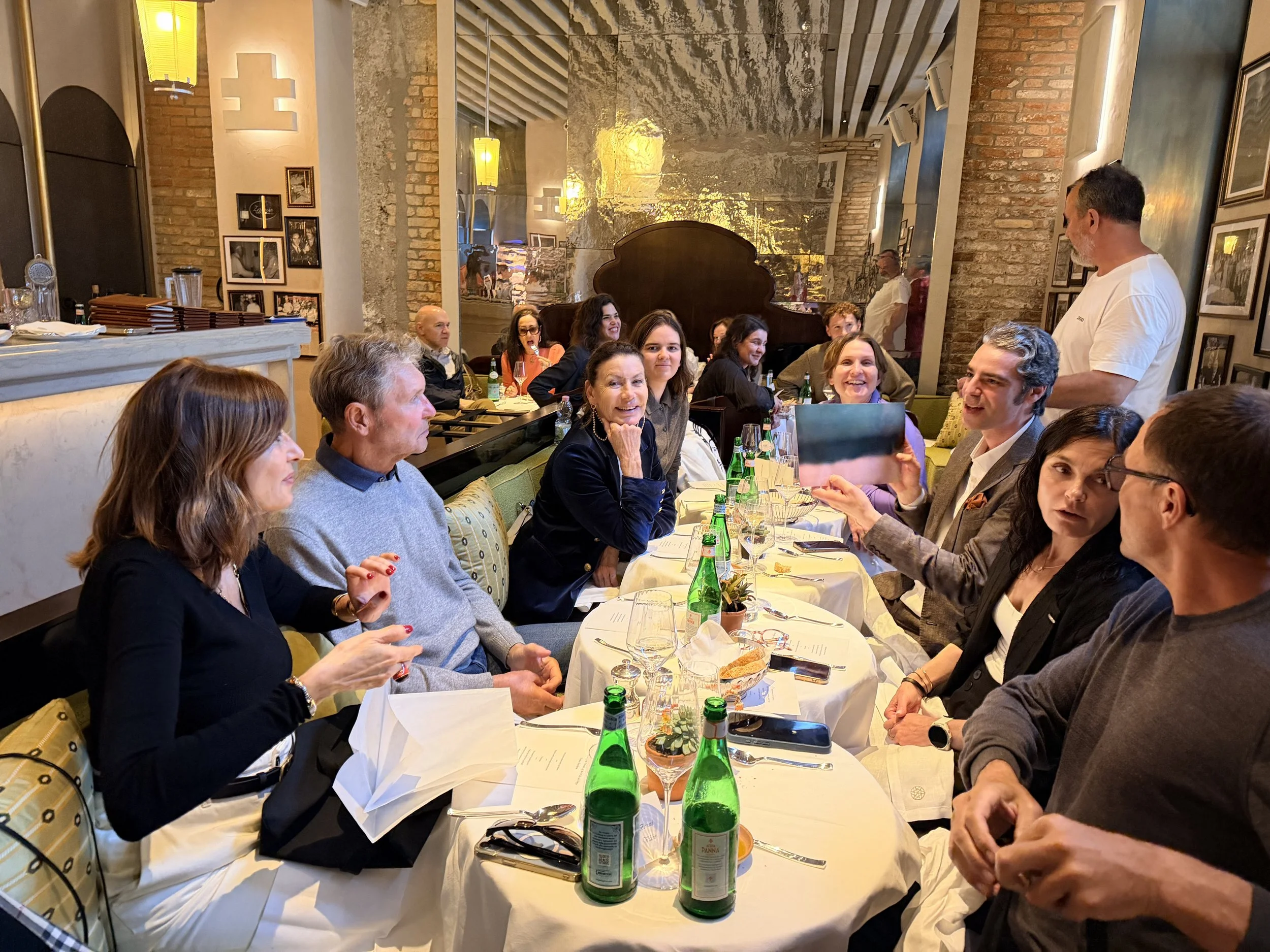
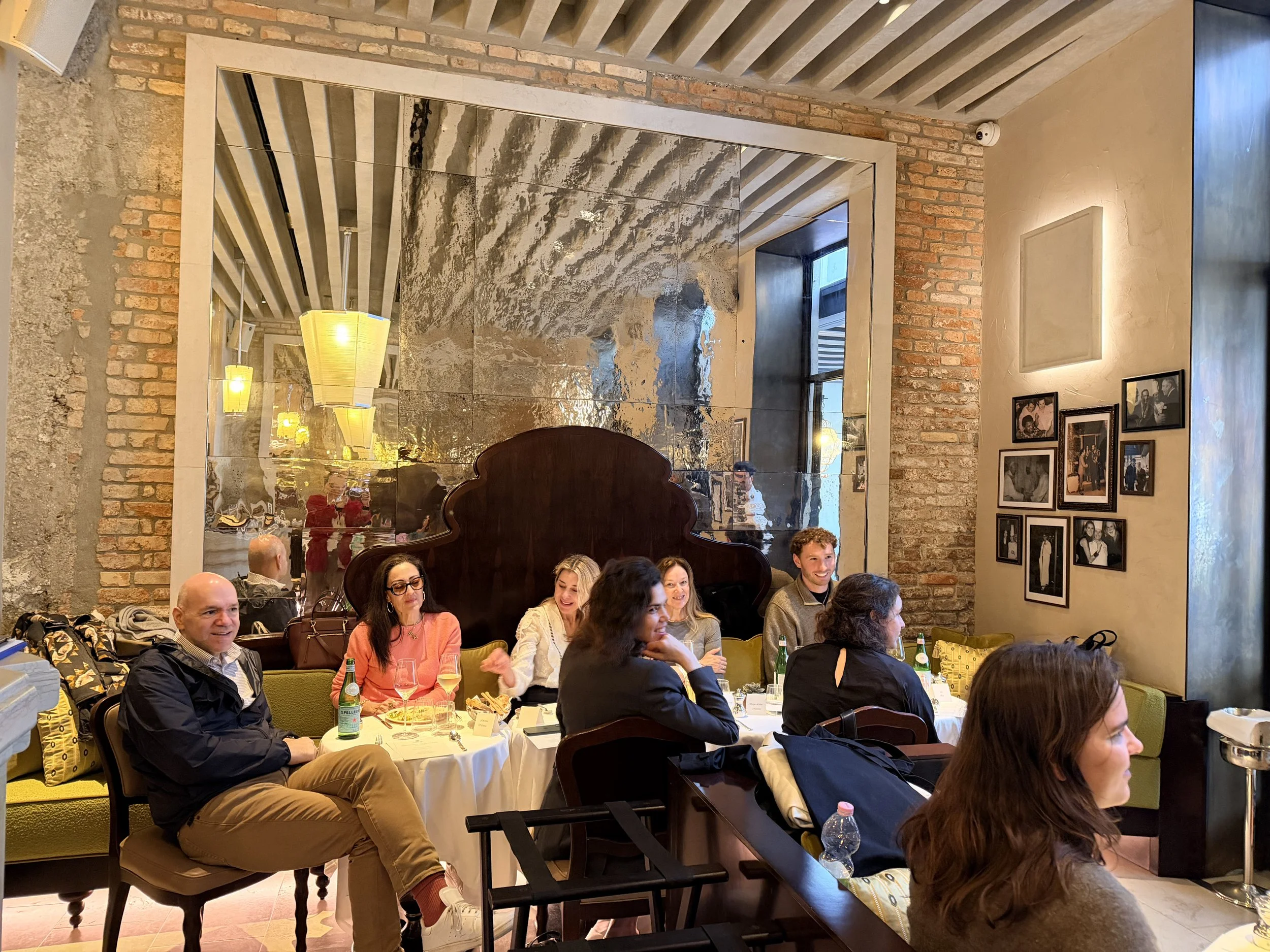
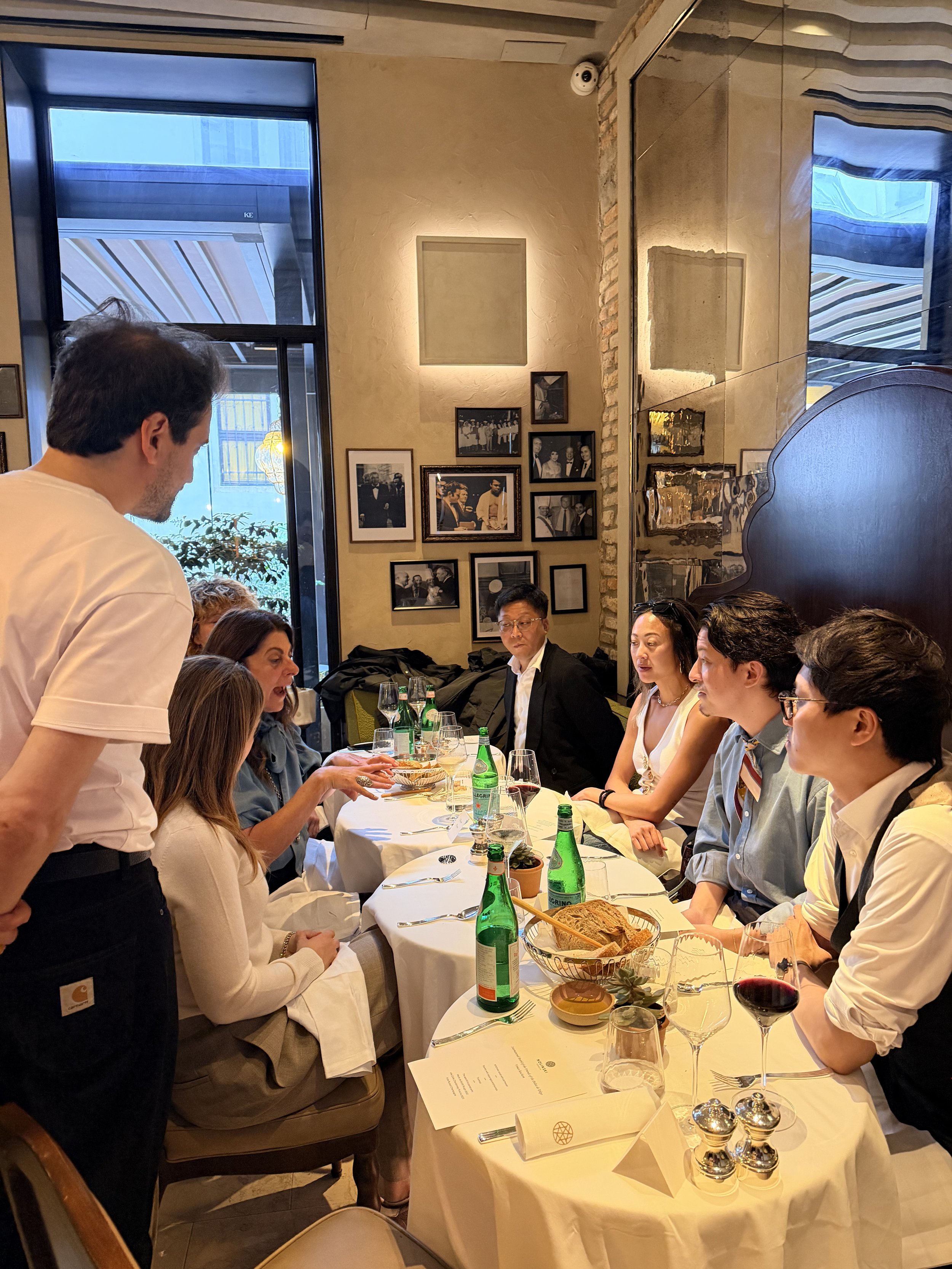
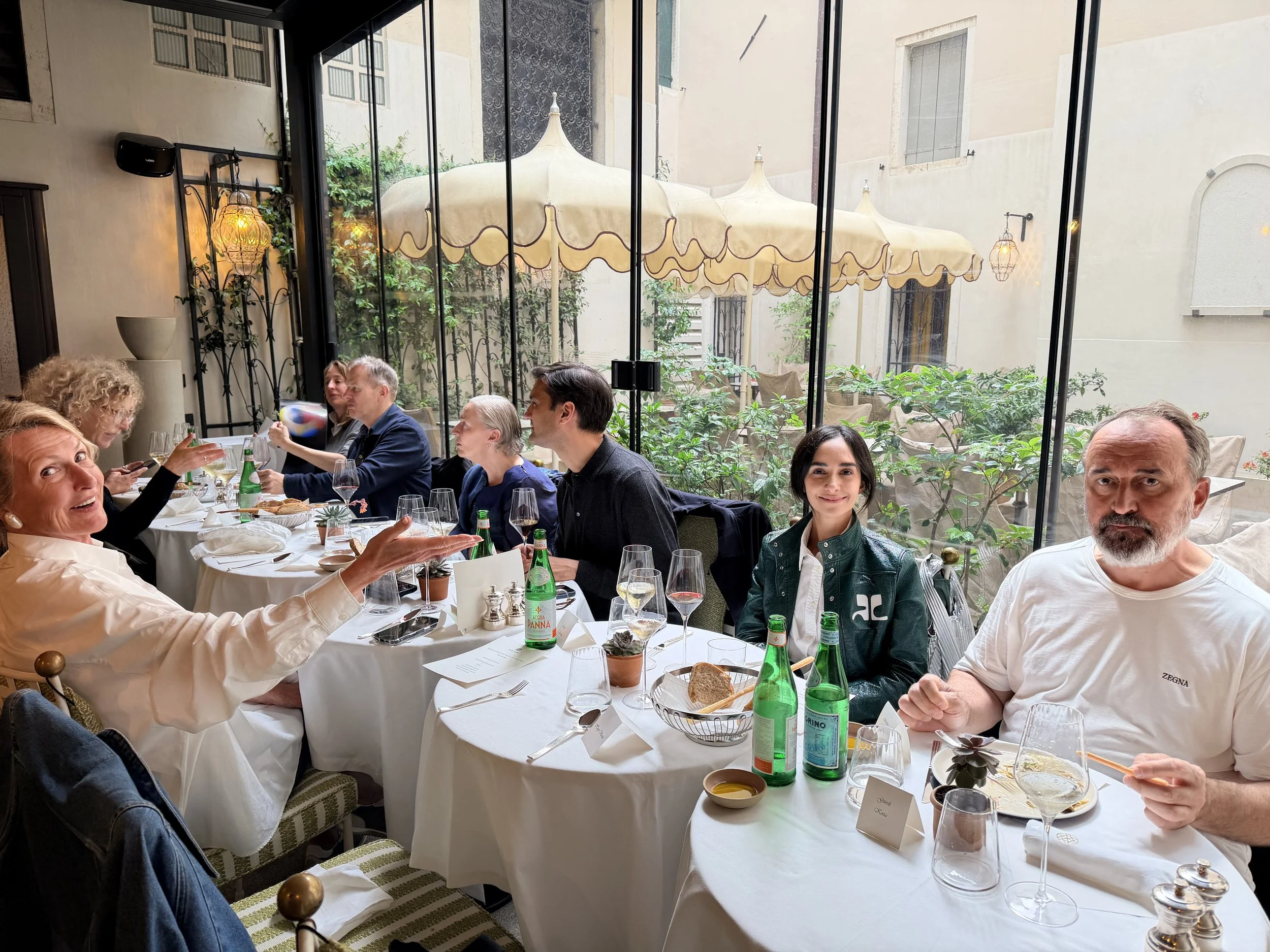
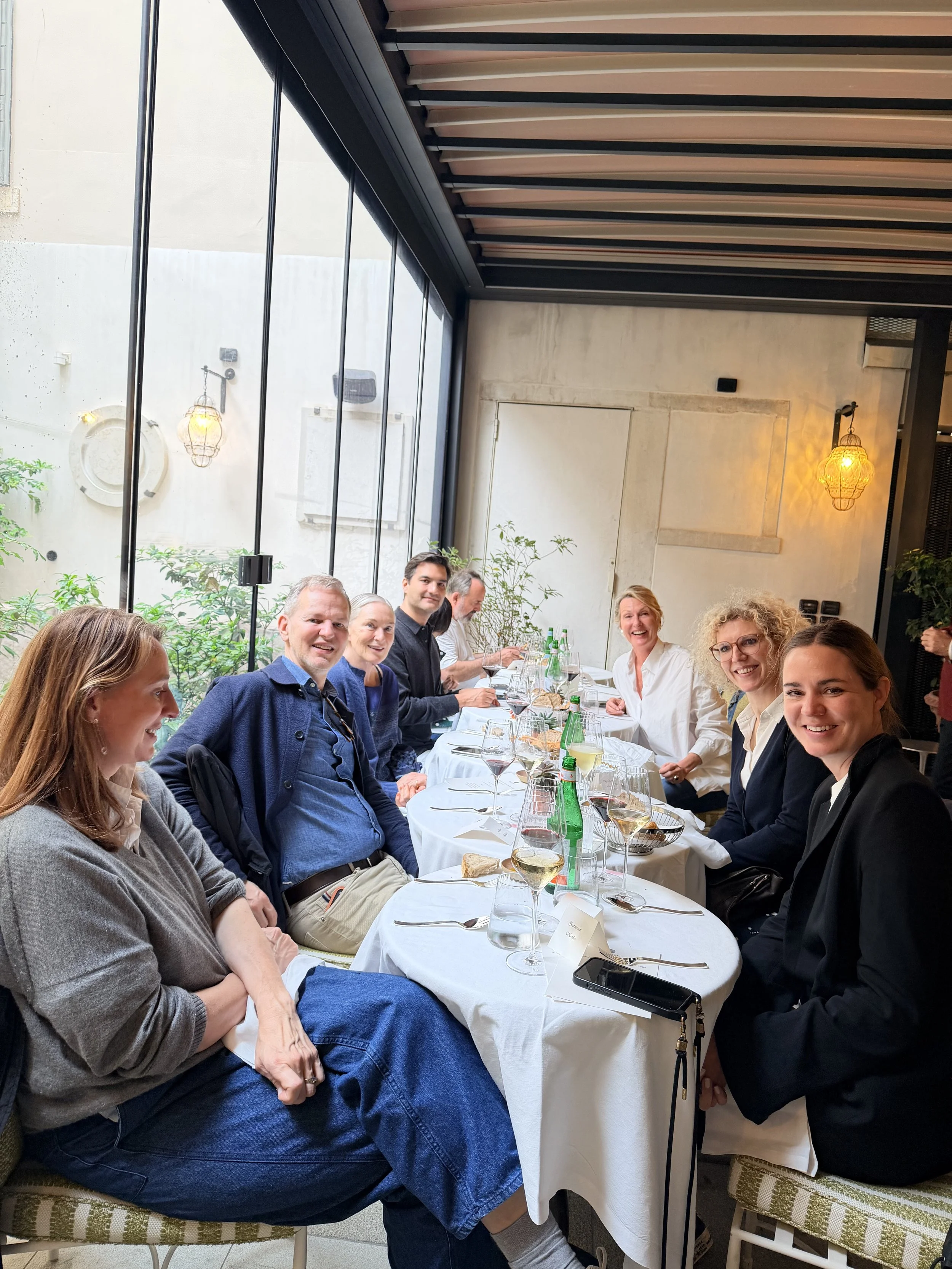
As we don’t change our good habits, the friends of the Palais de Tokyo hosted a festive luncheon at the Nolinski with all our friends and the team of the Palais de Tokyo. It was lovely to see so many members present and we were delighted to have the artist Charles-Joseph de Ligne with us who prepared a lovely gift for each and everyone of you.
Arsenale with Guillaume Désanges
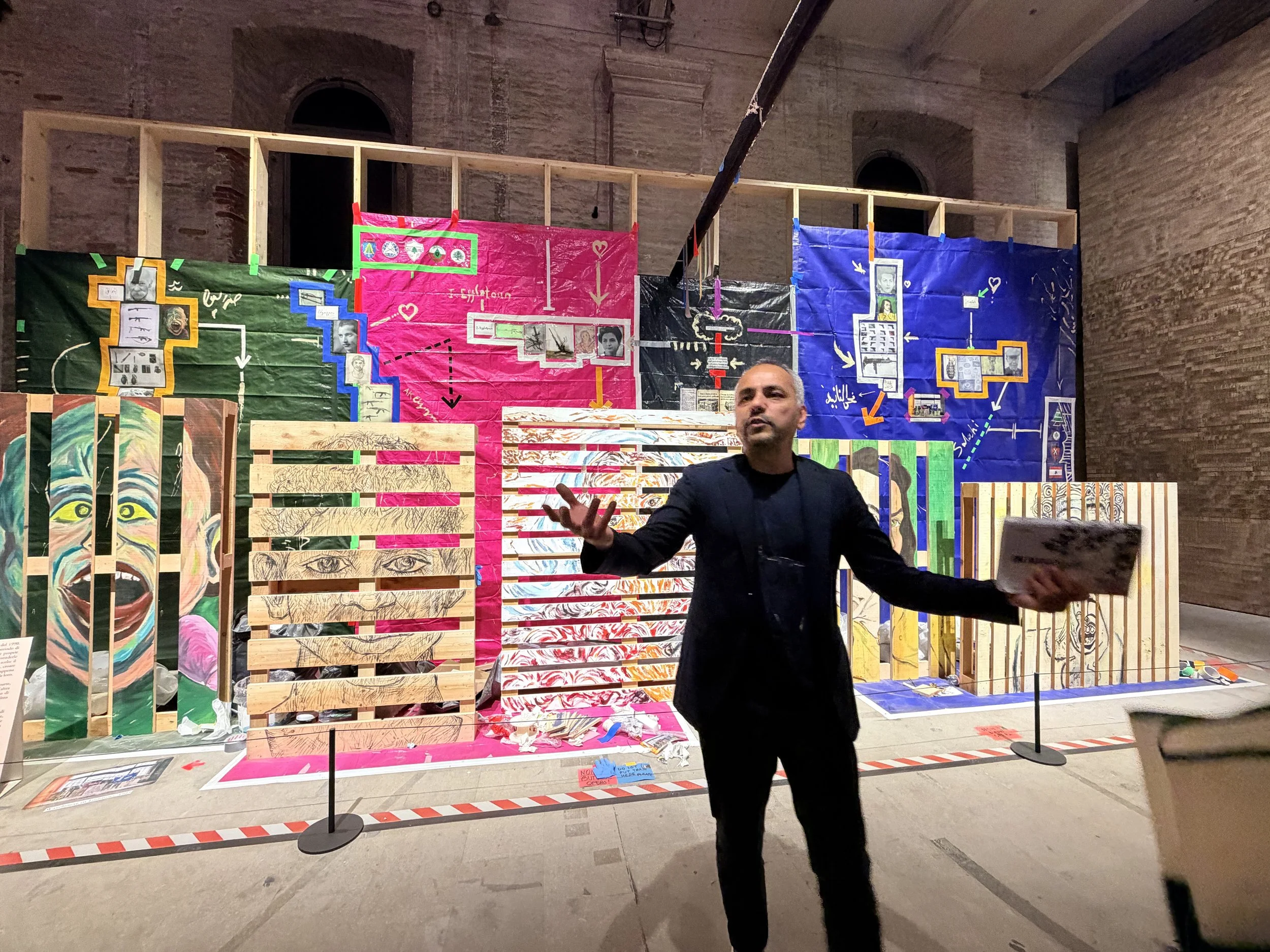
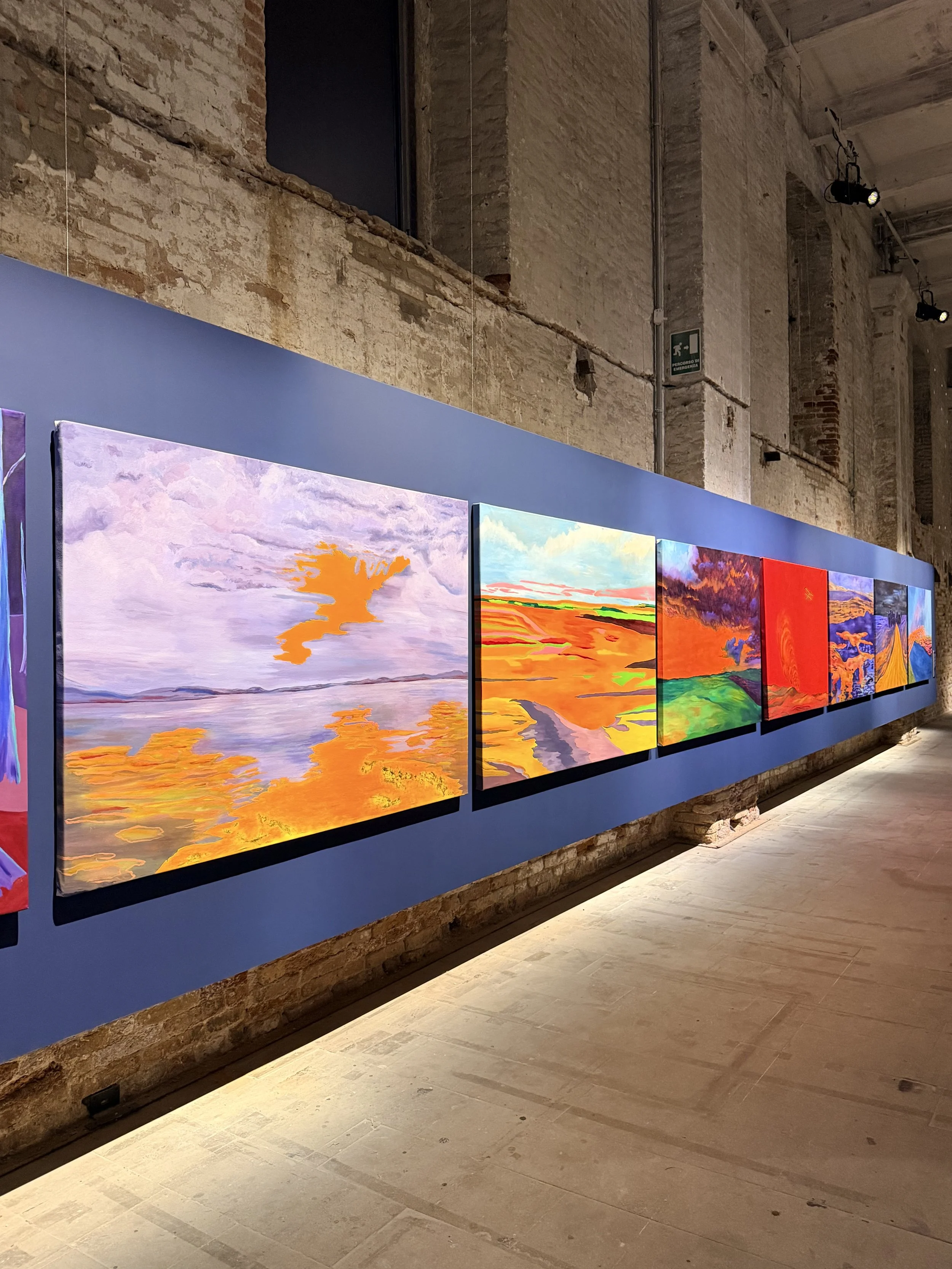
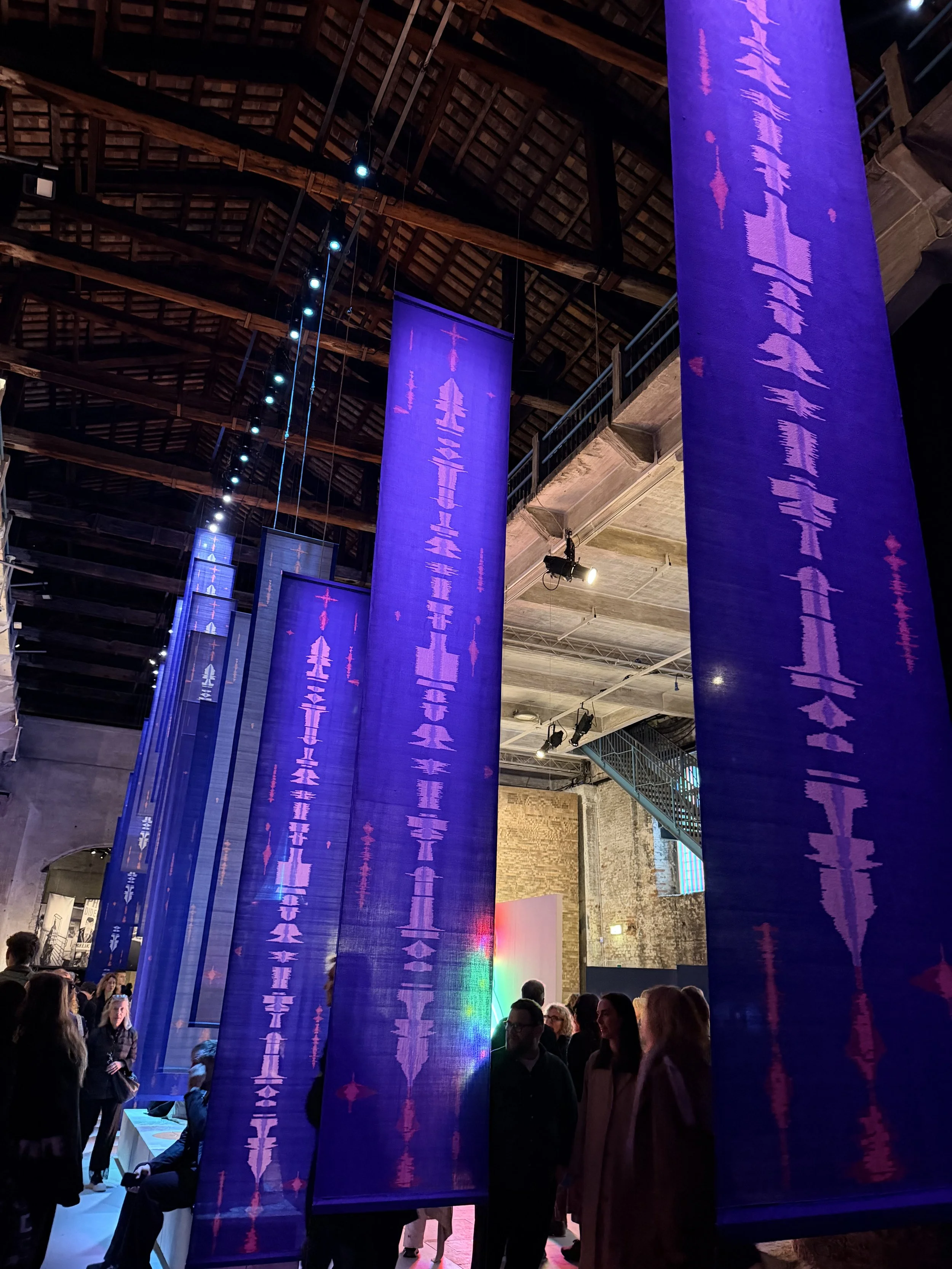
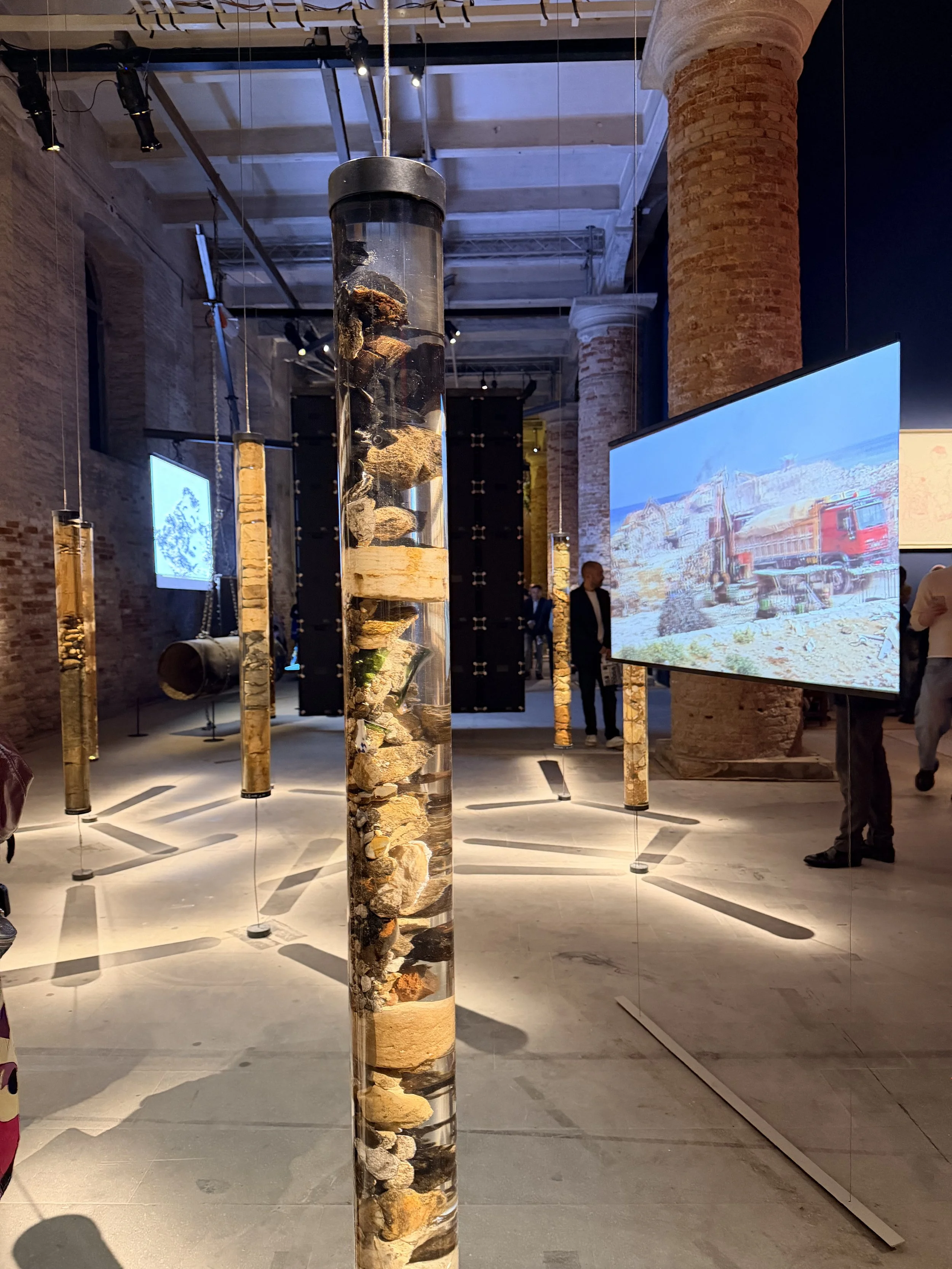
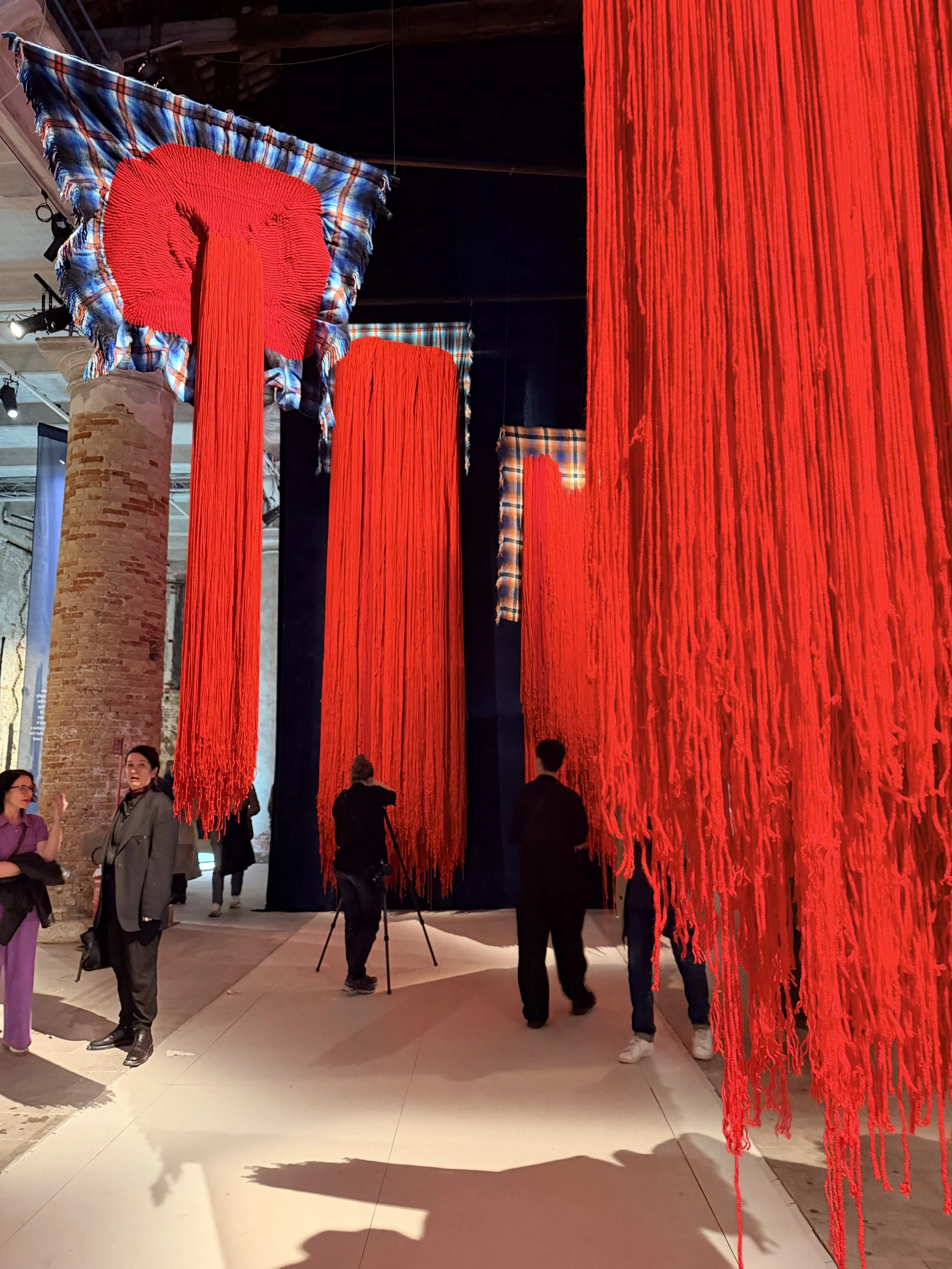
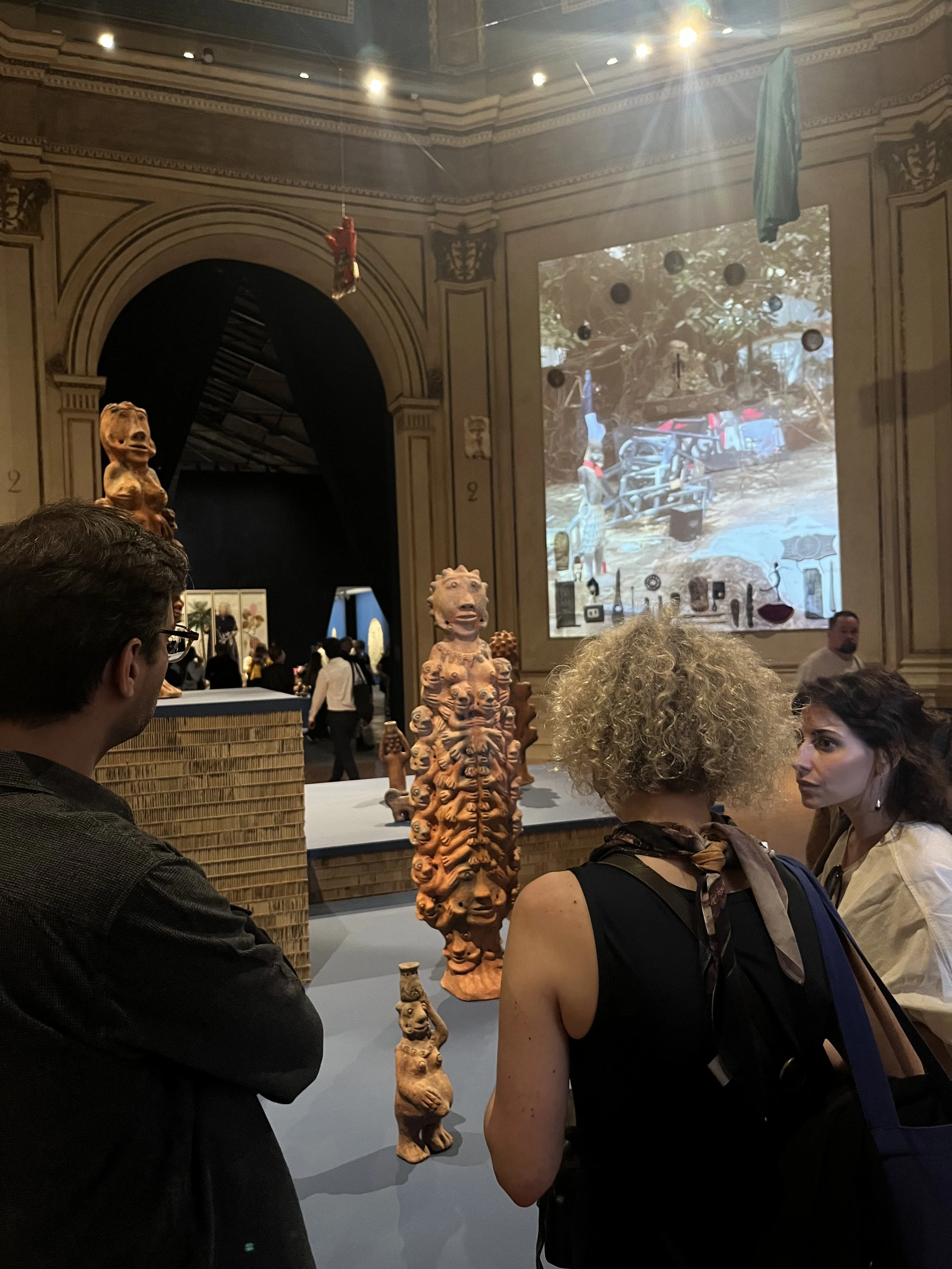
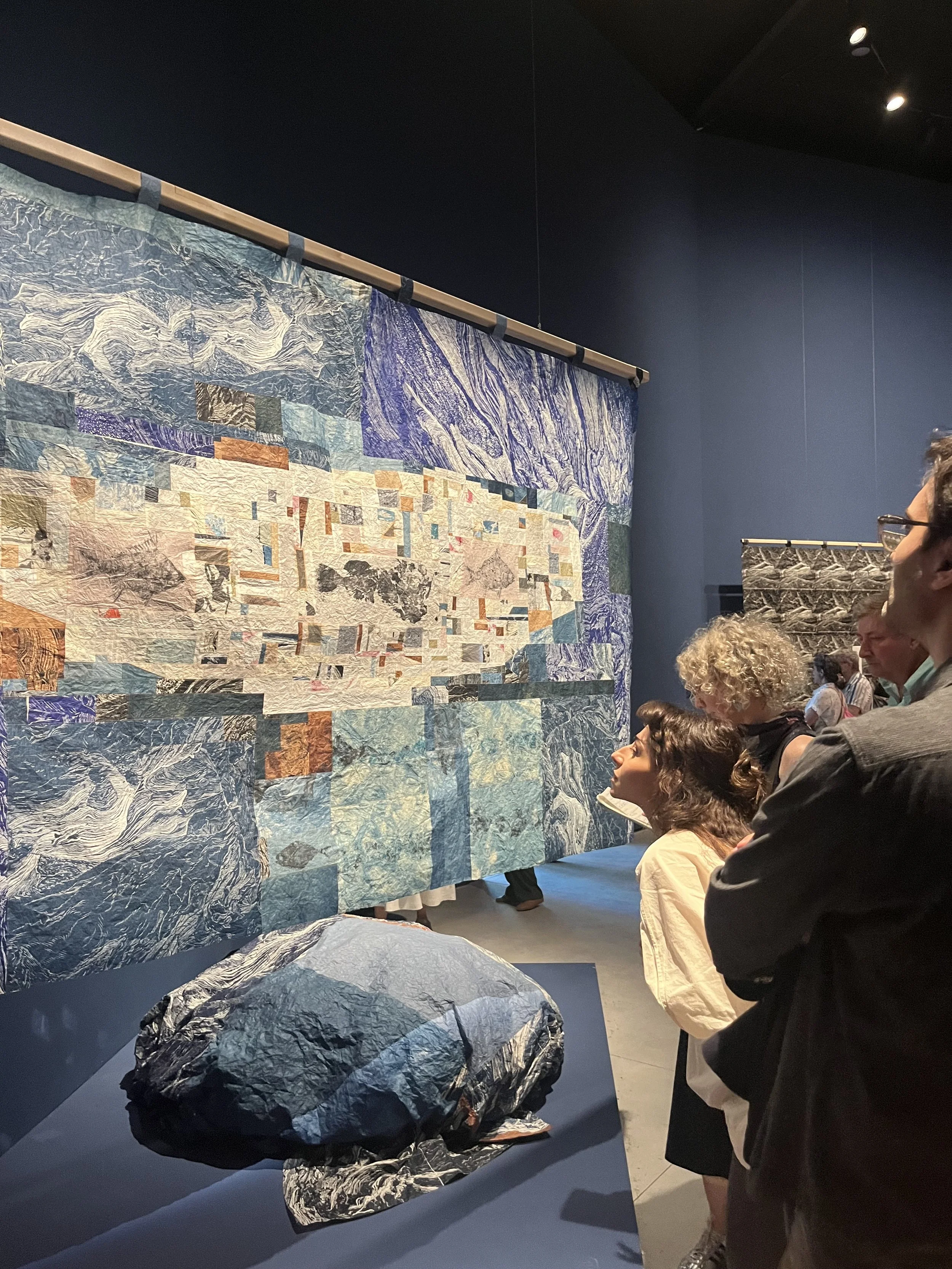
After our lunch and a digestive walk to the Arsenale, we met with Guillaume Désanges for an extensive tour of the main exhibition of this edition of the Venice Biennale; In Minor Keys by the late Koyo Kouoh. The exhibition explores attunement, slowness, and listening as political and sensory practices, using the metaphor of musical minor keys to hold together grief, memory, resistance, and healing.
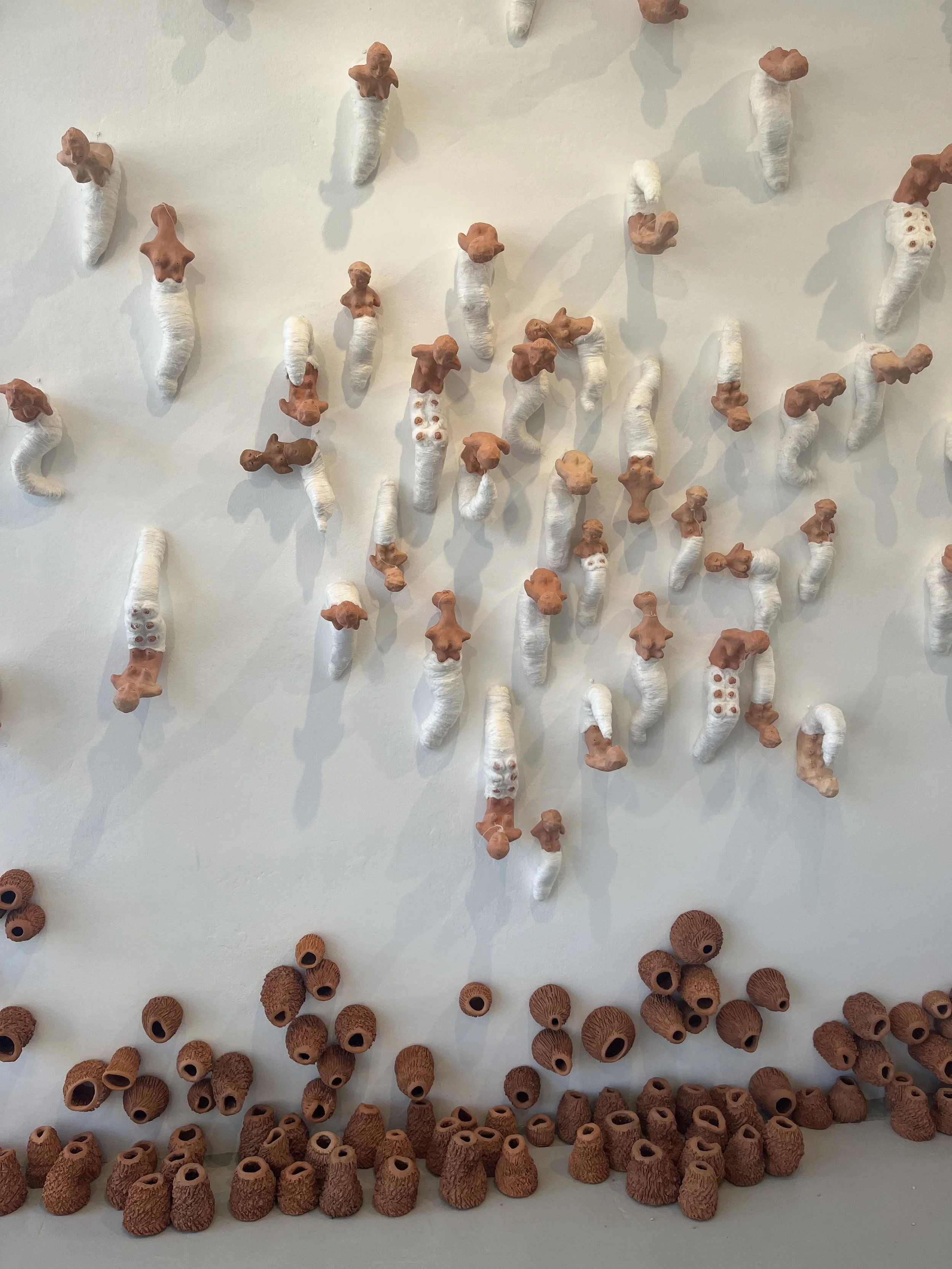
Guillaume walked us around his favourite works and artists. It was an opportunity to discover, rediscover and be amazed by a multitude of artists from all around the world whom in some cases already worked with Guillaume or the Palais de Tokyo.
Exploring the Biennale under the sun
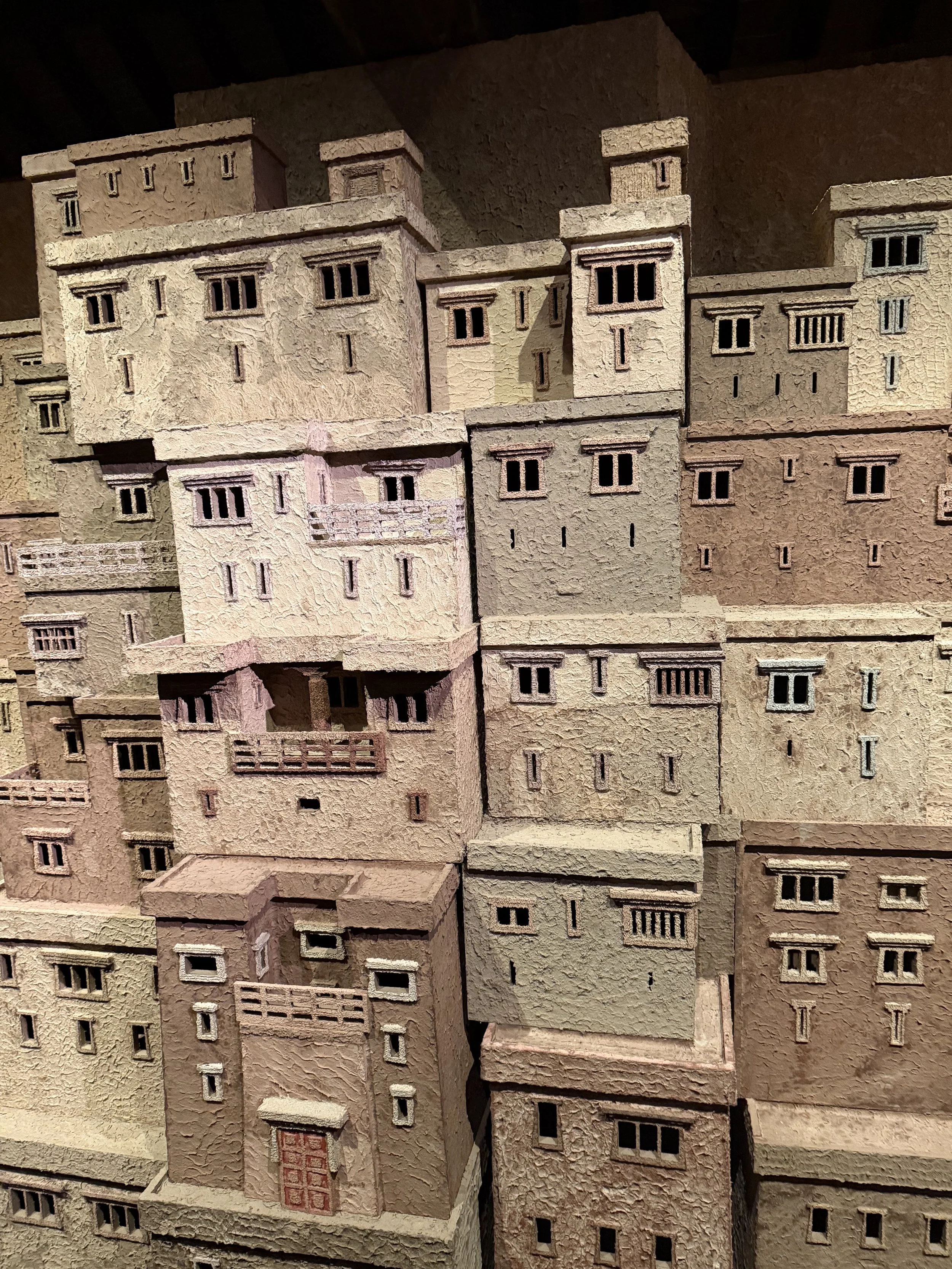
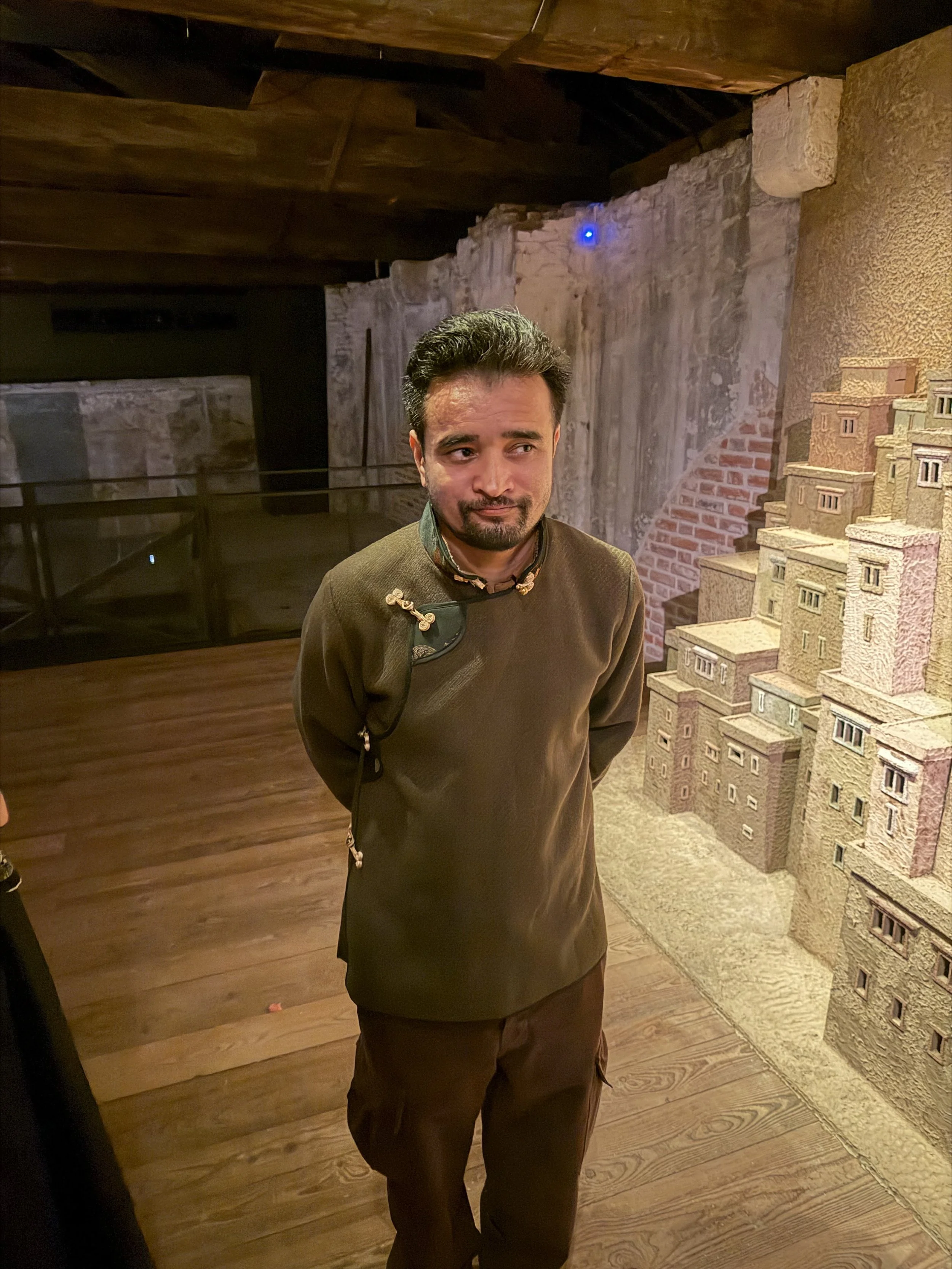
On our third day, the sun finally decided to join us on our visits! And what better way to start than with our beloved Amin Jaffer who walked us around the outstanding Indian pavilion, a personal highlight for me and many others I am sure. The pavilion offered us a special collective exhibition of 5 artists reflecting on the idea of home as something shifting, emotional, and carried across distance rather than fixed in place.
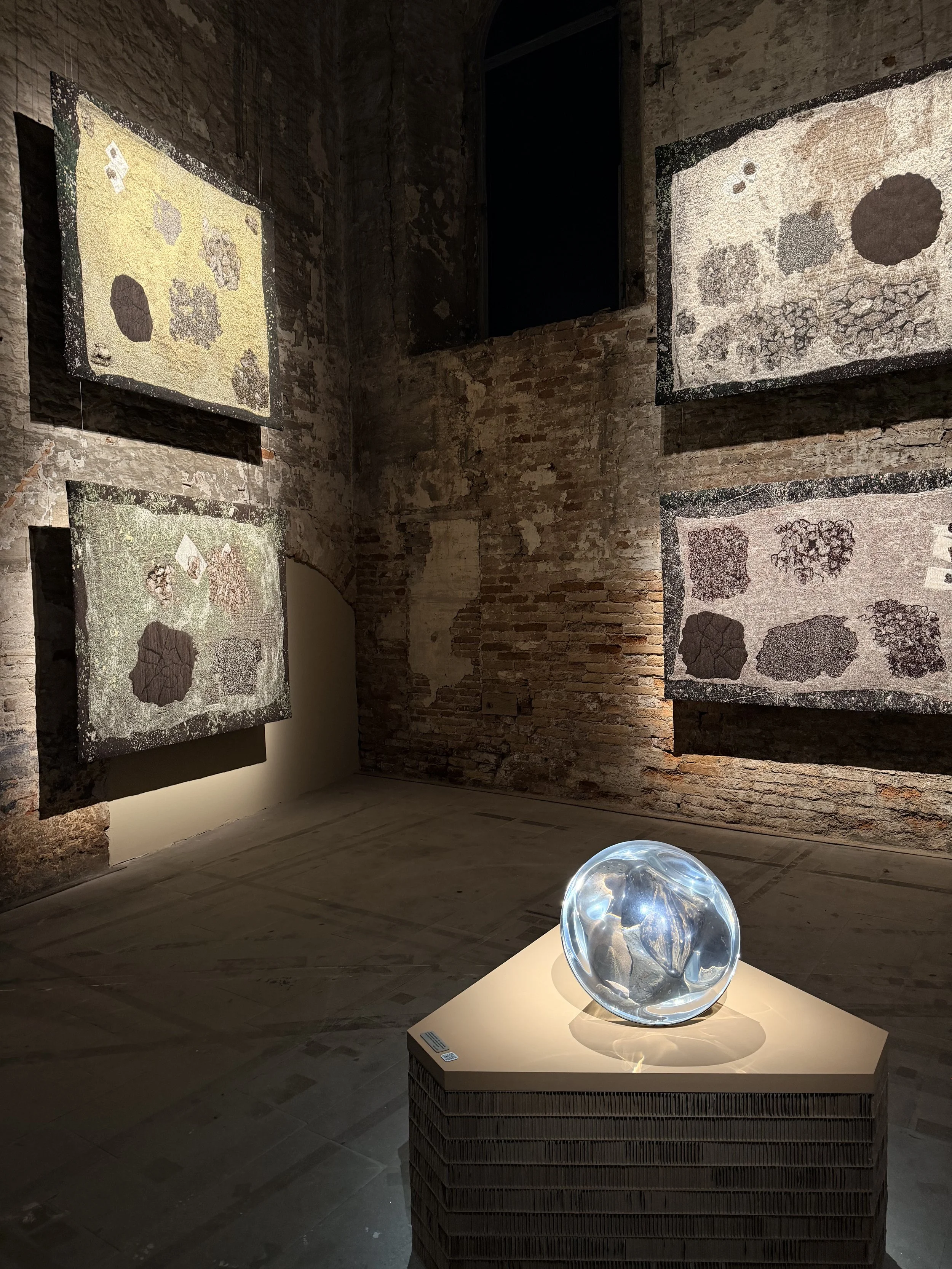
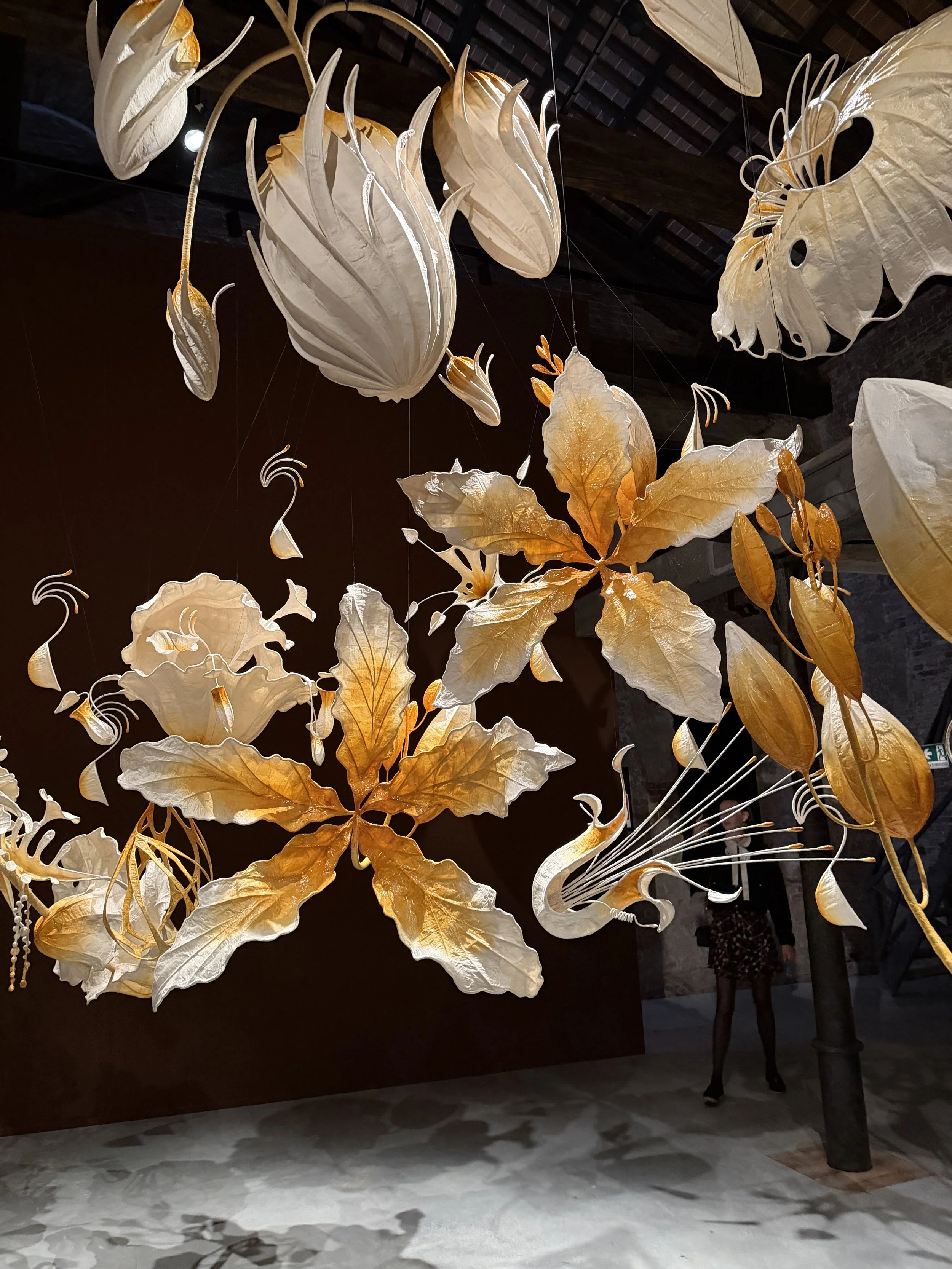
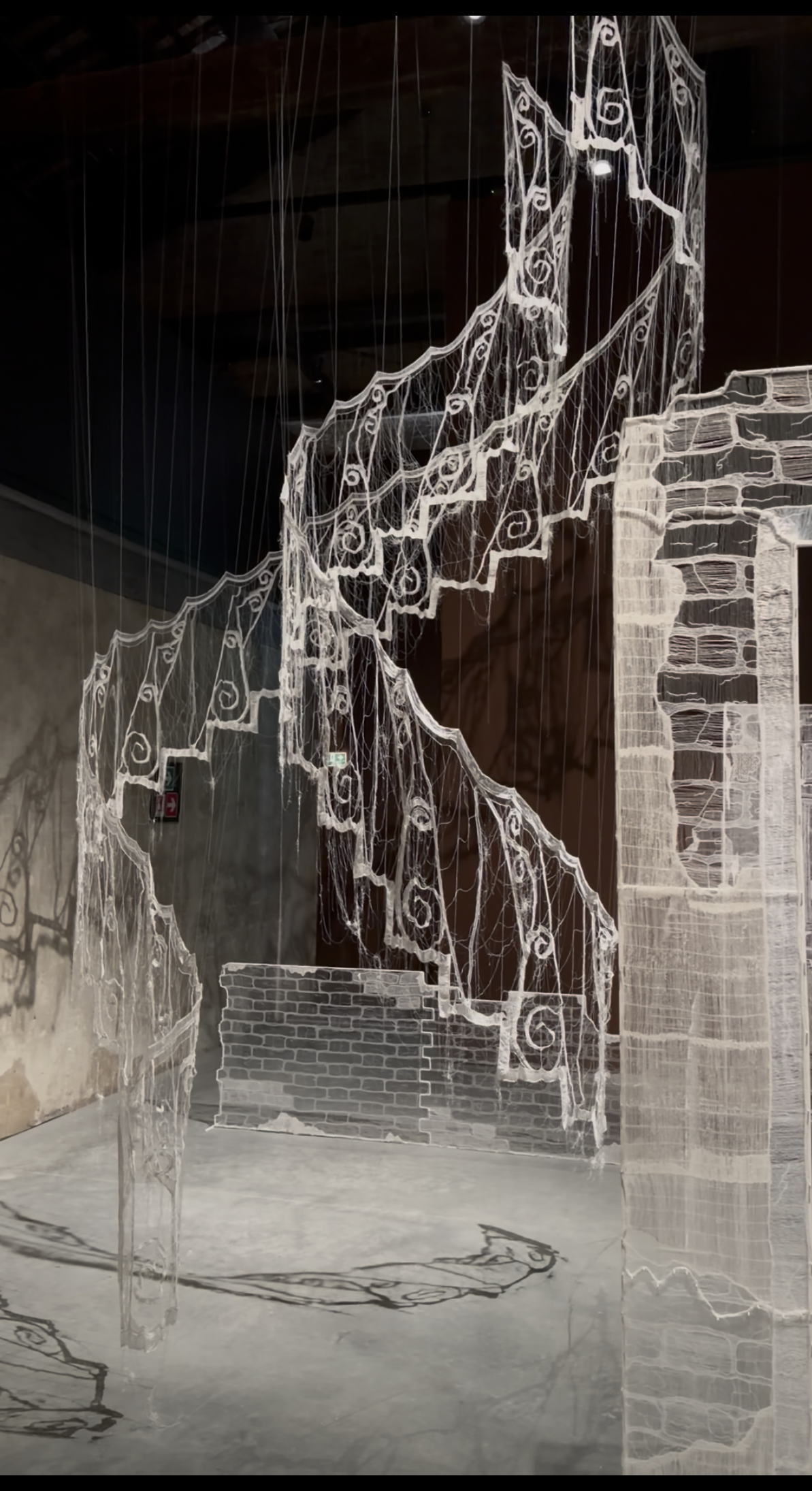
I was personally moved by the work of Sumakshi Singh who shares the idea that home is unstable, reconstructed each time through remembering, labor, and repetition. Her embroidery becomes a way of holding that instability together — a slow, bodily act that replaces permanence with care and fragility. Amin told us that here, the artist recreated the home of her childhood so that it still exists and not only in her memory. A similar idea particularily touched me in the work of Ranjani Shettar who presented a canva-like surface infused with earth and organic matter. The ground itself becomes image and medium — a slow record of landscape, erosion, and time, with the idea of territory as something lived rather than owned.
We then returned to the Giardini to meet with Peter Sit, curator of the Czech pavilion who so kindly introduced us to “The Silence of the Mole” by Jakub Jansa, an installation blending film, sculpture, and theatrical installation.
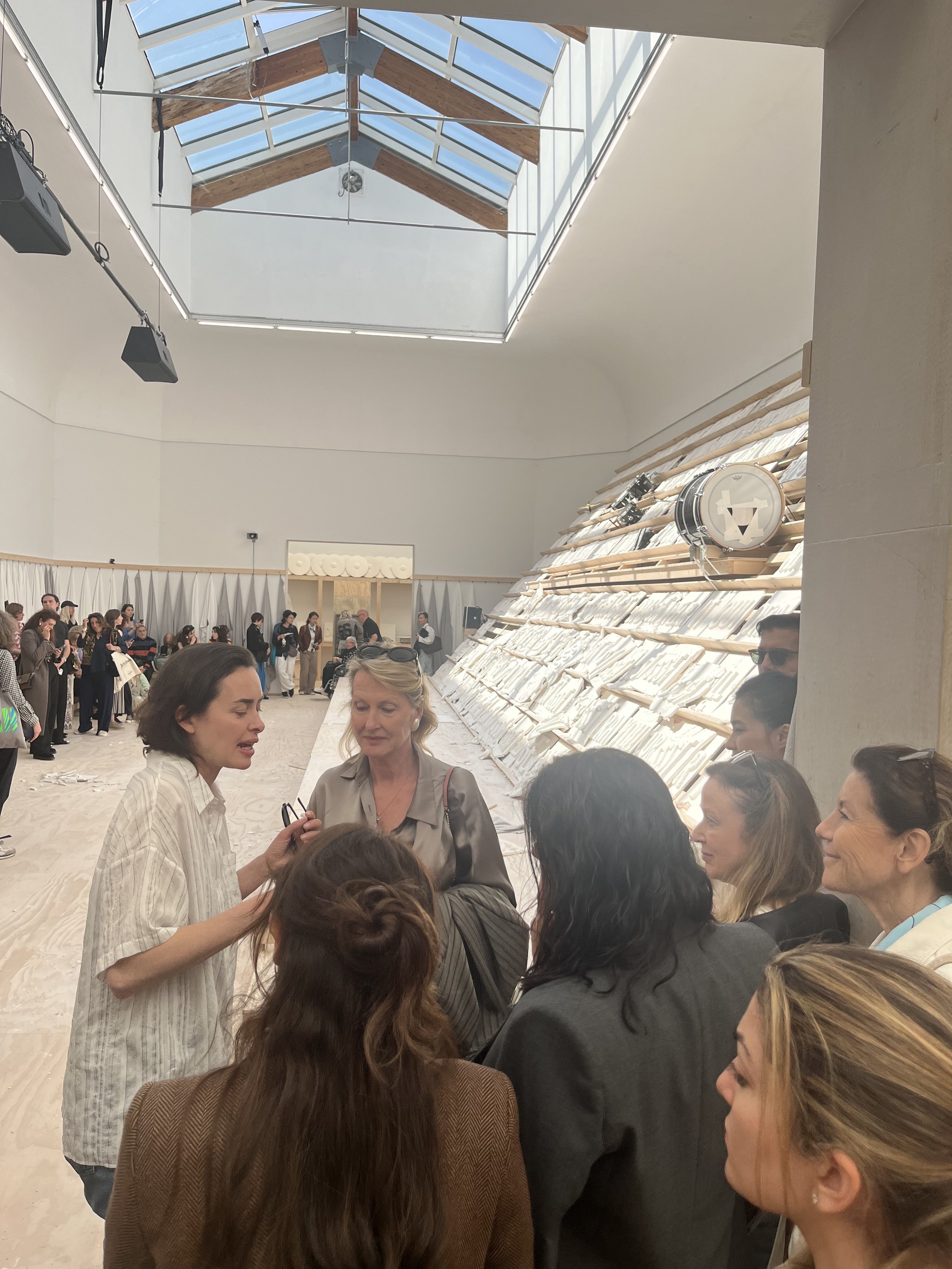
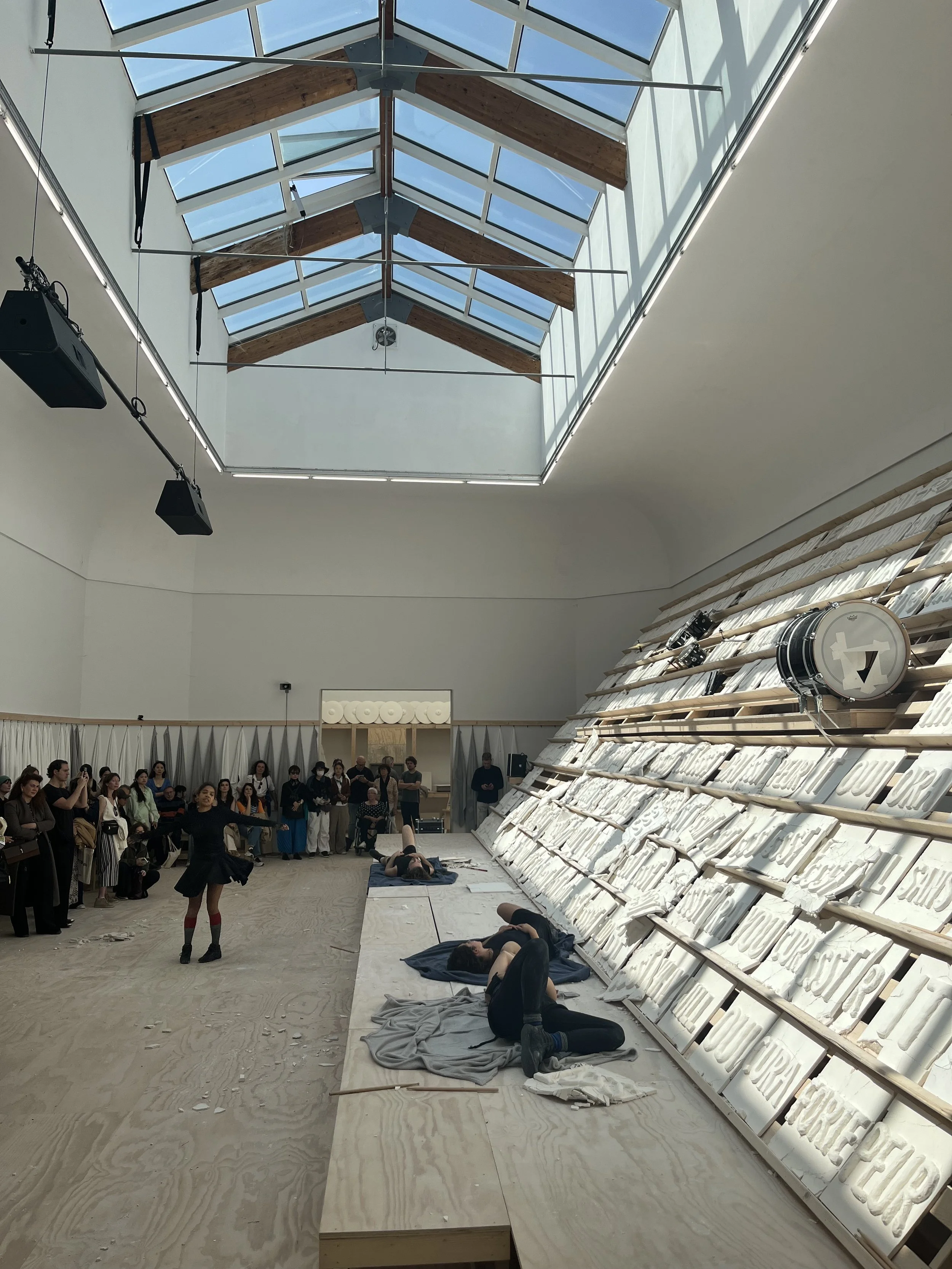
Our next stop was a special highlight as well. We were welcomed by Caroline Dumalin who introduced us to the very vibrant Belgian pavilion entitled It Never SSST which for the first time ever, held a performance by Miet Warlop as center stage. We were lucky to assist to one of the revolutionary live performances, a real burst of energy.
We finished off the morning with the beautiful Brazilian pavilion where our member Jessica Cinel stepped up and gave us an insightful introduction to the works of Rosana Paulino and Adriana Varejão whom she know well.
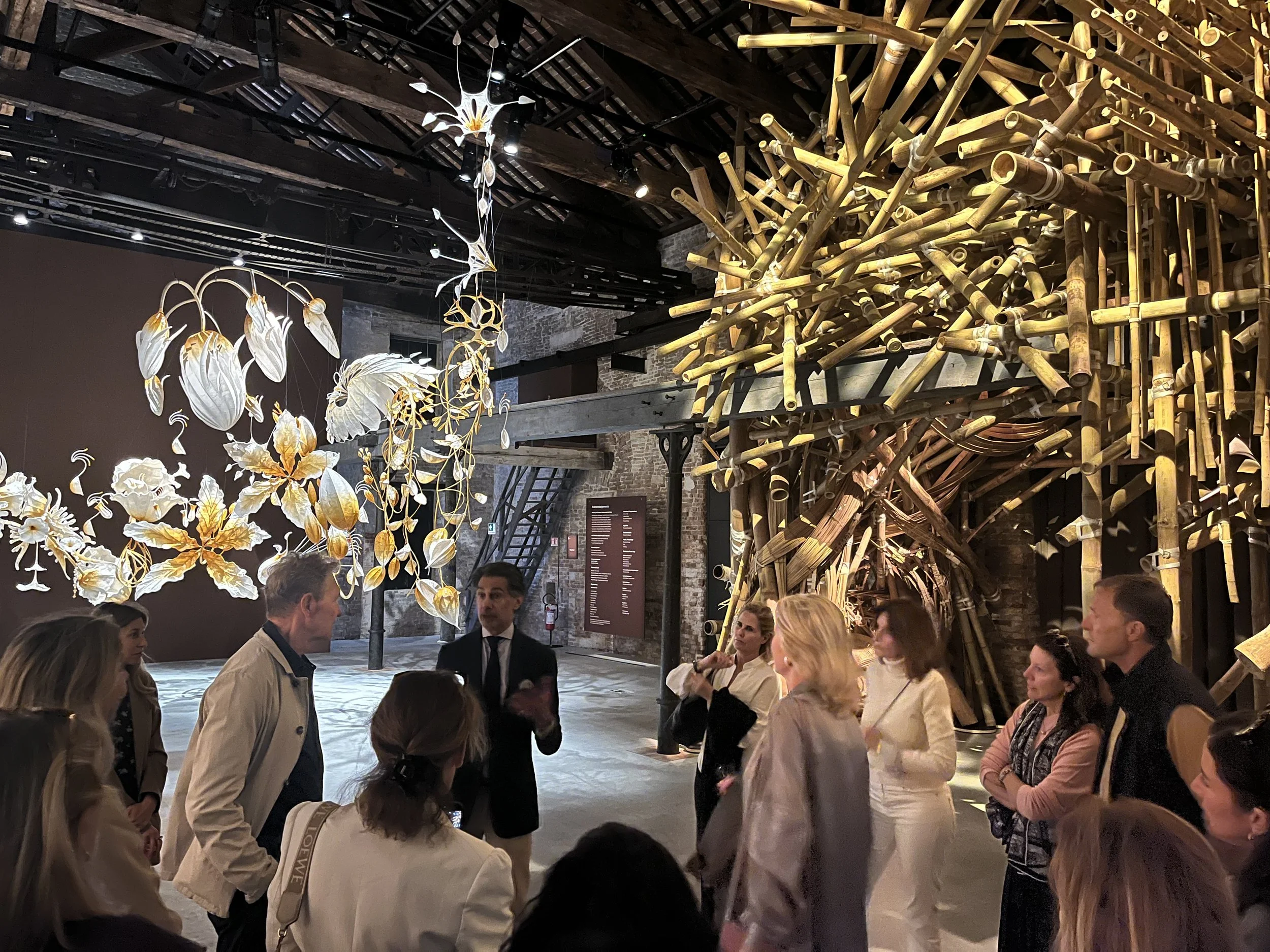
Our day ended with a private tour of the general pavilion by Daria de Beauvais. Daria carefully selected 12 artists and presented their work within the overall project of Koyo Kouoh.
Pinault’s Punta della Dogana & Palazzo Grassi
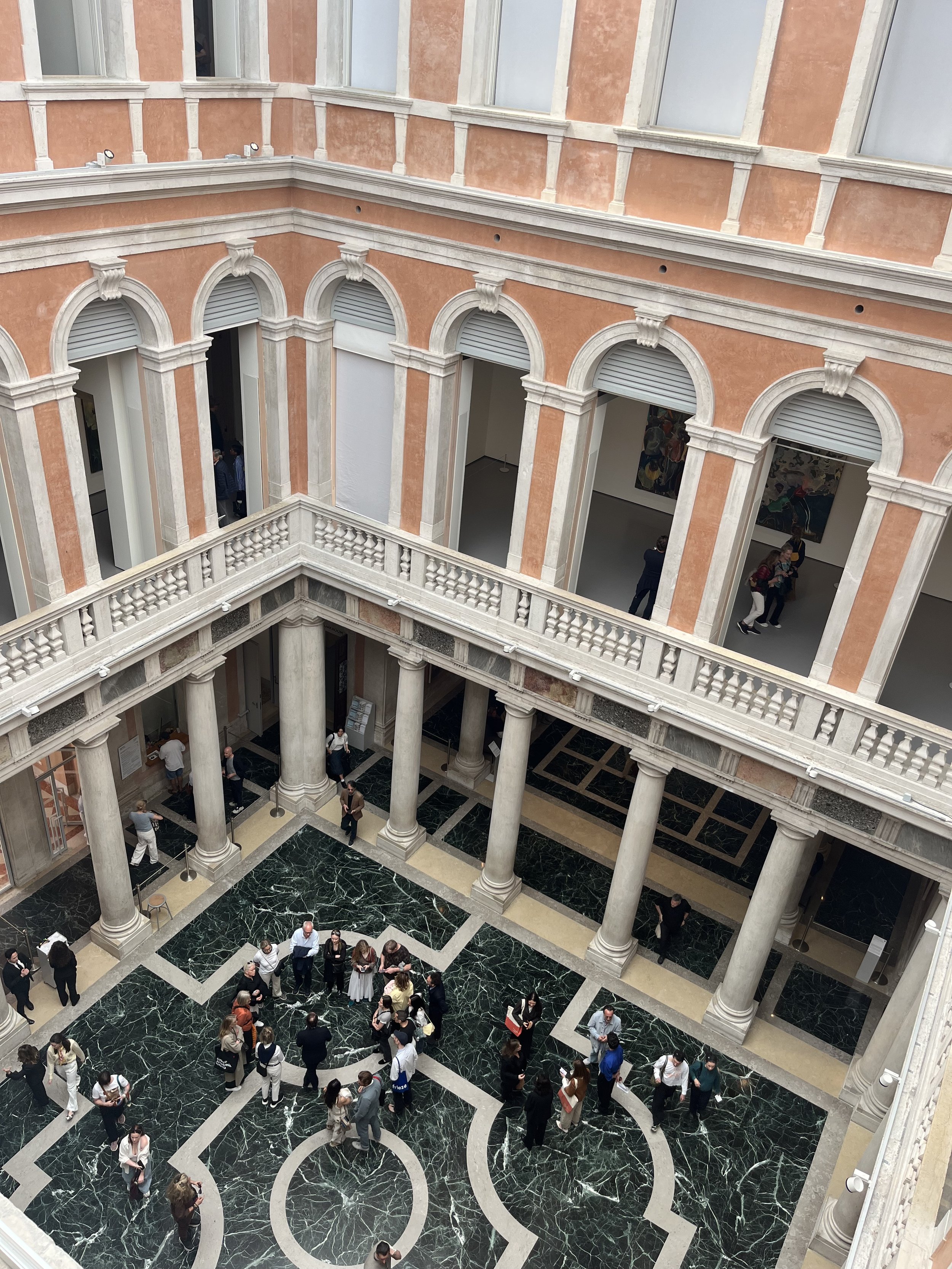
Our last morning was dedicated to Pinault’s most beautiful Venetian institutions - Punta della Dogana and Palazzo Grassi.
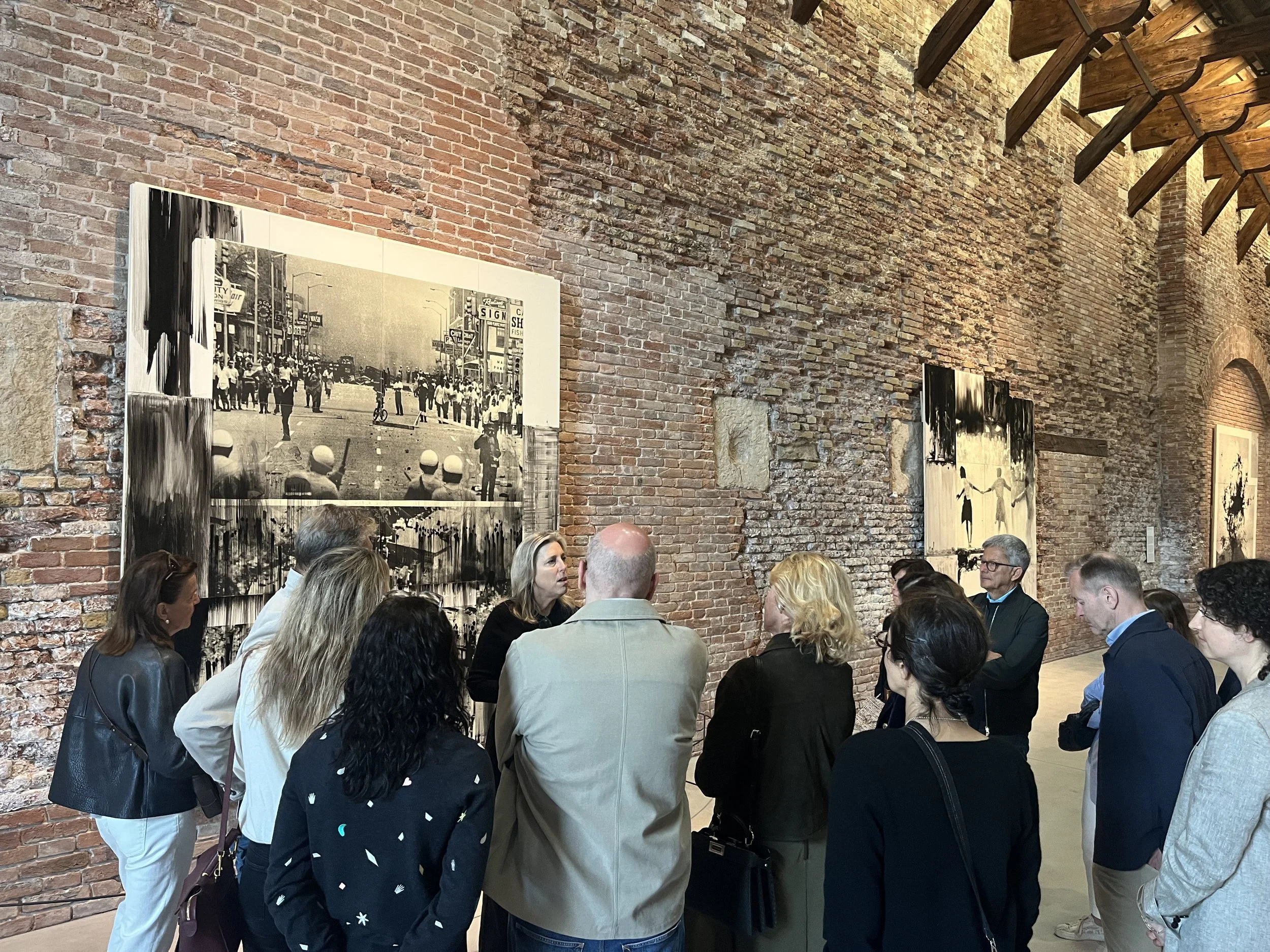
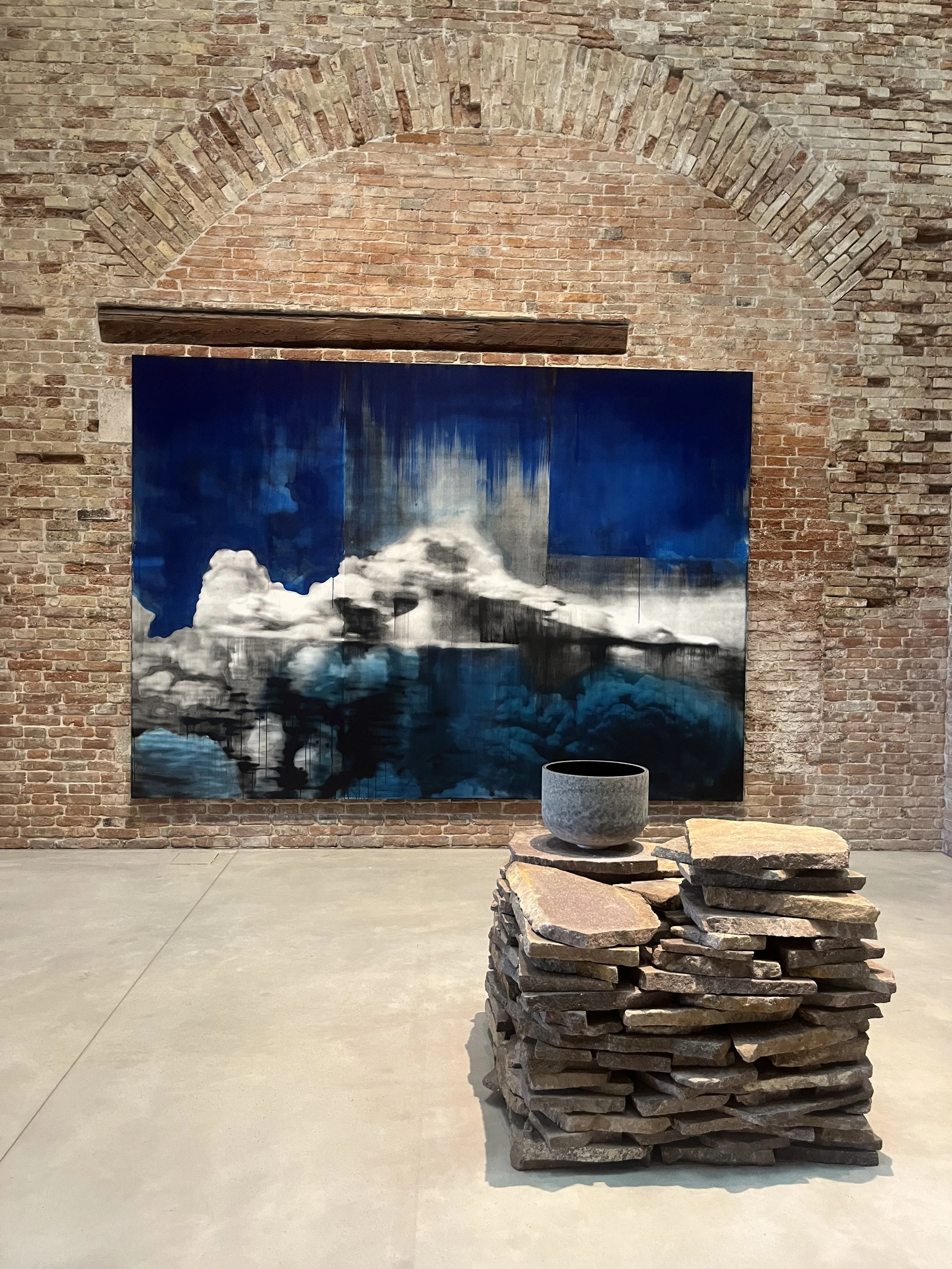
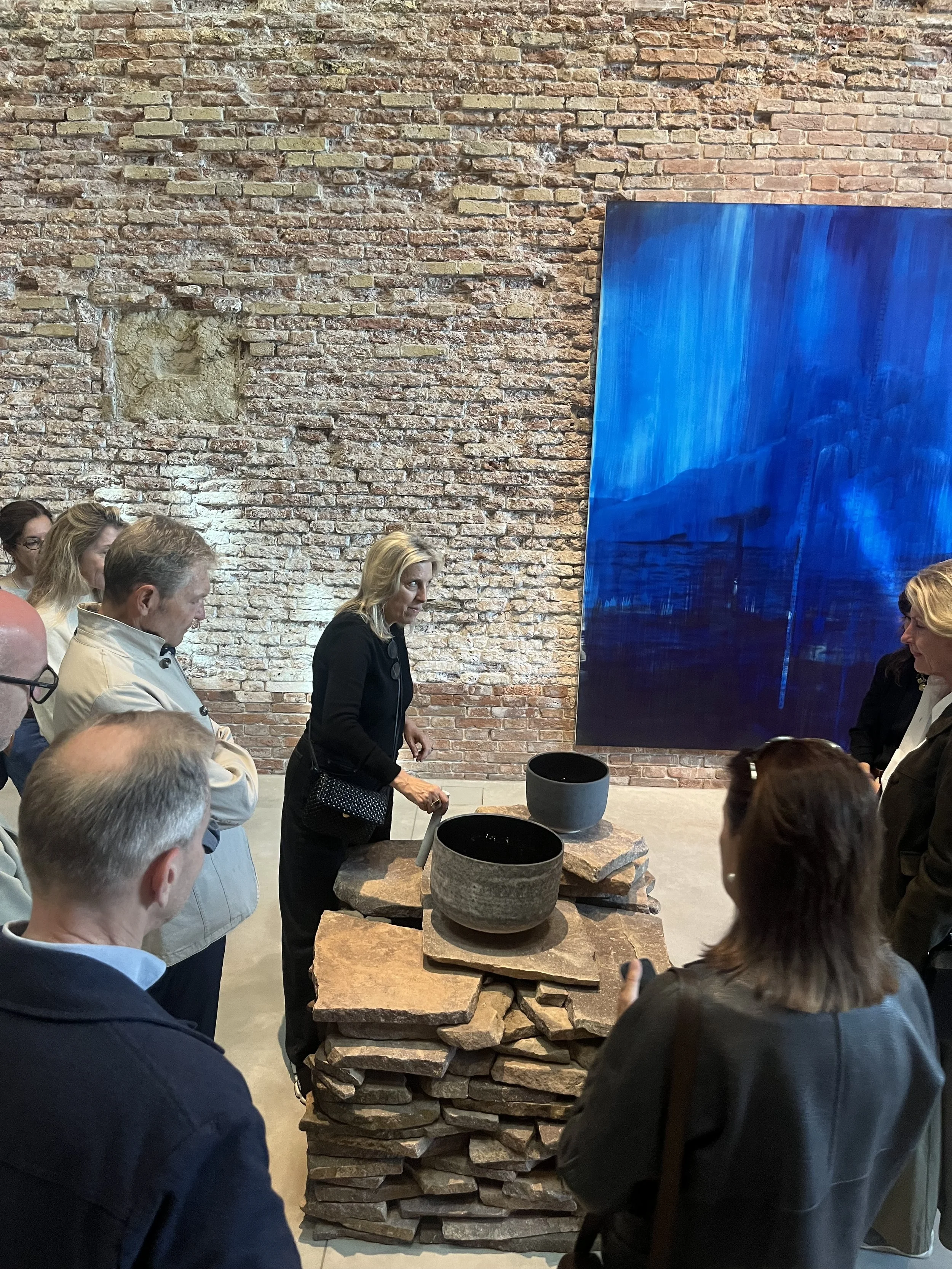
We were first received by Emma Lavigne who gave us such a thorough visit of Lorna Simpson’s wonderful exhibition despite her broken voice… This was one of the strongest collateral shows of the Biennale, Lorna’s work transforms archival imagery, fragmented bodies, and icy landscapes into a haunting meditation on memory, race, gender, and erasure.
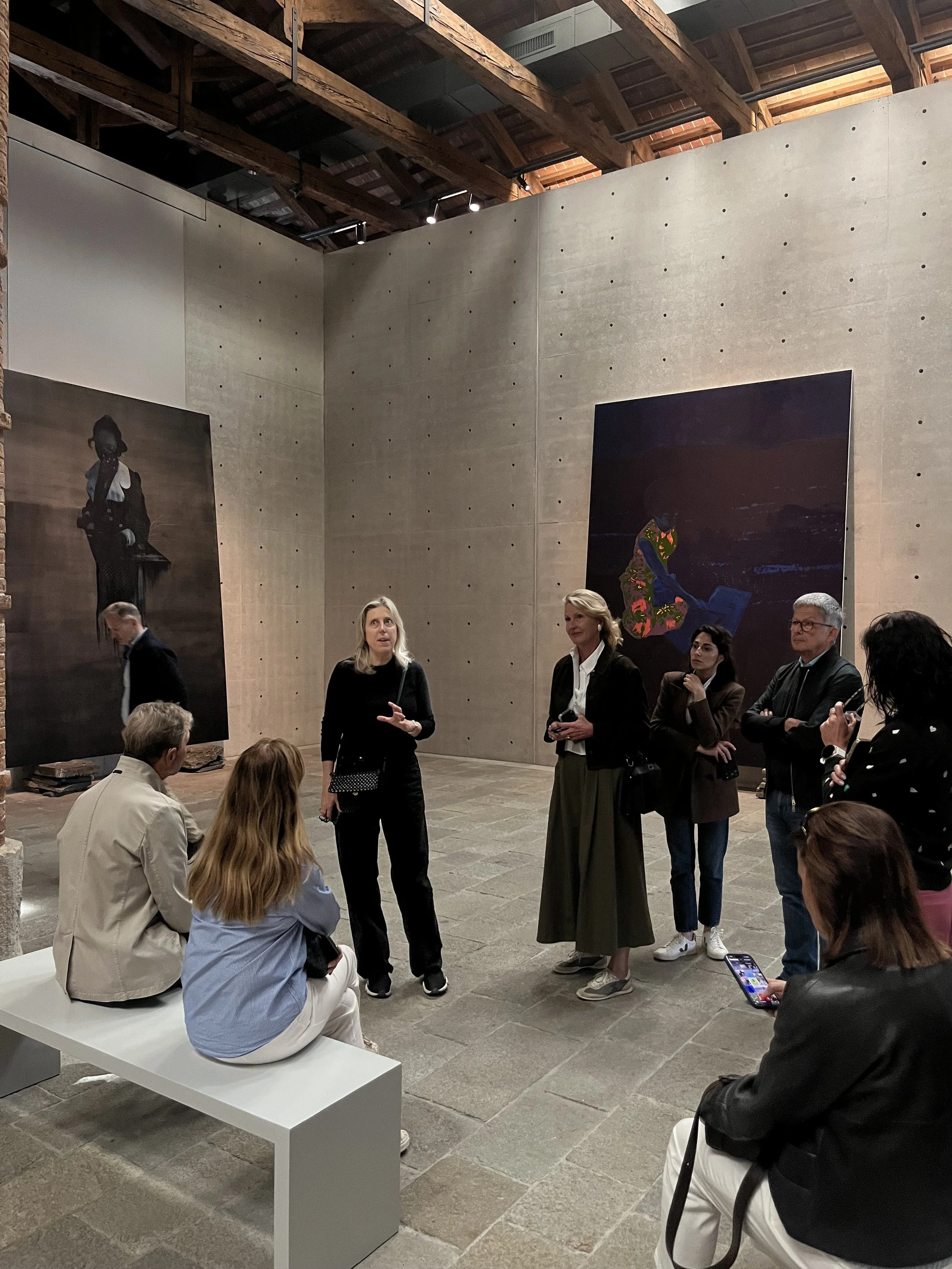
The Michael Armitage exhibition at Palazzo Grassi was our next stop. Curator Jean-Marie Gallais welcomed us and introduced us to this emotionally charged exhibition bringing together monumental paintings that merge East African politics, mythology, and personal memory into dense, dreamlike scenes.
An institutional afternoon
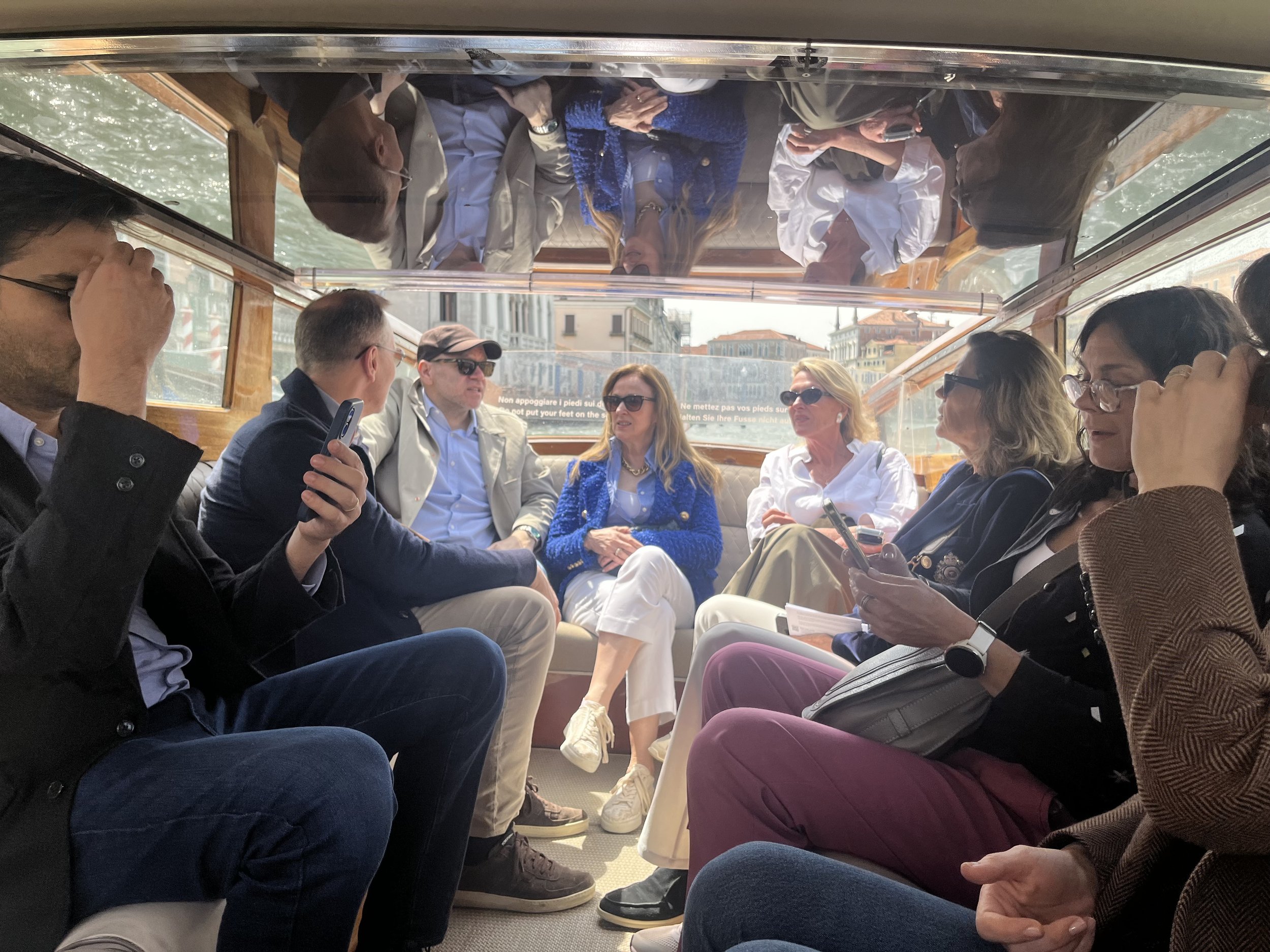
After a lovely lunch at one of my favourite restaurant - AcquaPazza, we boarded our private boat towards two newly opened foundations; AMA Venezia and Palazzo Diedo.
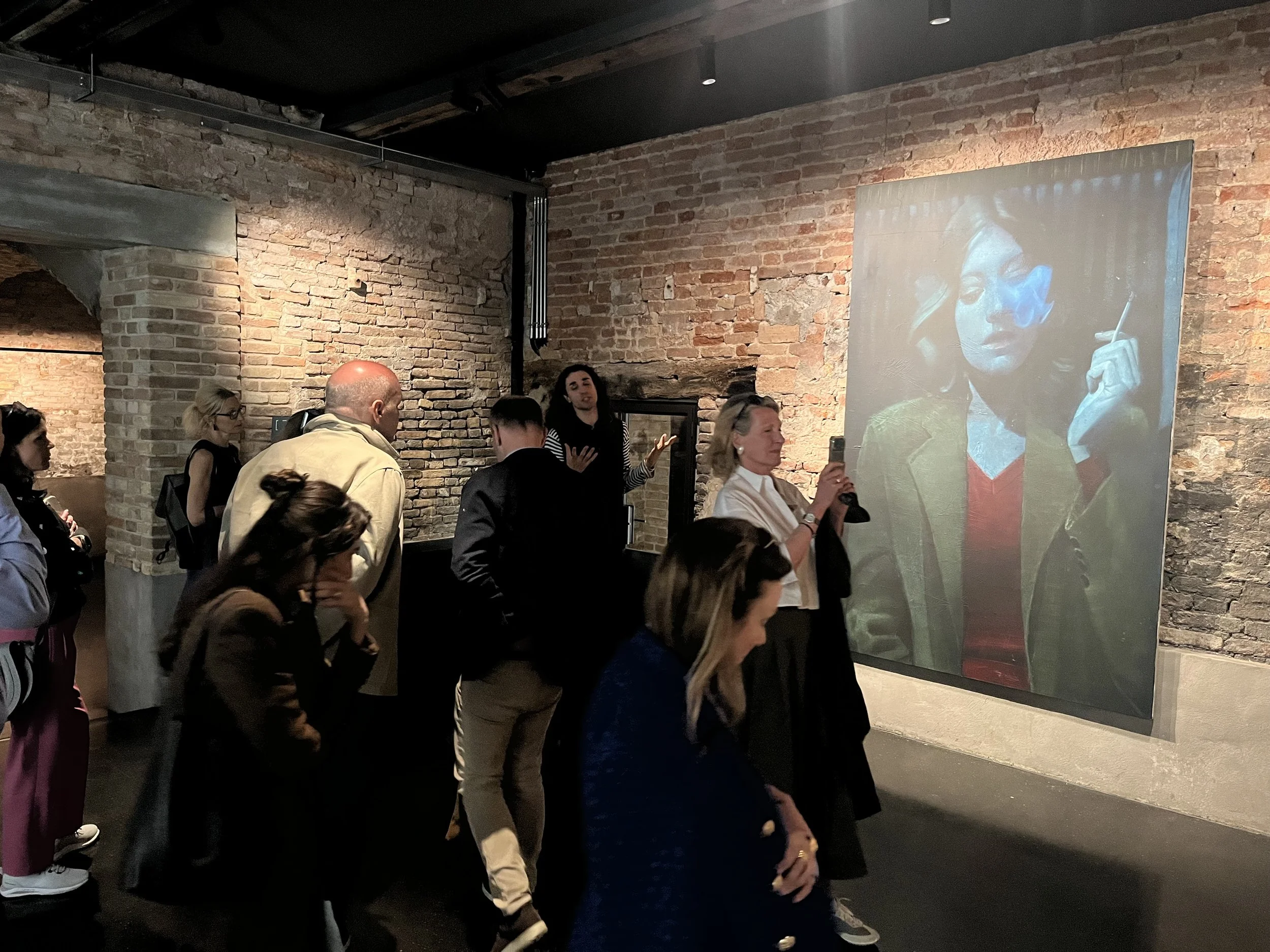
AMA Venezia, Laurent Ascher’s newly opened exhibition space, presented a group exhibition with remarkable artists such as Ed Ruscha, Jenny Saville, Tino Sehgal, Arthur Jafa, Richard Serra, and Christopher Wool in a quiet and typically venetian environment.
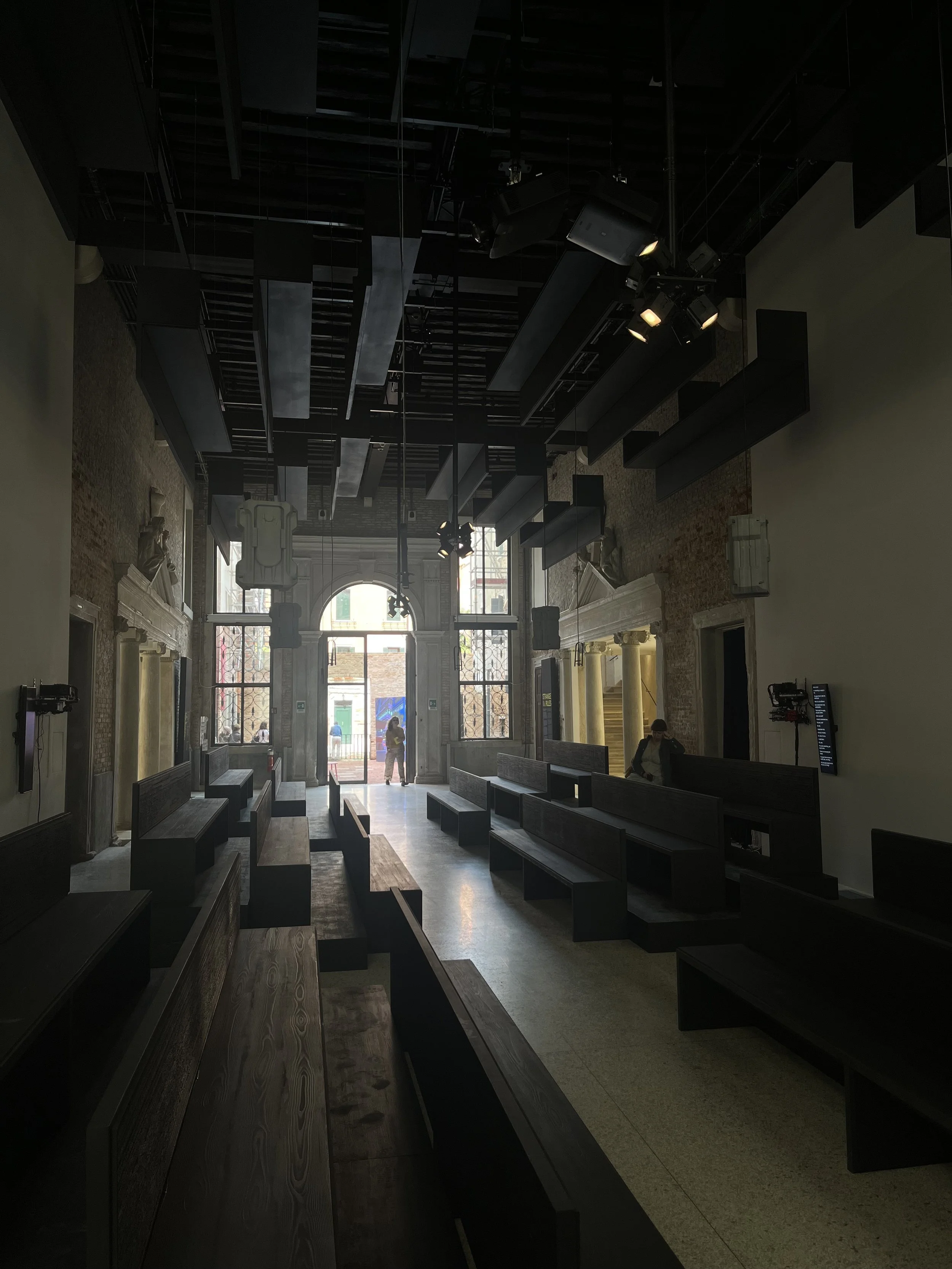
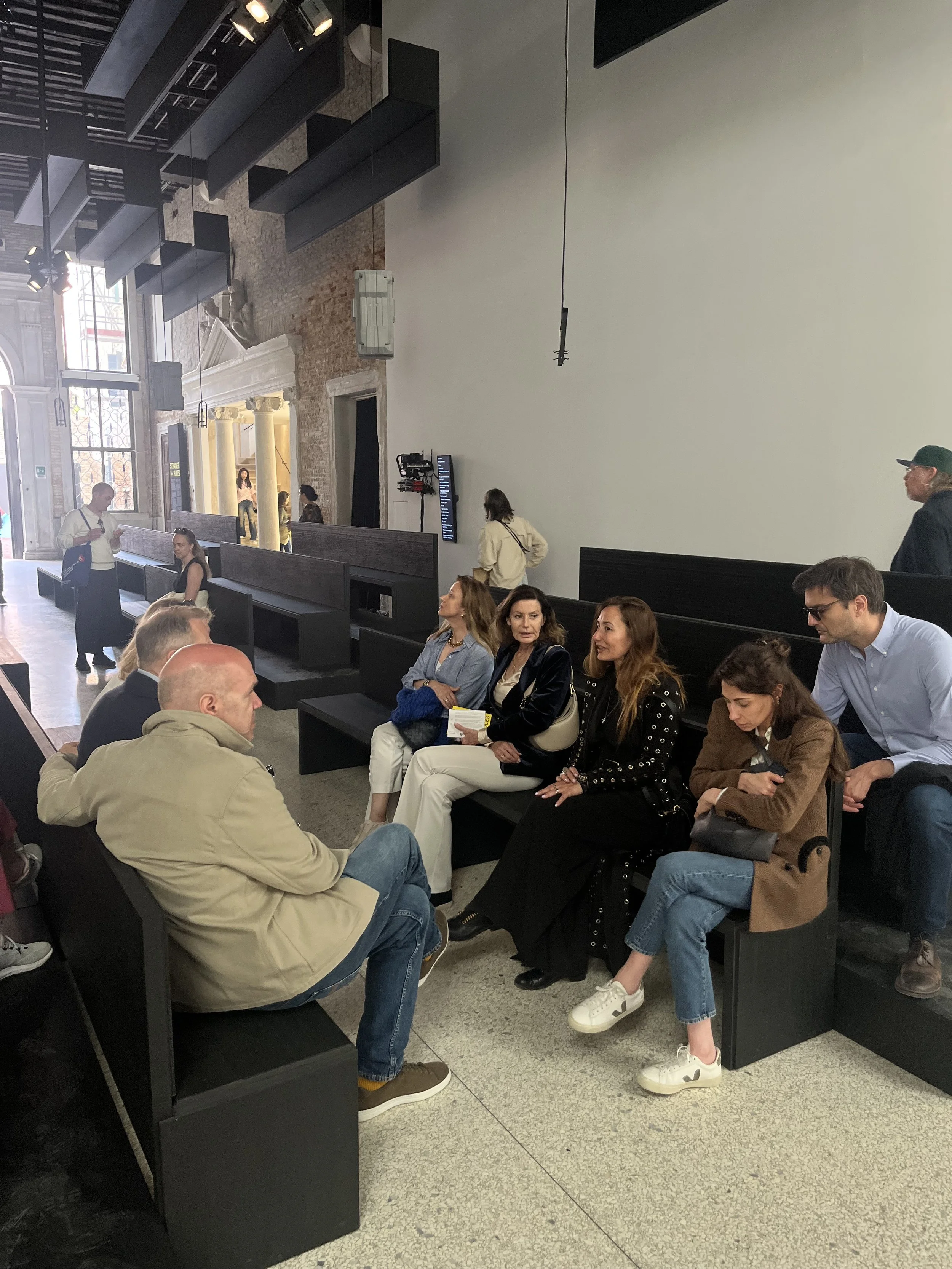
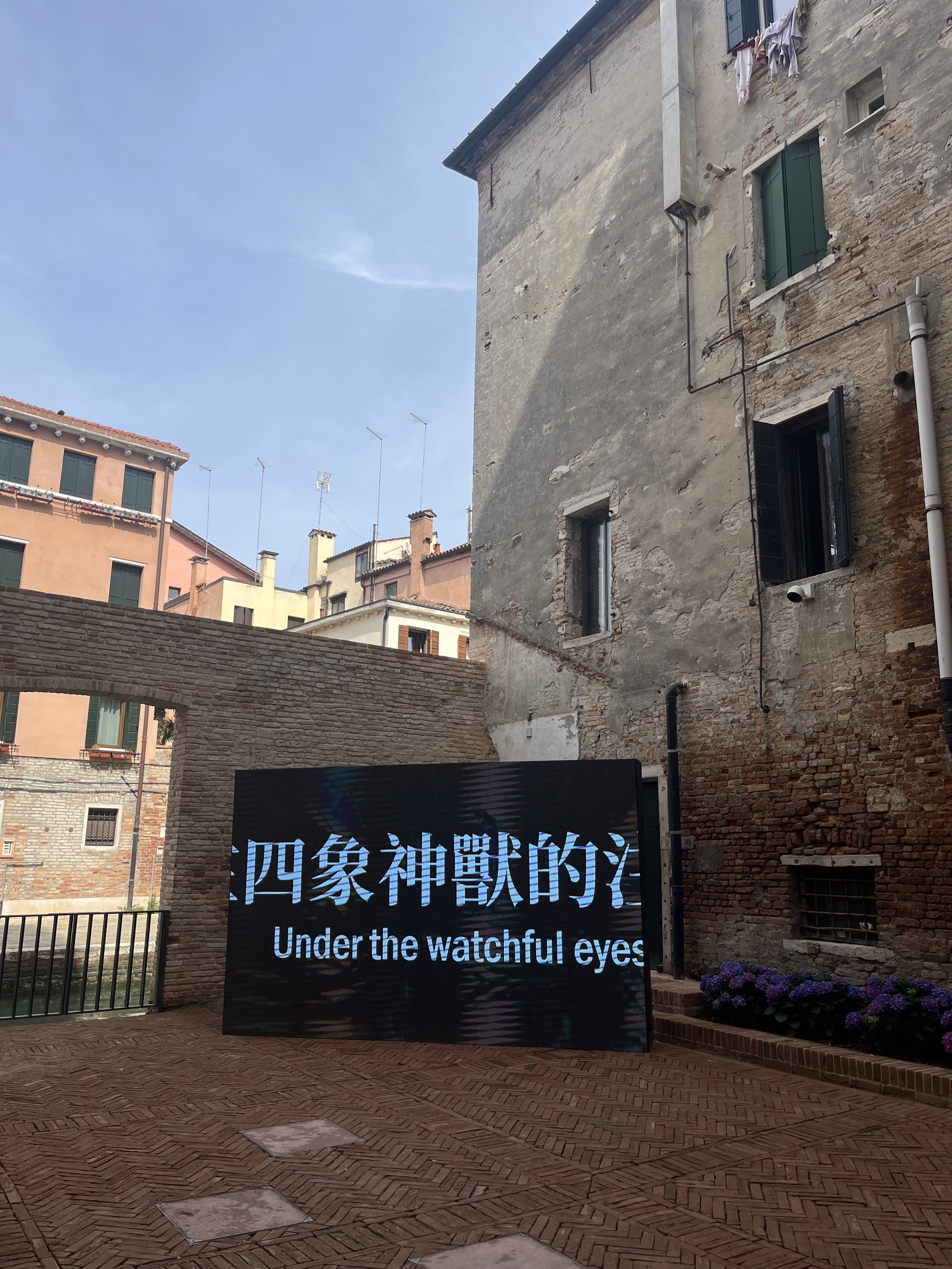
Located a stone’s throw away, Palazzo Diedo - Berggruen Arts & Culture, presented the “strange rules” exhibition. One of the co-curators Adriana Rispoli walked us through this pioneering exhibition focusing on technological contemporary cultures involving AI, algorithms, computational rules, etc.
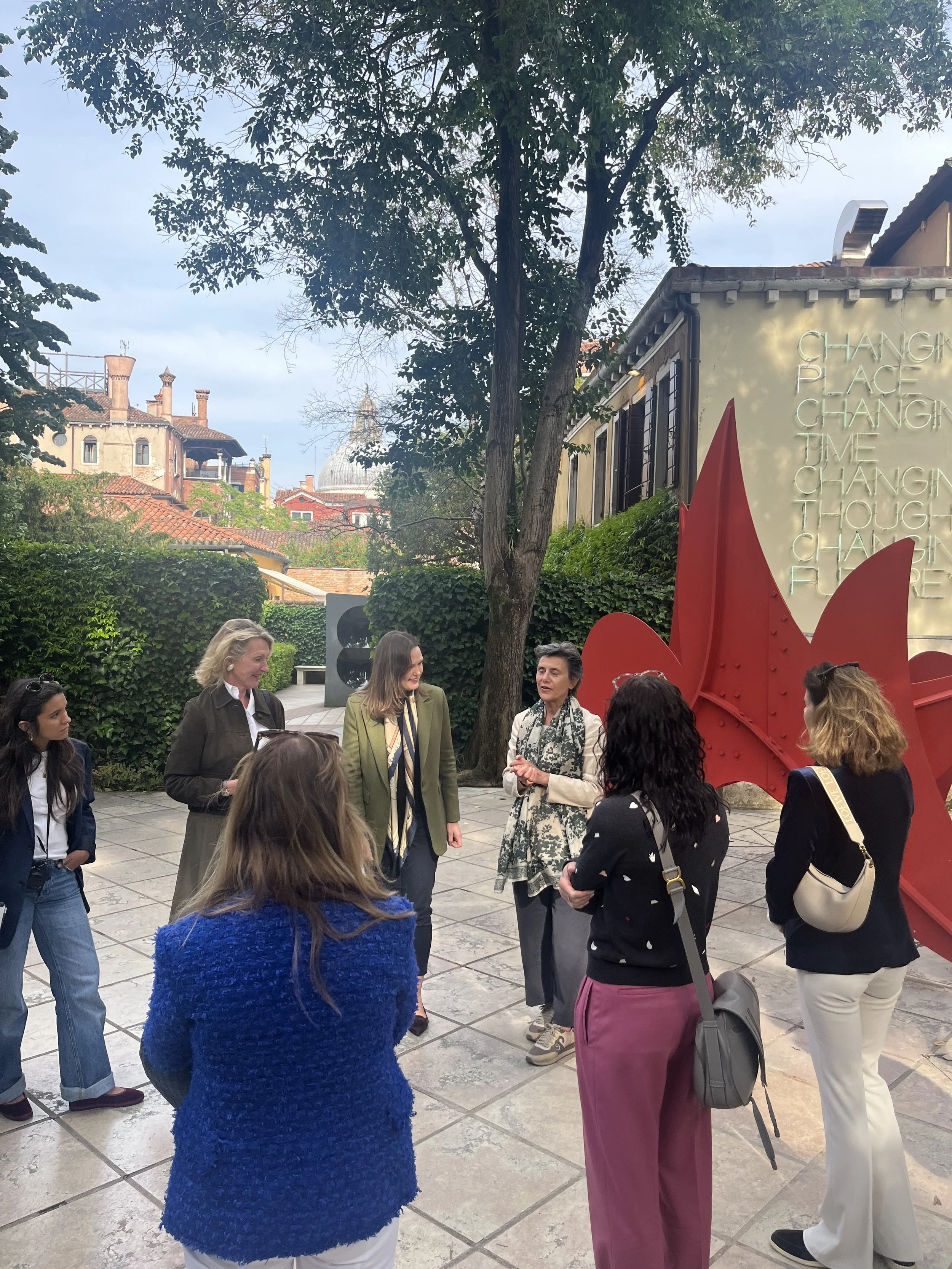
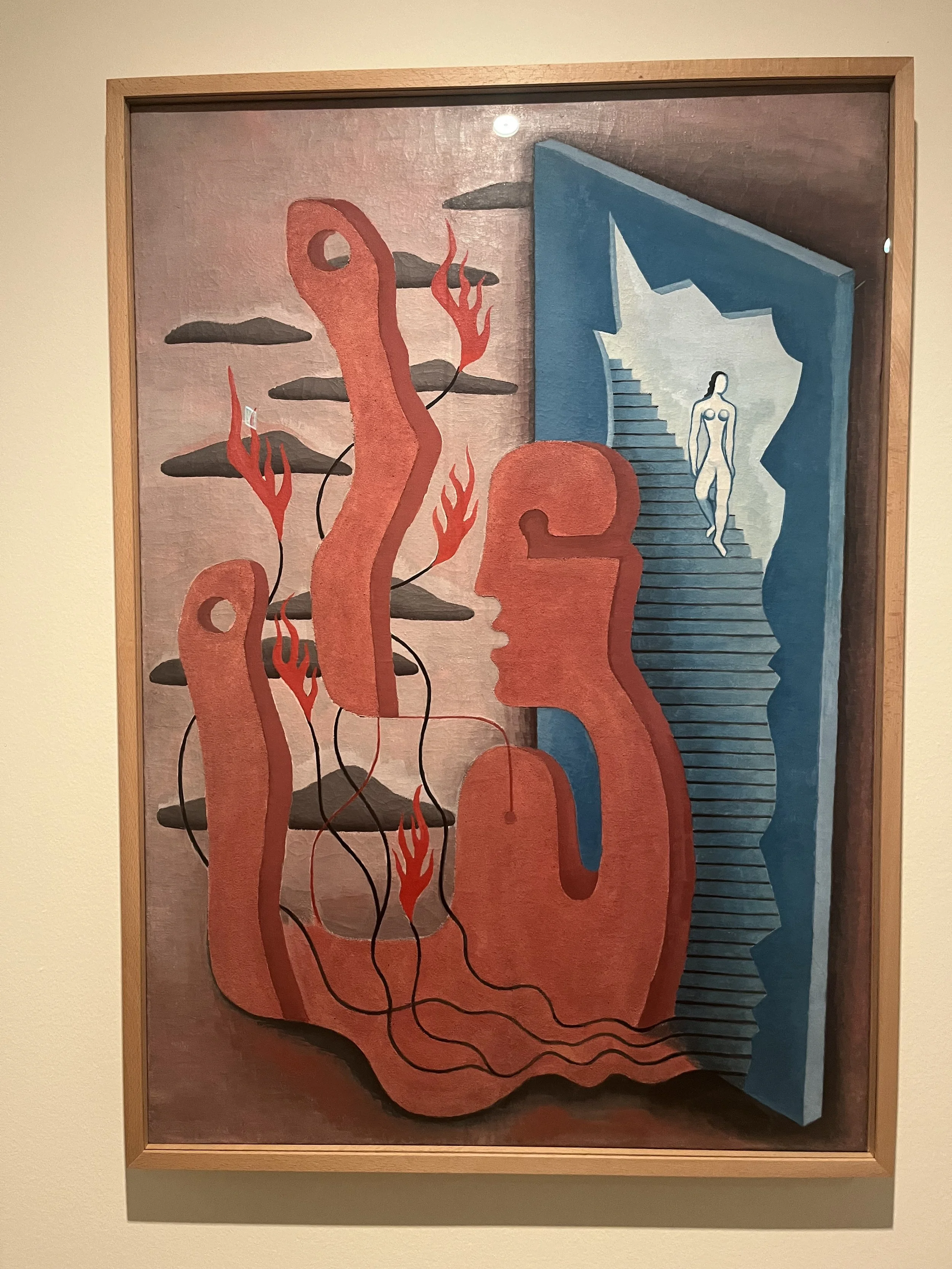
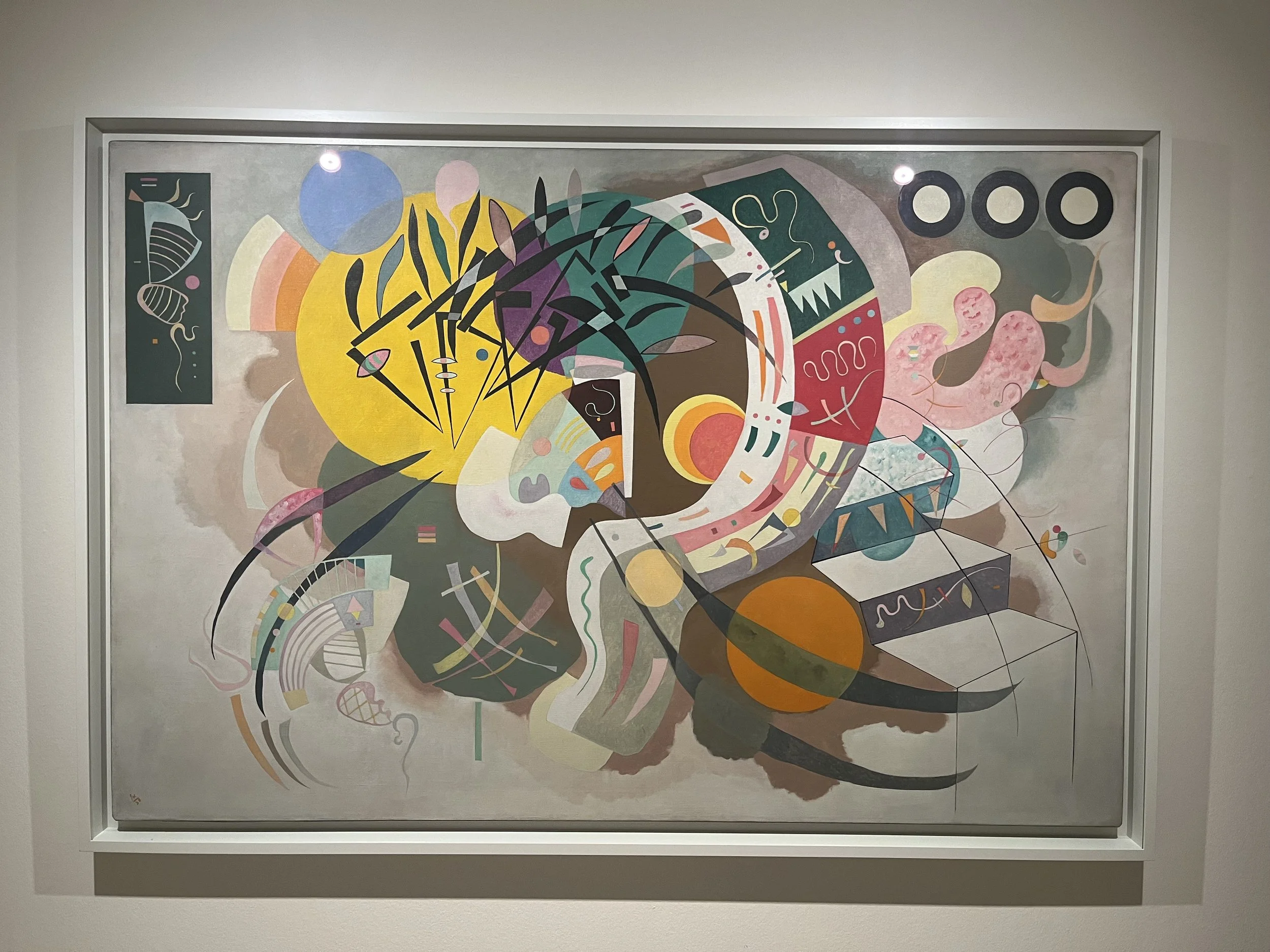
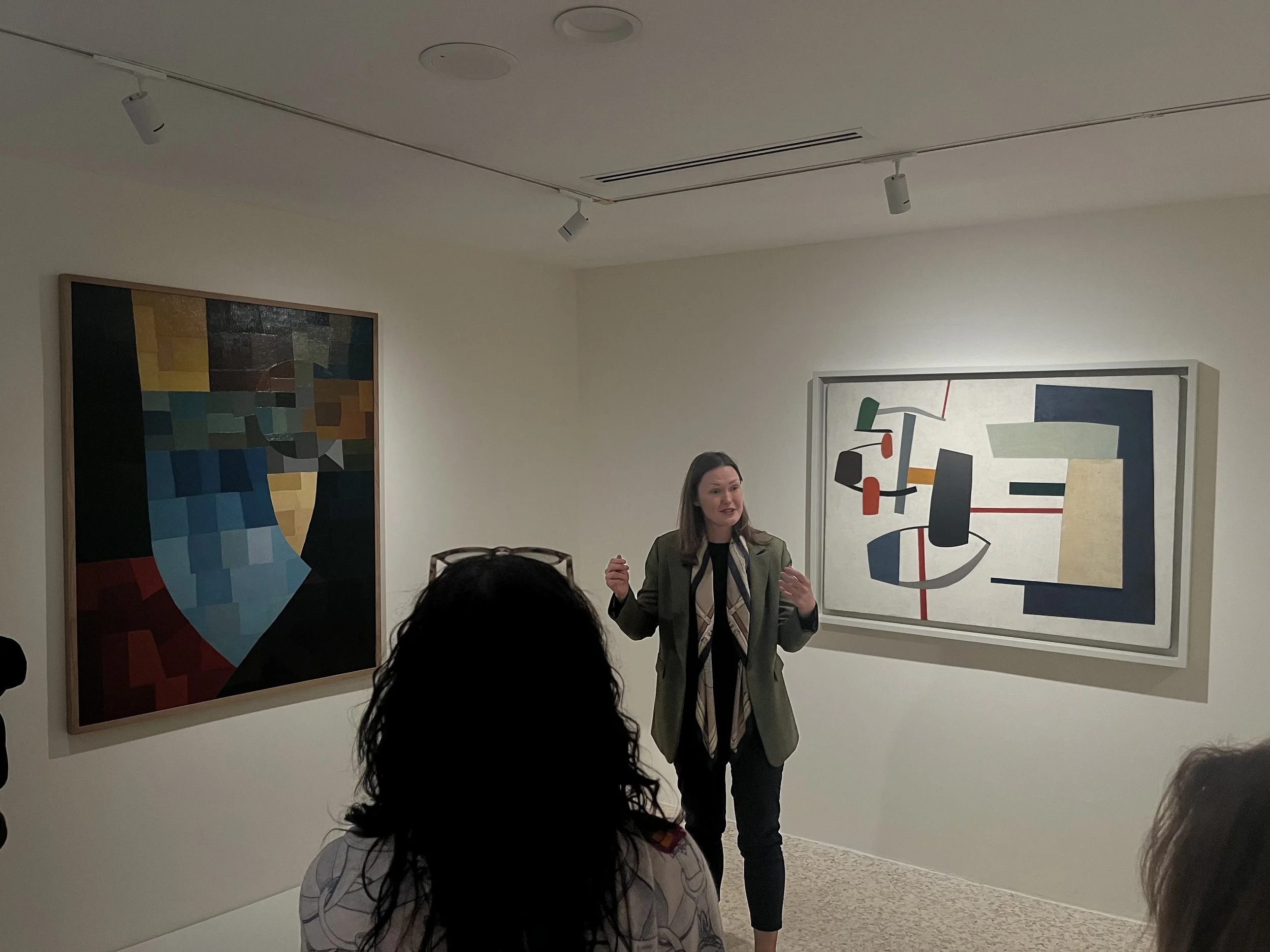
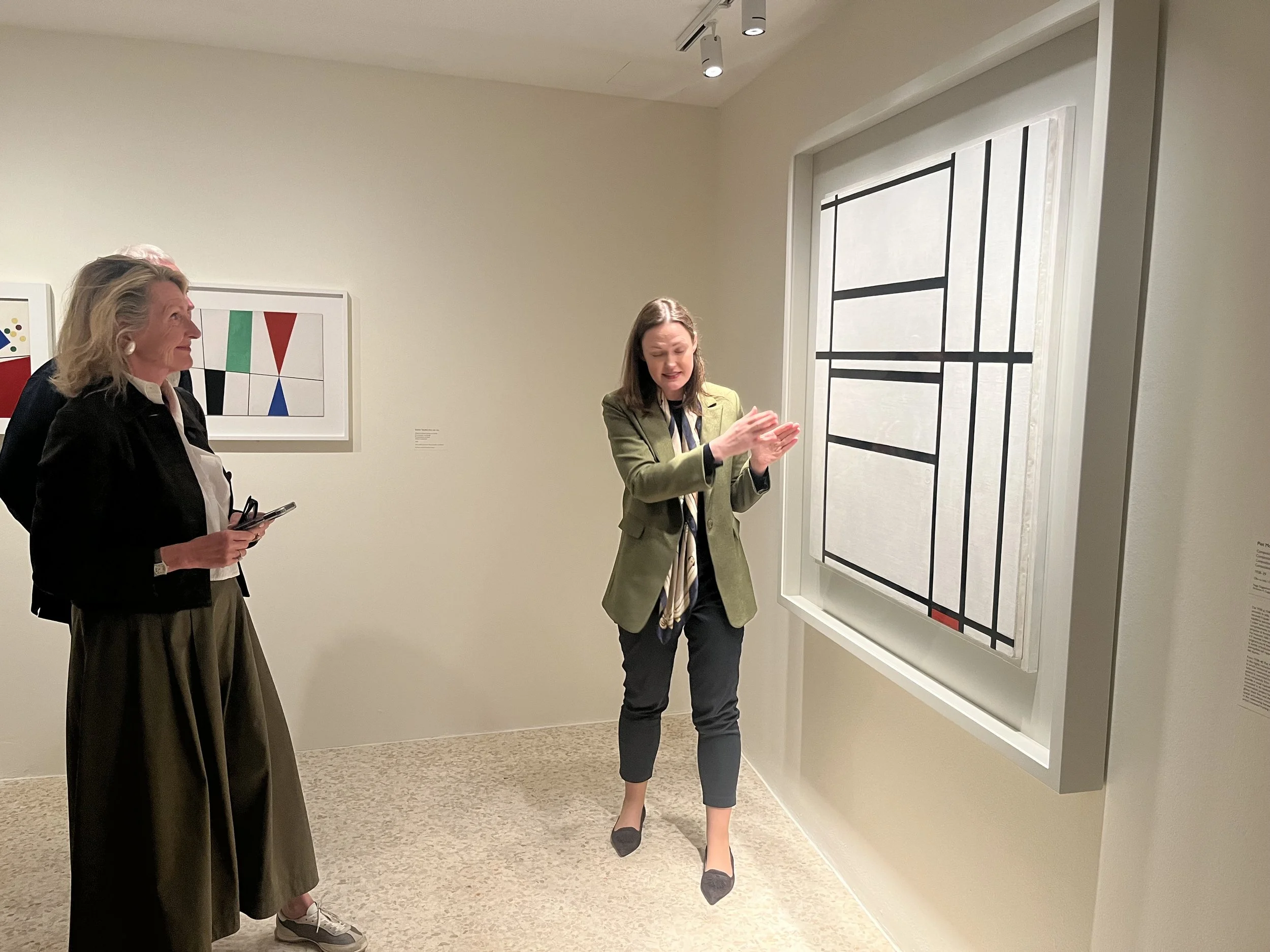
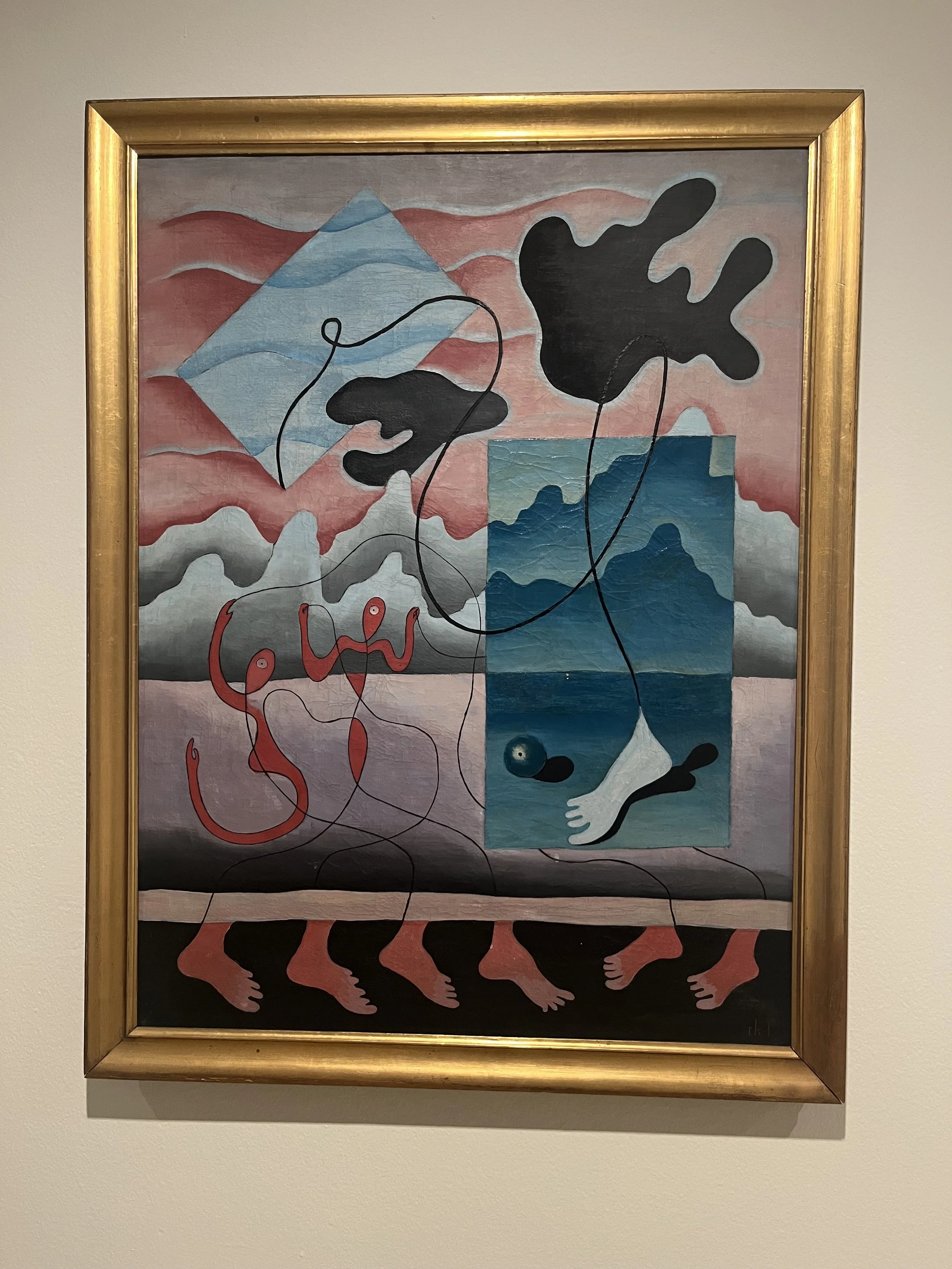
Lastly, we jumped on our boat again to head to the Peggy Guggenheim Collection where the director Karole P. B. Vail kindly welcomed us before the most amazing Gražina Subelytė took us around her exhibition retracing the life of Peggy Guggenheim. It revisits the moment she became a collector and patron, showing key works from early surrealism and abstraction alongside archival material, tracing her network (Duchamp, Beckett, Cocteau) and the avant-garde scene that shaped her future museum in Venice.
My conclusion
I am very impressed about this year’s edition of the Biennale and the quality of the works on display. I had the impression that even more people attended this edition than previously. One can only conclude that contemporary art is more important than ever and represents a real loud speaker, taking in consideration what is happening in the world today. I am glad that most of us got to spend so many nice moments together with the curators of all the pavilions we visited and many artists that exhibited inside and outside of the Giardini and the Arsenale.
Thank you again for your precious support and I am looking forward to seeing you for our next gathering!
Very warmest,
Susanne